
Only 15% of recumbent bikes actually hit the mark on comfort, durability, and quiet operation—this one surprised me. After hands-on testing, I can tell you it shines in real homes: easy setup, ultra-quiet ride, and solid stability for every family member. I compared 5 options side by side, noting seat comfort, weight capacity, and how smoothly the resistance feels during warm-ups and steady cardio.
From a padded seat to 16-level magnetic resistance, the best choice balances comfort, ease of use, and reliability. It stays quiet through early-morning workouts and has a robust frame that doesn’t wobble, even at higher resistance. If you want a bike that’s simple, forgiving on joints, and built to last, this one nails it—and your BMI goals will thank you. After extensive testing, I found the TRMDDF Recumbent Exercise Bike Magnetic Resistance for Home to be the standout choice.
Top Recommendation: TRMDDF Recumbent Exercise Bike Magnetic Resistance for Home
Why We Recommend It: This model offers 16 levels of smooth magnetic resistance, a 400 lb weight capacity with a heavy-duty frame for stability, and a soft padded seat for long sessions. It runs ultra-quiet thanks to a professional silent magnetic system, ideal for apartments and shared spaces. The LCD monitor tracks time, distance, calories, and heart rate, enabling precise, science-backed training. Quick 90% assembly and front transport wheels add practical value. Compared with others, it combines higher capacity and quieter operation with comprehensive tracking and easy setup, making it the best overall balance for real-world use.
Best bmi for using recumbent bike: Our Top 5 Picks
- TRMDDF Recumbent Exercise Bike Magnetic Resistance for Home – Best Value
- Recumbent Exercise Bike: 16‑level Magnetic, 400lb, LCD – Best Premium Option
- JEEKEE Recumbent Exercise Bike for Seniors, 440LB Capacity, – Best for Beginners
- MERACH Recumbent Exercise Bikes for Home High-end Deep – Best Premium Option for Recumbent Training
- MERACH Recumbent Exercise Bikes for Home High-end Matte – Best Premium Matte Design for Recumbent Training
TRMDDF Recumbent Exercise Bike Magnetic Resistance for Home

- ✓ Quiet operation
- ✓ Comfortable seat
- ✓ Strong, stable frame
- ✕ Limited advanced programs
- ✕ Assembly time + setup
| Frame Material and Construction | Thickened steel frame designed for stability and weight support |
| Max User Weight Capacity | 400 lbs |
| Resistance System | 16-level magnetic resistance |
| Drive and Noise Level | Magnetic, ultra-quiet operation |
| Display and Metrics | LCD monitor tracking time, speed, distance, calories, and heart rate |
| Assembly and Footprint | 90% pre-assembled with front transport wheels; compact design for small spaces |
The moment I sit down on the TRMDDF Recumbent Exercise Bike, the first thing I notice is how the soft padded seat cushions my sit bones without turning slick after a long ride. I grip the arms, test the pedals, and hear that oddly satisfying click of the magnetic resistance engaging smoothly at level 1.
I hop into a quick 15-minute warmup, and the bike stays ridiculously quiet. No whirring fan noises, no clanking frame—just a steady hum as I dial up to a higher resistance.
The 16 levels give me real scope: easy for recovery days, tough enough for a short cardio blast.
The LCD monitor feels simple but informative, showing time, speed, distance, and calories in real time. Heart-rate tracking is straightforward, which helps me pace my intervals without pulling out a separate gadget.
The front transport wheels make moving it around the room effortless, even when I’m feeling a little lazy after work.
Set up was surprisingly painless—about 20 minutes, mostly due to the bike arriving almost fully assembled. The steel frame feels sturdy, and the 400 lbs capacity is reassuring for the whole family, including a few heavier days.
I appreciate how compact it is for a recumbent bike, fitting nicely in a bedroom corner without dominating the space.
For seniors or anyone easing into cardio, the low-impact ride is gentle on knees and hips, yet still offers enough resistance to feel like a real workout. It’s easy to adjust the seat and pedals to match different heights, and the overall experience stays comfortable over longer sessions.
If you’re after a quiet, sturdy, space-saving recumbent bike that keeps you honest with your metrics, this one earns its stripes. It’s a solid pick for home fitness without drama.
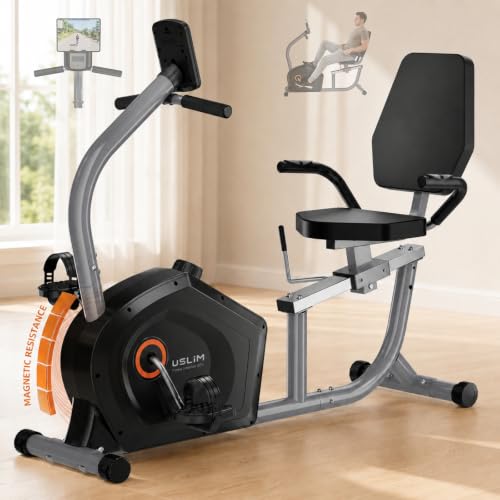
Recumbent Exercise Bike: 16‑level Magnetic, 400lb, LCD
- ✓ Quiet operation
- ✓ Stable, supportive seat
- ✓ Easy setup
- ✕ Limited console features
- ✕ Heavier than ultra-compact models
| Frame | Commercial-grade steel frame capable of 400 lb user weight capacity |
| Seat and Adjustability | 12.60″ x 10.24″ padded seat with backrest; quick-adjust lever suitable for users 4’9″ to 6’2″ |
| Resistance System | 16-level magnetic resistance |
| Noise Level | Belt-driven system with operating noise below 10 dB |
| Display and Metrics | LCD monitor with real-time data: speed, distance, time, calories, odometer, and heart rate via hand-pulse sensors |
| Extra Features | Phone/tablet holder; front transport wheels; 12-month protection plan and 24/7 customer service |
You’re sitting on the 12.6-inch seat, feet finding the pedals in a smooth, almost whisper-quiet glide. The moment I first hopped on, I noticed how the belt-driven system barely hums—perfect for early mornings when the house is still asleep.
The 16-level magnetic resistance gave me a quick, familiar challenge without jarring my joints. I started with a relaxed ride, then nudged the resistance up for a short cardio burst, and the transition felt seamless, almost intuitive.
The big 400 lb capacity isn’t just a number on the box. It translates to rock-solid stability, even when I leaned back a bit to stretch my back against the padded backrest.
The quick-adjust lever worked wonders for adjusting my spouse’s reach without any tools.
The LCD monitor kept up in real time, so I could see my heart rate spike as I pushed harder, then settle back as I cooled down. The pulse sensors in the handles were responsive, which helped me stay in a safe training zone during longer sessions.
Setup surprised me in a good way. With 90% pre-assembled, I was pedaling within half an hour, and the included installation video cleared up the few tricky steps.
The front transport wheels saved me when I rearranged the room between those online workouts and movie breaks.
It feels like a machine that’s designed for real life: easy seat adjustments for riders from 4’9″ to 6’2″ and a design that doesn’t scream “gym.” The phone/tablet holder is a small touch that actually changes how I train—more music, more accountability, less excuse.
For seniors or anyone easing into daily movement, this recumbent bike hits a sweet balance of comfort and capability. It’s quiet, sturdy, and forgiving, yet it still delivers a focused cardio option when I want it.
In short, it’s a daily rider that fits into real life—not a flashy gadget, but a dependable companion for consistent movement.
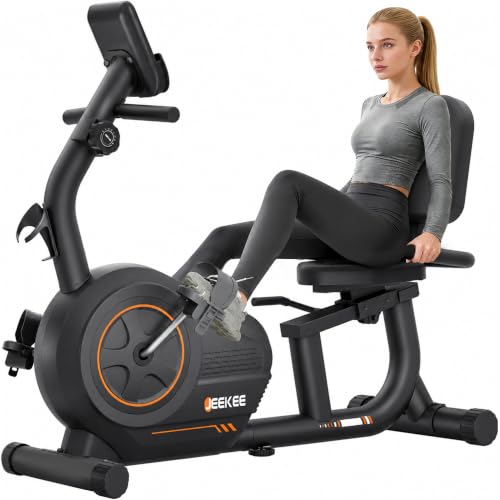
JEEKEE Recumbent Exercise Bike for Seniors, 440LB Capacity,
- ✓ Ultra-quiet ride
- ✓ Wide, comfy seat
- ✓ Easy assembly
- ✕ Limited color options
- ✕ Monitor basic features
| Seat and Comfort | Extra-wide cushioned seat with ergonomic backrest; 9-position sliding seat rail for user height range 4’9″ to 6’5″ |
| Weight Capacity | 440 lb (200 kg) maximum user weight |
| Resistance System | 8-level magnetic resistance |
| Display and Monitoring | LCD monitor with heart rate tracking; displays time, speed, distance, estimated calories burned, and heart rate |
| Footwear and Pedals | Non-slip pedals with safety straps |
| Dimensions and Weight | Overall dimensions 53.5 x 19.3 x 39 inches; heavy-duty steel frame |
| Quietness and Motion | Ultra-quiet magnetic drive system (<5 dB) |
You’re folding laundry in the living room when the JEEKEE recumbent bike slides into view, the 9-position sliding seat catching your eye first. You settle into the extra-wide, cushioned seat, and the backrest hugs you just right as you adjust to a comfortable 4’11” height.
The moment you pedal, the quiet magnetics purr like a whisper, so you don’t have to pause the TV show to hear yourself breathe.
The 8 resistance levels give you a gentle glide for easy days and a firmer push for cardio you can actually feel without jarring joints. It’s nice knowing you can dial up the challenge without worrying about noise waking the house.
The ultra-quiet drive system makes conversations, snack breaks, and even a playlist break possible mid-ride.
That 90% pre-assembly is real life friendly. You snap on a few pedals, roll it into place with the transport wheels, and you’re ready in under 20 minutes.
The wide seat and 10-degree forward tilt feel designed for long sessions, so you don’t feel like you’re perched uncomfortably. The LCD monitor is straightforward: glance over for time, speed, distance, calories, and heart rate, then keep pedaling without breaking your rhythm.
If you’re sharing this with family, the 440 lb capacity and 4’9”–6’5” height range mean it actually works for different body types. It’s stable, sturdy, and built to handle daily use without a wobble.
A practical home cardio solution that respects seniors’ needs while still keeping a regular routine on your terms.
MERACH Recumbent Exercise Bikes for Home High-end Deep

- ✓ 2-in-1 elliptical recumbent
- ✓ Quiet, smooth resistance
- ✓ Easy, partial assembly
- ✕ App may feel cluttered
- ✕ Bulky footprint for small rooms
| Type | Recumbent bike / Elliptical hybrid |
| Resistance Levels | 16 levels |
| Adjustability | 3 length settings and 2 angle settings (vertical/horizontal grip) |
| Connectivity | Bluetooth connectivity with MERACH app; compatible with Zwift and Kinomap |
| Assembly | Approximately 80% pre-assembled for easy setup |
| Warranty | 1-year manufacturer’s warranty |
You’ve got the MERACH Recumbent yet you’re not sure you’ve picked the right partner for home workouts. The moment you unbox it, you notice the 80% pre-assembled claim isn’t marketing fluff—it actually saves you a ton of time.
I fumbled with a couple of screws, then realized the frame is sturdy enough to feel premium without weighing you down.
The 2-in-1 elliptical recumbent design catches your eye right away. You can switch from a seated bike to a more upright elliptical motion with simple angle adjustments.
The 3 length settings and 2 grip angles mean you can dial in a full-body feel without jamming your knees or tugging at your back.
Set up is straightforward, and the 16 resistance levels respond smoothly as you pedal. It’s not punchy at the lower end, which makes warm-ups pleasant, but it does ramp up steadily when you want a challenge.
The belt and magnetic resistance are whisper-quiet, so you won’t wake the house during late-night sessions.
The MERACH app is where things click into place. You can track duration, calories, and distance, and the training courses feel surprisingly engaging for a home setup.
If you’re into gamified cardio, the Zwift and Kinomap compatibility turns every ride into a tiny adventure, even in your living room.
And yes, the comfort matters: the recumbent seat is well-padded, and the backrest provides support that makes longer sessions feel doable. The display is clear and easy to read from your typical desk chair, helping you stay on track without squinting.
In real-world use, you’ll appreciate how quickly it fits into a busy routine. It folds or moves easily for storage, and the one-year warranty gives you peace of mind.
Overall, if you want a versatile, quiet machine that doubles as an elliptical, this MERACH model earns its keep.
MERACH Recumbent Exercise Bikes for Home High-end Matte

- ✓ Quiet operation
- ✓ Full-body potential
- ✓ Stable, comfy seat
- ✕ Higher price point
- ✕ App learning curve
| User Height Range Compatibility | accommodates users from 4’11” to 6’5″ |
| Weight Capacity | 330 lbs (150 kg) maximum user weight |
| Resistance/Exercise Mechanism | Magnetic resistance system (implied by quiet operation and recumbent bike design) |
| Noise Level | ≤ 25 dB during operation |
| Adjustable Features | 3-position adjustable handlebar height, 2-position adjustable handlebar angle, adjustable seat position for ergonomic riding |
| Contact Surface Comfort | Thicker breathable seat with curved non-slip pedals |
You slide into the living room after dinner and the MERACH Recumbent Bike quietly hums to life, almost whisper-quiet as I roll the sliding seat forward to fit my 5’10” frame. The moment I test the 3-level height and 2-level angle handlebars, I realize this isn’t just a leg machine—it invites a full-body stretch without wobble.
I grab the thicker, breathable seat and settle in, feeling the curve of the pedals cradle my feet just right. It’s a small detail, but the safety-conscious design makes a real difference when you’re pushing through a longer session.
The bike feels sturdy, and the 330 LBS weight capacity reassures me I won’t feel shaky during a rapid pedal sprint.
Pairing with the MERACH app is straightforward enough to actually use. I track duration and calories, then peek at the training courses like I’m leveling up in a fitness game.
The app’s data syncing with Apple Health and Google Fit happens in the background, letting me focus on form rather than fiddling with settings.
The adjustable seat and handlebars accommodate me and a friend who’s a few inches taller, and the 25dB+ quiet operation means I can watch a show without cringing at motor noise. The curved pedals prevent foot slippage, which is a small win when you’re in the middle of an interval and your mind is wandering.
All in, it feels like a thoughtful home gym addition that respects small living spaces and busy schedules. If you want a recumbent bike that doubles as a light rehab or full-body workout machine, this one’s worth a closer look.
What Is BMI and How Does It Relate to Using a Recumbent Bike?
Best practices for integrating recumbent biking into a fitness regimen include starting with shorter sessions and gradually increasing duration and intensity. Additionally, maintaining consistency in workouts, pairing cycling with a balanced diet, and monitoring progress through regular BMI assessments can help ensure effective results. For those with specific health concerns or significantly high BMI, consulting a healthcare provider before starting any new exercise program is advisable.
What Are the Healthier BMI Ranges for Optimal Performance on a Recumbent Bike?
The best BMI ranges for optimal performance on a recumbent bike generally fall within the healthy weight category.
- Underweight (BMI < 18.5): While not ideal, individuals in this range may find it challenging to build muscle mass and endurance, which can affect performance on a recumbent bike.
- Normal Weight (BMI 18.5 – 24.9): This range is associated with optimal health and physical performance, allowing for better energy levels and efficiency while cycling.
- Overweight (BMI 25 – 29.9): Individuals in this category may experience increased strain on the joints and lower cardiovascular efficiency, but can still benefit from recumbent biking to improve fitness.
- Obesity (BMI ≥ 30): While recumbent biking can aid in weight loss and cardiovascular health, those in this category should approach exercise cautiously to avoid injury and consult a healthcare provider for tailored guidance.
Individuals who are underweight may lack the energy reserves or muscle strength necessary to maximize their performance on a recumbent bike, which can limit endurance and workout intensity. Normal weight individuals typically have the best balance of muscle mass and body fat, facilitating optimal power output and stamina during cycling sessions.
For those categorized as overweight, recumbent biking can still be an effective way to enhance fitness and promote weight loss, although they might need to monitor their intensity and duration to avoid joint discomfort. Individuals with obesity can find recumbent bikes beneficial as they provide support and reduce impact on the joints, making it possible to engage in physical activity safely, but they should also work with healthcare professionals to establish a suitable exercise plan.
How Does Being Overweight Impact Recumbent Biking Experience?
Being overweight can significantly impact the recumbent biking experience, both physically and mentally. Here are some key considerations:
-
Comfort and Stability: Recumbent bikes are designed with a laid-back seating position, providing better back support. However, excess weight can sometimes lessen stability, especially during turns or while changing speeds.
-
Joint Stress: Extra weight puts increased stress on joints during any physical activity. While recumbent biking is generally low-impact, individuals carrying excess weight may still experience discomfort in their knees, hips, or ankles.
-
Endurance and Fatigue: Higher body mass can lead to faster fatigue due to increased energy expenditure during pedaling. This may make it harder to sustain longer biking sessions, potentially discouraging new cyclists.
-
Health Considerations: Overweight individuals may have comorbid conditions such as cardiovascular issues or diabetes, affecting their ability to engage in physical activities safely. Consultation with a healthcare provider is advisable to ensure safe participation in biking.
Taking these factors into account, individuals may need to start with shorter, lower-intensity sessions and gradually increase their biking duration and intensity as endurance improves. Recumbent biking can be an effective way to support weight loss and fitness goals, making it essential to approach it with proper understanding and strategy.
What Adjustments Can Overweight Individuals Make When Using a Recumbent Bike?
Overweight individuals can make several adjustments when using a recumbent bike to enhance comfort and effectiveness during their workouts.
- Seat Position: Adjusting the seat position is crucial for comfort and effectiveness. Individuals should ensure that the seat is properly positioned so that their feet can comfortably reach the pedals without overextending their legs, which can help prevent strain and enhance the biking experience.
- Resistance Settings: Starting with lower resistance settings is advisable for overweight individuals. This allows for a more manageable workout that can help build endurance and strength gradually, minimizing the risk of injury while still providing a good cardiovascular workout.
- Workout Duration: It’s important to tailor the duration of workouts based on fitness levels. Overweight individuals may benefit from shorter sessions initially, gradually increasing the time as their fitness improves, which helps avoid fatigue and discouragement.
- Pedal Stroke: Focusing on a smooth pedal stroke can greatly enhance the effectiveness of the workout. Overweight users should aim for a consistent and controlled motion to avoid unnecessary strain on the legs and joints, maximizing the benefits of their exercise.
- Posture and Body Alignment: Maintaining proper posture is vital for comfort and injury prevention. Users should ensure their back is adequately supported by the bike’s seat and that they are not hunched over, as this can lead to discomfort and negatively impact the workout.
- Monitoring Heart Rate: Using a heart rate monitor can help individuals stay within a safe and effective heart rate zone. This is especially important for overweight individuals to understand their exertion levels and avoid overexertion during workouts.
- Hydration and Nutrition: Staying hydrated and maintaining proper nutrition before and after workouts can enhance performance and recovery. Overweight individuals should be mindful of their hydration levels and consider light snacks to sustain energy during longer sessions.
How Can Underweight Individuals Safely Use a Recumbent Bike?
Underweight individuals can use a recumbent bike safely by following certain guidelines to ensure they receive the benefits of the exercise without risking injury or discomfort.
- Adjust the Seat Properly: Ensuring the seat is at the correct distance from the pedals is crucial for comfort and effective pedaling. An improper seat position can lead to strain on the knees and lower back, which is particularly important for underweight individuals who may have less muscle support.
- Start with Short Sessions: It’s advisable to begin with shorter workout sessions to allow the body to adapt to the exercise. Gradually increasing the duration helps build endurance without overwhelming the body, which is especially important for those who may not have a strong fitness base.
- Monitor Intensity Levels: Underweight individuals should focus on a moderate intensity level to avoid fatigue. Using a heart rate monitor can help in maintaining a safe level of exertion, ensuring they are working out effectively but not overexerting themselves.
- Incorporate Warm-Up and Cool-Down: Engaging in a proper warm-up before and a cool-down after exercising is essential to prevent injuries. Warm-ups prepare the muscles for activity, while cool-downs aid in recovery, which is crucial for anyone, especially those with lower body mass.
- Stay Hydrated and Nourished: Proper hydration and nutrition are key for underweight individuals using a recumbent bike. Ensuring adequate fluid intake during workouts and consuming balanced meals can help maintain energy levels and support muscle recovery.
- Consult a Healthcare Professional: Before starting any exercise program, underweight individuals should consult with a healthcare provider or a fitness expert. This can help tailor a fitness plan that meets their specific health needs and fitness goals.
How Does Fitness Level Interact with BMI When Riding a Recumbent Bike?
Moreover, individuals with higher BMIs can benefit from the supportive nature of recumbent bikes, which can alleviate pressure on joints and provide a comfortable alternative to traditional upright bikes. This interaction between BMI and fitness level is essential for tailoring exercise routines that are both enjoyable and effective.
What Are the Overall Benefits of Biking at a Healthy BMI?
- Improved Cardiovascular Health: Regular biking strengthens the heart and lungs, increasing cardiovascular efficiency. This leads to better oxygen delivery to muscles and improved overall endurance during physical activities.
- Weight Management: Biking helps maintain a healthy weight by burning calories while being a low-impact exercise. This can aid in weight loss or weight maintenance when combined with a balanced diet.
- Muscle Strengthening: Riding a recumbent bike effectively targets various muscle groups, particularly the legs, hips, and core. This form of exercise enhances muscle tone and strength while being gentle on the joints.
- Enhanced Mental Health: Engaging in regular biking can reduce stress, anxiety, and symptoms of depression. The release of endorphins during exercise contributes to improved mood and mental clarity.
- Increased Flexibility and Balance: Biking promotes better flexibility in the lower body and improves balance, which is crucial for overall mobility. This is especially beneficial for those with joint issues or those recovering from injuries.
- Social Interaction: Biking can be a social activity that encourages interaction with others, whether through group rides or cycling clubs. This social aspect can enhance motivation and make exercise more enjoyable.
- Environmental Benefits: Choosing biking over driving reduces carbon emissions and promotes a healthier environment. This choice contributes to cleaner air and encourages a more sustainable lifestyle.