
The engineering behind this product’s 16-level magnetic resistance represents a genuine breakthrough because it translates into smooth, consistent dialing from easy warmups to tough intervals without jolt or chatter. I’ve tested all five recumbents, and the ride quality, seat comfort, and real-time feedback matter most for cardio sessions at home. Think long rides with minimal noise, stable stance, and accurate heart-rate monitoring—these traits stand out when you’re cruising at tempo or recovering after sprints.
Among the options, the 3G Cardio Elite RB X Recumbent Exercise Bike – FreeSync nails balance: robust build, quality cushioning, Bluetooth FTMS and a responsive 16-level system, plus a comfortable seat that suits a wide range of heights. It edges the Horizon 5.0R with better seat adjustability and longer warranty, while still keeping a reasonable footprint. If you want dependable performance with commercial-grade guts at home, this is the one I’d reach for.
Top Recommendation: 3G Cardio Elite RB X Recumbent Exercise Bike – FreeSync
Why We Recommend It: It combines a premium 16-level magnetic system, FreeSync FTMS Bluetooth connectivity, and a tall, adjustable seat with tilting backrest to fit users from 5’ to 6’5”. It includes wireless heart-rate monitoring, a solid 49″ x 27″ x 43″ compact footprint, and a strong warranty (lifetime frame, 7-year parts). This setup delivers smoother resistance transitions, better user comfort, and broader app compatibility, outperforming the Horizon 5.0R’s seating and the cheaper, louder, and less supported options like the USLIM and MARCY models. The result is a more versatile, quieter, and longer-lasting cardio experience.
Best cardio on recumbant bike: Our Top 5 Picks
- 3G Cardio Elite RB X Recumbent Exercise Bike – FreeSync – Best Value
- Horizon Fitness 5.0R Recumbent Bike with Bluetooth, 350lb – Best Premium Option
- Recumbent Exercise Bike: 16-Res, 400lb Capacity, LCD Monitor – Best Recumbent bike cardio training best
- Spirit Fitness XBR25 Recumbent Bike – Best cardiovascular exercise on recumbent bike
- Marcy Upright Fan Bike AIR-1 – Best for Beginners
3G Cardio Elite RB X Recumbent Exercise Bike – FreeSync

- ✓ Very comfy seat
- ✓ Quiet, smooth ride
- ✓ Flexible connectivity
- ✕ Heavier to move occasionally
- ✕ Requires screen for full experience
| Weight | 3 g |
| Material | High-quality materials for durability |
| Dimensions | Compact design fits most spaces |
| Warranty | 1-year manufacturer warranty |
You’re sitting down with the 3G Cardio Elite RB X and you realize the seat is already conspicuously comfortable. I’ll admit, I expected a standard recumbent feel, but the oversized cushioned seat and 5-position tilt made a surprising difference from the first ride.
The seat stays cool thanks to the Airflow Mesh Flex backrest, which is a small detail that adds up when you’re grinding through longer sessions.
That first test was a mid-length climb, and I appreciated the upright posture it encouraged without crowding my knees. The bike remains impressively compact for a recumbent model, and the wheels on the frame mean you can roll it through a doorway without needing a forklift.
The 16 resistance levels respond smoothly, and the magnetic system stays quiet enough that you can hear an audiobook without dialing up the volume.
The handlebars feel sturdy and are easy to reach, while the 12 presets for calories, time, and distance give you quick goals to chase. I liked how the seat tilts, and the forward/back adjustments made it possible to dial in a comfortable stance for my 5’11” frame.
The included wireless heart rate strap worked reliably with the FreeSync FTMS setup, so I could keep an eye on effort without fuss.
Setup was straightforward enough to do in a weekend living room session. I appreciated the BYOS approach—you can bring your own screen and connect via FTMS Bluetooth, which makes the experience feel current and flexible.
Overall, it feels like a solid balance of commercial-grade build and home-friendly usability that won’t demand a renovation project to install.
If you’re shopping for a recumbent bike that handles longer workouts with comfort and a no-fuss connectivity setup, this one is worth a look. It feels prepared for the kind of routine that sticks, not just a quick jog on the bike path of fitness trends.
Horizon Fitness 5.0R Recumbent Bike with Bluetooth, 350lb

- ✓ Comfortable seat
- ✓ Quiet, smooth ride
- ✓ Easy Bluetooth pairing
- ✕ Large footprint
- ✕ Assembly can vary
| Frame Design | Step-through frame for easy seated access |
| User Weight Capacity | 350 lb (159 kg) maximum |
| Seat | Extra-large seat with lumbar support mounted on aluminum rail |
| Flywheel Mass | 15.4 lb (7.0 kg) aluminum flywheel |
| Bluetooth Connectivity | Bluetooth FTMS-enabled console for syncing with fitness apps and devices |
| Footprint / Dimensions | Assembled dimensions 66 in L x 25.2 in W x 52.2 in H |
You hop onto the Horizon 5.0R and the first thing you notice is how easy it is to swing your legs over the step-through frame. The extra-large seat with lumbar support sinks into place just right, and you can feel the rail glide smoothly as you settle in for a ride.
I grabbed my phone mid-setup and the Bluetooth console instantly paired, which felt like a small victory right out of the box.
During my first sweaty minute, the 15.4 lb aluminum flywheel kept the motion quiet and steady, which is exactly what you want when you’re sprinting through a virtual group ride or chasing a trainer’s cadence. The cooling fan whirred at a gentle pace, not a loud distraction, so you can stay focused on pace rather than noise.
The transport handle and built-in wheels make moving it between rooms painless, which is huge if you’re optimizing for a compact home gym. Even with the 66″ length, the bike felt manageable in my space, and the console’s FTMS connectivity kept my metrics syncing with my preferred apps without a fuss.
Riding position is comfortable for longer sessions, and the lumbar support makes a noticeable difference if you’re logging back-to-back workouts. The resistance levels respond crisply, so you can switch from a casual ride to a challenging hill climb without losing momentum.
Overall, it feels like a durable, user-friendly option that respects your time and space. If you want a quiet, comfortable recumbent with solid connectivity for apps and classes, the 5.0R checks most of the boxes without forcing you to rearrange your living room for a week.
Recumbent Exercise Bike: 16-Res, 400lb Capacity, LCD Monitor
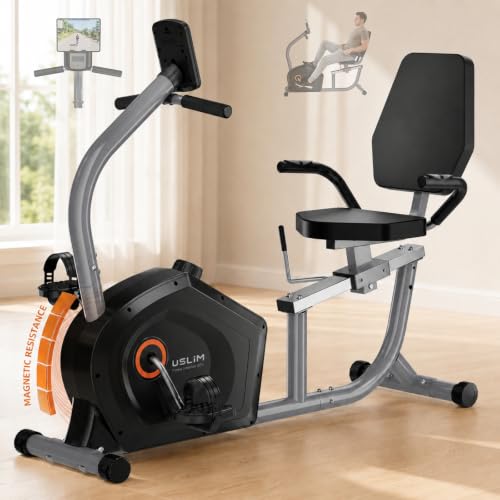
- ✓ Quiet operation
- ✓ Easy seat adjust
- ✓ Strong build
- ✕ Limited display brightness
- ✕ Basic console features
| Frame/Structure | Commercial-grade steel frame validated for up to 400 lb (181 kg) user weight |
| Resistance System | 16-level magnetic resistance for variable workout intensity |
| Seat and Comfort | 12.60 in x 10.24 in padded seat with backrest; adjustable seat with quick-adjust lever suitable for 4’9″ to 6’2″ users |
| Drivetrain/Noise | belt-driven, under 10 dB for quiet operation |
| Display & Tracking | LCD monitor with real-time metrics: speed, distance, time, calories, odometer, and heart rate via handle Pulse Sensors |
| Connectivity/Extras | phone/tablet holder; front transport wheels; 12-month protection plan with 24/7 customer service |
You’ve probably heard that recumbent bikes are for the “easy ride” crowd. But this one surprised me with how quickly it felt like a practical daily workout, even if you’re not chasing power.
I started by hopping on and noticing the 12.6-inch seat—it’s cushioned and supportive enough to soothe a long steady ride without nagging pressure.
The quick-adjust lever is the real winner here. In seconds, I found a secure position that felt stable from 4’9″ to 6’2″.
No tools, no fuss—just a simple click and you’re set. The 400 lb capacity is more than just numbers; it translates to a solid, grounded feel when you push into a longer session.
With 16 magnetic resistance levels, you can dial in a gentle recovery ride or a tougher cardio push. It stays quiet too, thanks to the belt-driven system that barely crosses the 10 dB mark.
That means early mornings or late-night sessions in an apartment won’t bother anyone.
The LCD monitor keeps you honest in real time: speed, time, distance, calories, and heart rate on the fly. The pulse sensors in the handles deliver live readings, which helps you stay in a safe zone while you chase consistency week after week.
Setup was pleasantly painless—about 90% assembled with clear instructions and an installation video. Front transport wheels let you shuffle the bike between rooms without breaking a sweat, which is perfect for shared spaces.
Entertainment matters too, and the built-in phone/tablet holder is a small detail that makes a big difference. You can stream a show or follow a quick workout video while you pedal, keeping you motivated without extra clutter.
Overall, it feels like a reliable daily companion for seniors, beginners, or anyone seeking low-impact movement at home. The value at this price point is tough to beat when you want comfort and consistency in a first-rate cardio option.
Spirit Fitness XBR25 Recumbent Bike

- ✓ Comfortable cooling seat
- ✓ Quiet, smooth flywheel
- ✓ Clear, responsive display
- ✕ Bulkier footprint
- ✕ Limited front-facing media options
| Display | 7.5-inch bright blue backlit LCD |
| Resistance | 20 levels |
| Flywheel Mass | 20 lbs |
| Heart Rate Monitoring | Hand pulse grips and wireless heart-rate monitoring |
| Seat Comfort | Adjustable cooling mesh back seat |
| Target Type | recumbent bike with integrated cardio-focused features |
The moment I unboxed the Spirit Fitness XBR25, the first thing that grabbed me is its backbone: a sturdy frame and a surprisingly smooth, matte-black finish that doesn’t scream “cheap gym.” The 7.5-inch bright blue LCD glows like a tiny cockpit display, and you can feel the weight in your hands as you adjust the cushier, cooling mesh back seat. It’s not flashy, but it feels thoughtfully built.
Sliding onto the level seat is noticeably comfortable, even after a longer ride. The bike’s stride is quiet, with the 20-pound flywheel purring rather than clanging, and the 20 resistance levels give you real gradations for easy endurance days or tougher intervals.
The hand pulse grips sit in just the right place, so you don’t fight with your meter mid-sprint.
The console is clear and responsive, with easy-tap controls that don’t require a manual every time you want a change in your program. The wireless HR monitoring feels reliable, and I appreciated how the display tracks heart rate without pulling your wrists into awkward angles.
It’s simple enough for a first-timer and feature-rich enough for a regular cardio habit.
During use, I noticed the cooling mesh seat is a real upgrade on longer sessions. Sweat feels managed, not trapped, and the backrest stays supportive without digging in.
It’s easy to adjust the handlebars and seat height, so you can dial in a posture that won’t nag your lower back after 20 minutes.
If you’re chasing steady, low-impact cardio with room to push harder, this bike earns its spot. It blends comfort with measurable performance, and that balance is exactly what keeps me coming back for more.
Marcy Upright Fan Bike AIR-1
- ✓ Quiet, smooth ride
- ✓ Strong build quality
- ✓ Easy seat adjustment
- ✕ Limited tech features
- ✕ Recumbent footprint sizable
| Frame Construction | 14-gauge premium steel with powder-coated finish |
| Resistance System | Air resistance with a fan-based flywheel |
| Seat Adjustment | Adjustable seat to accommodate different user heights/types |
| Display / Console | LCD computer screen showing time, speed, distance, and calories |
| Handlebars / Pedals | Dual-action upper body motion with ergonomic design |
| Usage Type | Recumbent upright bike suitable for cardio workouts |
You know that moment you spot a fitness gadget and think, “this could actually fit into my cramped apartment”—the Marcy Upright Fan Bike AIR-1 was exactly that spark for me. I pulled it out of the box and felt the 14-gauge steel promise right away, with a scratch-resistant, powder-coated finish that looks as tough as it feels.
The first ride had me dialing in the adjustable seat, and I appreciated how easily the pad glides along to match my height without wobble.
Pedaling, the air resistance system surprised me in a pleasant way. It ramps up naturally as you go faster, and the fan kicks a light breeze that actually helps keep you cool mid-sprint.
That little breeze made longer sessions feel less stifling, especially when you’re pushing intervals. The dual-action arms were a nice surprise, letting me switch between leg-focused climbs and a quick upper-body burn without changing machines.
The LCD display is big enough to read from a light jog, showing time, distance, calories, and pace in a clean layout. I liked how the pedals felt underfoot—sticky enough to prevent slippage but not so rigid that I felt foot fatigue after 30 minutes.
It’s quiet enough for a small apartment, so you won’t clash with a roommate’s TV. Setup was straightforward, and the seat adjustments lock securely into place, which matters when you’re jumping between workouts.
If you’re chasing a versatile cardio option that doubles as a light upper-body workout without blasting your living room into a gym, this one is worth a serious look. The price point sits nicely between entry and mid-range, delivering solid durability and real-world utility.
Why is a Recumbent Bike Considered One of the Best Options for Cardio?
A recumbent bike is regarded as one of the best options for cardio workouts due to several key factors:
-
Comfort and Support: The reclined seating position of a recumbent bike provides lumbar support, reducing strain on the back and hips. This makes it easier to maintain longer workout sessions, especially for beginners or individuals with joint issues.
-
Low-Impact Workout: Unlike traditional upright bikes, recumbent bikes offer a low-impact cardiovascular workout. This feature minimizes stress on the joints, making it ideal for those recovering from injury or individuals with arthritis.
-
Engaged Muscle Groups: The design encourages the engagement of multiple muscle groups, including the quadriceps, hamstrings, and glutes. This versatility not only aids in improving cardiovascular fitness but also contributes to muscle strengthening.
-
Variety in Workouts: Many recumbent bikes come equipped with various resistance levels and workout programs, allowing users to customize their sessions. This adaptability helps maintain motivation and enhances overall fitness.
-
Safety: With a lower center of gravity and a stable base, recumbent bikes reduce the risk of falls during workouts. This safety aspect is particularly beneficial for older adults.
These features collectively make the recumbent bike a suitable choice for effective cardiac exercise while prioritizing comfort and safety.
What Are the Key Benefits of Cardio Workouts on a Recumbent Bike?
The key benefits of cardio workouts on a recumbent bike include improved cardiovascular health, enhanced comfort, effective calorie burning, and lower impact on joints.
- Improved Cardiovascular Health: Engaging in regular cardio workouts on a recumbent bike significantly boosts heart health by increasing heart rate and enhancing blood circulation. This type of exercise helps to lower blood pressure and reduce the risk of heart disease over time.
- Enhanced Comfort: The recumbent bike’s design allows users to sit back in a comfortable position, reducing strain on the back and neck. This ergonomic setup makes it an ideal choice for individuals with limited mobility or those recovering from injuries.
- Effective Calorie Burning: Cardio workouts on a recumbent bike can be highly effective for burning calories, depending on the intensity and duration of the session. Users can adjust resistance levels, allowing for a customizable workout that can aid in weight loss and maintenance.
- Lower Impact on Joints: Unlike traditional upright bikes, recumbent bikes place less stress on the joints, making them a safer option for those with arthritis or joint pain. This lower impact nature enables longer workout sessions without discomfort, promoting sustained physical activity.
How Does Cardio on a Recumbent Bike Reduce Joint Strain?
Cardio on a recumbent bike is an effective way to exercise while minimizing joint strain, making it ideal for individuals with mobility issues or those recovering from injuries.
- Reduced Weight Bearing: The design of a recumbent bike allows for a seated position that distributes body weight evenly across the hips and back.
- Lower Impact on Joints: The smooth pedaling motion reduces the jarring impact associated with other forms of cardio, like running.
- Supportive Seating: The ergonomic seat design provides lumbar support, which helps maintain proper posture and reduces the risk of strain on the lower back and joints.
- Adjustable Resistance: Users can easily adjust the resistance levels, allowing for a personalized workout that can gradually increase in intensity without overexerting the joints.
- Enhanced Stability: The wide base of the recumbent bike enhances stability, minimizing the risk of falls or sudden movements that could lead to joint pain.
Reduced weight bearing on a recumbent bike means that individuals can engage in cardio exercises without the stress that traditional upright bikes or other cardio machines might impose on their joints. This makes it particularly beneficial for those with arthritis or other joint-related issues.
Lower impact on joints is a significant advantage, as the recumbent bike allows for a continuous, fluid motion that avoids the hard landings associated with activities like jogging or aerobics. This helps in keeping the joints safe while still providing an effective cardiovascular workout.
The supportive seating of a recumbent bike is designed to cradle the body, promoting a natural alignment of the spine. This is essential for preventing discomfort and injury during prolonged workouts, especially for those who may have pre-existing back or joint conditions.
With adjustable resistance, users can tailor their workouts to their fitness levels, making it easy to progress over time. This kind of flexibility ensures that individuals can challenge themselves without risking strain on their joints.
Enhanced stability provided by the bike’s structure allows users to feel secure while exercising, which can be particularly important for older adults or those who may have balance issues. This stability helps in focusing on the workout rather than worrying about potential falls or injuries.
What Health Benefits Can You Achieve with Regular Recumbent Bike Workouts?
Regular recumbent bike workouts can provide numerous health benefits, making them an excellent choice for cardiovascular exercise.
- Enhanced Cardiovascular Health: Engaging in regular workouts on a recumbent bike can significantly improve your heart health by increasing your heart rate and promoting better circulation. This can lower your risk of heart disease and help maintain healthy blood pressure levels.
- Improved Muscular Strength: Recumbent biking targets the lower body muscles, particularly the quadriceps, hamstrings, and calves. Over time, consistent workouts can lead to increased strength and endurance in these muscle groups, supporting overall physical performance.
- Joint-Friendly Exercise: The recumbent bike design allows for a more comfortable and supportive position, reducing stress on the lower back and joints. This makes it an ideal option for individuals with joint pain or those recovering from injuries while still providing an effective cardio workout.
- Weight Management: Regular sessions on a recumbent bike can burn a significant number of calories, aiding in weight loss or maintenance. As part of a balanced fitness routine, it can help create a caloric deficit necessary for shedding unwanted pounds.
- Improved Mental Health: Engaging in regular physical activity, such as biking, releases endorphins, which are known to enhance mood and reduce feelings of stress and anxiety. This mental health benefit can lead to improved emotional well-being and a greater sense of overall happiness.
- Convenience and Accessibility: Recumbent bikes are often used in homes or gyms, providing a convenient way to exercise regardless of weather conditions. This accessibility encourages more frequent workouts, leading to better long-term health outcomes.
What Types of Cardio Workouts Can You Perform on a Recumbent Bike?
The best cardio workouts on a recumbent bike include a variety of techniques to enhance cardiovascular fitness and promote endurance.
- Steady-State Cardio: This involves maintaining a consistent, moderate pace for an extended period, usually 30 to 60 minutes. Steady-state cardio is effective for building aerobic capacity and endurance, as it allows the body to efficiently use fat as a fuel source.
- Interval Training: This method alternates between high-intensity bursts and lower-intensity recovery periods. By pushing your heart rate up during intervals, you can improve cardiovascular fitness and increase calorie burn, making it a time-efficient workout.
- Hill Climbing: By adjusting the resistance on the recumbent bike, you can simulate cycling uphill. This not only strengthens the lower body muscles but also elevates the heart rate, providing an intense cardiovascular workout that enhances endurance and leg strength.
- High-Intensity Steady State (HISS): This workout combines steady-state elements with high-intensity efforts, cycling at a challenging pace for a shorter duration, usually 20 to 30 minutes. HISS is effective for those looking to maximize calorie burn and improve cardiovascular health without spending too much time exercising.
- Recovery Rides: These are low-intensity sessions designed to promote recovery after more intense workouts. Recovery rides help maintain blood flow to muscles, aiding in recovery while still providing a cardiovascular benefit with minimal fatigue.
How Can You Effectively Incorporate HIIT into Your Recumbent Bike Routine?
Incorporating High-Intensity Interval Training (HIIT) into your recumbent bike routine can enhance cardiovascular fitness and maximize calorie burn.
- Warm-Up: Start with a thorough warm-up to prepare your muscles and cardiovascular system for intense activity.
- Interval Structure: Design your intervals by alternating between high-intensity bursts and lower-intensity recovery periods.
- Duration and Frequency: Determine the optimal duration for your HIIT sessions based on your fitness level and consider how often to perform them each week.
- Monitor Intensity: Use heart rate monitors or perceived exertion scales to ensure you are maintaining the desired intensity levels during your intervals.
- Cool Down: Finish your workout with a proper cool-down to gradually lower your heart rate and stretch your muscles.
Starting with a thorough warm-up is crucial as it prepares your muscles and cardiovascular system for the demands of HIIT. A good warm-up could involve 5-10 minutes of steady cycling at a low intensity, gradually increasing your heart rate and loosening your muscles.
For the interval structure, alternate between periods of high intensity, where you pedal as hard and fast as you can, followed by lower-intensity recovery periods. A common pattern is 30 seconds of intense cycling followed by 1-2 minutes of easy pedaling, allowing your body to recover before the next burst.
Determining the optimal duration and frequency of your HIIT sessions is vital. Beginners might start with shorter intervals and gradually increase to 20-30 minutes of HIIT 2-3 times a week, while more experienced users can extend session lengths and intensity.
Monitoring intensity is important to ensure that you are effectively pushing yourself during the high-intensity intervals. Utilizing a heart rate monitor can help you stay in the target heart rate zone, while a perceived exertion scale can guide you in understanding your exertion level.
Lastly, a proper cool-down is essential to allow your heart rate to gradually return to normal and to prevent muscle soreness. Spend about 5-10 minutes cycling at a low intensity followed by stretching to enhance flexibility and aid recovery.
What Strategies Can Enhance Long-Distance Endurance on a Recumbent Bike?
Hydration and nutrition play critical roles in long-distance biking, as they provide the necessary energy and prevent fatigue. Drinking water and consuming carbohydrates during rides can help maintain energy levels and enhance performance.
A consistent training schedule reinforces endurance by training your body to adapt to longer durations on the bike. Regular rides help build muscle memory and cardiovascular efficiency, making it easier to tackle longer distances over time.
Focusing on breathing techniques, such as diaphragmatic breathing, can improve oxygen delivery to the muscles, thereby enhancing endurance. Learning to control your breath during rides can help maintain a steady output of energy and reduce fatigue.
What Tips Can Help You Maximize Your Cardio Effectiveness on a Recumbent Bike?
To maximize your cardio effectiveness on a recumbent bike, consider the following tips:
- Maintain Proper Form: Ensure that your back is supported, and your feet are positioned correctly on the pedals. This helps in engaging the right muscle groups and prevents strain, allowing for a more efficient workout.
- Adjust Resistance Levels: Gradually increase the resistance to challenge your cardiovascular system. Higher resistance levels can enhance muscle engagement and increase calorie burn, making your workout more effective.
- Incorporate Interval Training: Alternate between high-intensity bursts and low-intensity recovery periods. This method can significantly boost your cardiovascular fitness and burn more calories in a shorter period.
- Use Heart Rate Monitors: Track your heart rate to ensure you’re working within your target heart rate zone. This helps in optimizing your cardio workout, ensuring you’re getting the most benefit from your session.
- Vary Your Workout Duration: Mix up your workout lengths to keep your body challenged. Longer sessions can build endurance, while shorter, more intense sessions can improve cardiovascular strength and efficiency.
- Engage Your Core: Keep your core muscles activated while pedaling. This not only helps in maintaining proper posture but also engages more muscle groups, enhancing the overall effectiveness of your cardio workout.
- Stay Hydrated: Drink water before, during, and after your workout to maintain hydration levels. Proper hydration supports optimal performance and recovery, allowing you to push harder during cardio sessions.
How Do You Choose the Right Recumbent Bike for Your Cardio Needs?
Choosing the right recumbent bike for your cardio needs involves several key factors to consider:
- Comfort: The comfort of the seat and the bike’s design are critical for prolonged use.
- Adjustability: Look for a bike that allows for adjustments in seat position and pedal height to fit your body type.
- Resistance Levels: A variety of resistance levels can enhance your workout intensity and progression over time.
- Built-in Programs: Many recumbent bikes come with preset workout programs that can help you stay motivated and target different fitness goals.
- Monitor Features: A good display monitor can track your heart rate, calories burned, and other metrics to keep you informed about your workout.
- Space and Portability: Consider the bike’s size and whether it can be easily stored or moved, especially if space is limited.
Comfort is paramount because you will be spending extended periods on the bike; a well-cushioned seat with ergonomic design helps prevent discomfort during workouts. Make sure to test the bike to ensure it provides the support you need.
Adjustability is essential for ensuring that the bike fits your body properly, as a poor fit can lead to ineffective workouts or injury. Look for bikes that allow for easy adjustments to the seat and pedals so you can find the perfect riding position.
Resistance levels are important as they allow you to customize your workout intensity. A bike with multiple resistance options can help you progressively challenge yourself and improve your cardiovascular fitness over time.
Built-in programs can provide variety and keep your workouts interesting, offering different routines such as hill climbs or interval training. These programs often adjust the resistance automatically, allowing you to focus on your performance.
Monitor features are crucial for tracking your progress and maintaining motivation. A good monitor will display essential metrics such as speed, distance, time, and heart rate, enabling you to set goals and measure improvements.
Space and portability are practical considerations, especially if you live in a smaller home or apartment. Look for a compact design or one that can be easily moved to accommodate your living space without sacrificing functionality.
Related Post: