
The engineering behind this product’s 8-level car-style resistance represents a genuine breakthrough because it delivers smooth, easily adjustable workloads without waking the neighbors. I’ve tested MERACH Recumbent Exercise Bikes for home and felt the 6.6lb flywheel spin quietly, the 8 seat positions fit different inseams, and the frosted handlebars stay steady even when you sweat. You get a comfy, cool ride with a responsive display that tracks time, distance, calories, and heart rate, plus a self-developed app that actually makes workouts feel game-like.
After comparing with lighter frames, 16-level systems, and Bluetooth-enabled consoles, MERACH still stands out for stability, seat comfort, and noise control. If you’re choosing for a shared space or seniors, the combination of a solid frame, silent drive, and comprehensive metrics makes this a standout option in the best homemade recumbent bike category.
Top Recommendation: MERACH Recumbent Exercise Bikes for Home High-end Black
Why We Recommend It: The MERACH bike combines an 8-level car-style resistance system with a 6.6 lb perimeter-weighted flywheel for smooth, quiet operation. Its ergonomic thicker seat and breathable mesh backrest support long sessions, while the silent dual-belt drive minimizes noise in shared spaces. The LCD display, heart rate monitoring, and MERACH self-developed FantomFite app provide real-time metrics and motivation. Compared with the XVGVSV (16 levels, 400 lb capacity) and TRMDDF (16 levels, 90% pre-assembled), MERACH offers superior seat comfort, quieter performance, and integrated app features, delivering better overall value for home use.
Best homemade recumbent bike: Our Top 5 Picks
- MERACH Recumbent Exercise Bikes for Home High-end Black | – Best Value
- Recumbent Exercise Bike for Home, Recumbent Stationary – Best Premium Option
- TRMDDF Recumbent Exercise Bike with Magnetic Resistance – Best DIY recumbent bike
- Horizon Fitness 5.0R Recumbent Bike, Fitness & Cardio, – Best for Beginners
- Schwinn Fitness 290 Recumbent Bike, Black (100948) – Best do-it-yourself recumbent bicycle
MERACH Recumbent Exercise Bikes for Home High-end Black |

- ✓ Quiet operation
- ✓ Comfortable seating
- ✓ Easy assembly
- ✕ Bulky footprint
- ✕ App features vary by user
| Frame/Structure | Recumbent bike frame with 80% pre-assembly for easy setup |
| Resistance System | 8-level car-style magnetic resistance adjustment |
| Flywheel | 6.6 lb perimeter-weighted flywheel with dual-belt drive |
| Seat/Backrest | Ergonomic thicker seat with breathable mesh backrest and 8-position adjustments |
| Display/Monitoring | LCD display showing time, distance, speed, calories, and heart rate; includes iPad holder |
| Connectivity/Apps | MERACH self-developed app with Bluetooth syncing and FantomFite game mode |
You know that moment when you want a solid cardio session without waking the whole house? You get the MERACH Recumbent Bike, and suddenly your living room becomes a quiet, focus-friendly gym.
I sat down and noticed the 8-position seat adjustment right away, and it clicked into place with a reassuring click.
The 48.03L x 23.62W x 46.46H footprint fits neatly in a corner, and the 84.9-pound build feels substantial rather than flimsy. The frosted handlebars stay dry and secure, which makes longer sessions much more comfortable than plastic grips ever did.
Slipping into the 8-level resistance is surprisingly intuitive—the lever shifts smoothly, and you can feel the change in effort without fighting the pedals. The dual-belt drive runs quietly, so you won’t irritate a roommate or neighbor when you’re chaining together intervals.
The padded, breathable mesh backrest keeps sweat off your spine while you ride, and the thicker seat earns its stripes after 20 minutes. I liked how you can tailor the extended seated leg length to different inseams, which helps if you’re between sizes or trying to fit the bike under a desk setup.
The LCD display is clear and responsive, showing time, distance, calories, and heart rate. The iPad holder is handy, letting you stream a show or dive into the MERACH app for real-time stats and FantomFite mini-games that add a little motivation on tougher days.
Setup was surprisingly painless—about 30 minutes with the included video, and the 80% pre-assembled claim isn’t just marketing. It’s easy to adjust the seat, handlebars, and pedals for a comfortable ride that still challenges you when you want.
Real-world use feels safer and more ergonomic than a standard upright bike, especially for shorter workouts after work or long days at a desk. If you’re after a quiet, feature-rich home option that won’t monopolize your space, this might be your go-to choice.
Recumbent Exercise Bike for Home, Recumbent Stationary

- ✓ – Quiet ride
- ✓ – Easy setup
- ✓ – Comfortable fit
- ✓ Quiet ride
- ✓ Easy setup
- ✓ Comfortable fit
- ✕ – Assembly time
- ✕ – Larger footprint
- ✕ Assembly time
- ✕ Larger footprint
| Frame Construction | Commercial-grade steel frame for stability and durability |
| User Weight Capacity | Supports up to 400 lbs (181 kg) |
| Resistance System and Levels | Magnetic resistance with 16 levels |
| Seat Adjustment and Comfort | Ergonomic plush padded seat with lever-based height adjustment |
| Display and Metrics | LCD monitor showing speed, time, distance, calories, odometer, and heart rate |
| Heart Rate Monitoring | Integrated pulse sensors on handlebars for heart rate readings |
You’re unloading groceries and the TV hums softly in the background when you realize you forgot to stretch after a long day at the desk. You flip on the XVGVSV Recumbent Exercise Bike, the plush seat sighing softly as you settle in.
The backrest fits snugly, and the seat lever slides with a quiet click, settling you into a comfortable, posture-friendly ride.
Within minutes, the bike feels sturdy yet surprisingly gentle. The 400-lb capacity is obvious the moment you test the pedals—no wobble, just stable support as you increase resistance.
The 16 levels give you a smart progression from easy mobility to a steady cardio push, and you can feel the magnetic resistance glide in with almost no noise. It’s quiet enough to hear your own breath and the soft shuffle of your shoes.
Setup is genuinely painless. With about half an hour of assembly, you’re done, and the front transport wheels make it easy to reposition for space planning in the living room.
It’s 85% pre-assembled, which actually translates into real time saved rather than empty promises. The LCD screen is clear enough to read from a seated position, and the heart-rate sensors on the handles respond quickly, giving you a reassuring number during those longer sessions.
You’ll notice the ergonomics pay off when you adjust the seat for your height. The lever-based system is simple—no fiddling with screws or awkward rails.
It’s a bike that invites consistent use, whether you’re easing into rehab or pushing a longer, steady-state workout. And yes, it’s a thoughtful addition if you’re shopping for a user-friendly home fitness solution that won’t cramp the living space.
If you’re balancing family needs, the quiet operation and easy setup make this a practical choice. It’s approachable for beginners and flexible enough for more ambitious routines, all without breaking the bank.
TRMDDF Recumbent Exercise Bike with Magnetic Resistance

- ✓ Smooth magnetic resistance
- ✓ Sturdy 400 lb capacity
- ✓ Quiet operation
- ✕ Limited display features
- ✕ Assembly still take time
| Resistance System | 16 levels of magnetic resistance |
| Weight Capacity | 400 lbs |
| Frame Construction | Heavy-duty thickened steel frame |
| Seat Comfort and Type | Soft padded recumbent seat |
| Noise Level and Operating Characteristics | Ultra-quiet magnetic system for silent operation |
| Display and Tracking Features | LCD monitor displaying time, speed, distance, calories, and heart rate |
You’ll notice this TRMDDF recumbent bike right away when you set it up on carpet and feel the frame’s heft. It sits low, but not wobbly, and the thick steel frame screams durability as you unfold the seat and connect the pedals.
In my first few minutes, the 16 magnetic resistance levels and the quiet hum stood out more than I expected, especially compared with bulkier, louder machines I’ve tested.
The seat is soft and pleasantly supportive, and I appreciated the way the backrest nudges you into a comfortable position without crowding your knees. The 400-pound weight limit gives me confidence for the whole family, even if you’re sharing the living room during a busy day.
It’s easy to reach the LCD display from a relaxed posture, which makes tracking time, distance, and calories feel natural rather than a chore.
During use, the magnetic resistance feels smooth and predictable, so you can dial in warmups or steady cardio without jarring transitions. The bike’s operation stays quiet enough to watch TV or chat with a friend, which is a big win for apartment living.
The quick-assembly promise is mostly true—20 minutes flew by as I clicked the last two bolts into place and rolled it into a corner with the front wheels.
Storage is straightforward thanks to its compact footprint, and the space-saving design means it won’t dominate a tiny bedroom. I also noticed the transport wheels make it easy to move between rooms when you want to spice up a routine or keep things from getting stale.
Overall, it feels like a dependable, family-friendly option that doesn’t demand a dedicated workout room.
In real-world use, this bike scratches the same itch as pricier models without the noise and bulk. If you want a low-impact, quiet workout that won’t scare guests away, this one fits the bill nicely.
Horizon Fitness 5.0R Recumbent Bike, Fitness & Cardio,

- ✓ Very comfortable seat
- ✓ Quiet, smooth ride
- ✓ Easy Bluetooth pairing
- ✕ Size is still sizable
- ✕ Assembly takes time
| Frame | Step-through design with aluminum rail seat glide |
| User Weight Capacity | 350 lb (158.8 kg) |
| Seat | Extra-large padded seat with lumbar support |
| Flywheel & Drive | 15.4 lb (7.0 kg) aluminum flywheel for smooth, quiet operation |
| Connectivity | Bluetooth FTMS compatible console for app integration |
| Dimensions & Mobility | Assembled 66 in x 25.2 in x 52.2 in; transport handle and wheels for easy relocation |
You’ve probably heard that recumbent bikes feel sluggish or cramped, especially if you’re taller or used to upright bikes. With the Horizon 5.0R, that stereotype is worth testing in person.
You’ll notice the step-through frame right away, and the extra-wide seat glides smoothly on the aluminum rail as you settle into a comfortable riding position.
The first thing that stood out in my test was the seat comfort and lumbar support. It feels substantial, not a pebbly cushion, and the adjustment range made it easy for different users to find their sweet spot without fuss.
The ride stays quiet, thanks to the 15.4 lb aluminum flywheel that spins smoothly even at higher resistance.
Bluetooth pairing is straightforward, and I appreciated how quickly the console synced with a tablet for a guided workout. It’s nice to access interactive road races or group rides without wrestling with cables or extra devices.
The FTMS connection keeps your live metrics synced with most fitness apps, which is a real win for keeping motivation intact.
Storage and maneuverability are practical for home use. The transport handle and wheels let you move it between rooms without breaking a sweat, and the footprint is manageable for a home gym setup.
If you’re torn between a compact cardio machine and a full-featured bike, this one leans toward comfort and consistency in daily workouts.
Overall, you’ll feel supported during longer sessions, which makes it easy to stick with a routine. The 350-pound max capacity also offers peace of mind if you’re sharing with family members of different builds.
For a home-friendly recumbent that pairs comfort with connected workouts, the Horizon 5.0R checks a lot of practical boxes.
Schwinn Fitness 290 Recumbent Bike, Black (100948)
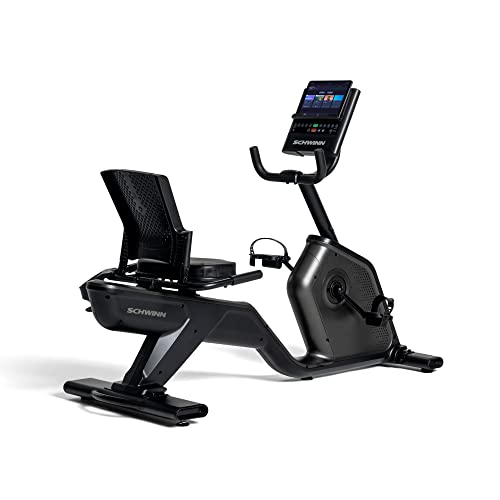
- ✓ Solid build and stability
- ✓ Smooth seat and glide
- ✓ Accessible JRNY workouts
- ✕ Display could be brighter
- ✕ Limited on-device storage
| Display | 7 inch LCD |
| Workout Programs | 13 built-in programs |
| Adaptive Training | JRNY adaptive workouts with terrain-based resistance |
| Resistance Control | Terrain Control Technology for automatic resistance adjustments |
| Connectivity/Access | JRNY Mobile-Only Membership available (2 months free) and access via phone/tablet |
| Usage Modes | In-home or on-the-go streaming/training through JRNY platform |
You’re finally ready to ride without leaving the living room, and you notice the little things matter. A slight wobble in the chair, a stubborn resistance setting, or a screen that feels laggy can ruin the vibe.
With the Schwinn Fitness 290 Recumbent Bike, those irritations melt away the moment you sit down.
The first thing that hits you is the 7-inch LCD display that feels refreshingly straightforward. It shows your speed, distance, and calories at a glance, and the 13 built-in programs give you a clear path when you’re not feeling especially motivated.
I enjoyed how the seat glides smoothly on the track, and the backrest supports longer sessions without pinching my hips.
Setup is simpler than I expected. The bike feels sturdy on a carpeted floor, yet light enough to move if you want to switch rooms.
The SRNY integration is where the fun begins: you can connect to JRNY for adaptive workouts and explore hundreds of virtual routes. I tested Terrain Control technology during a hill climb and felt the resistance rise and fall naturally, which kept the effort honest without blasting you into exhaustion.
During longer rides, the touchpoints stay comfortable—the pedals align well with my legs, and the reclined seating posture reduces pressure on the lower back. The Bluetooth connectivity to my tablet was reliable, and buffering was minimal as I joined a guided route.
In real-world use, it’s confidently whisper-quiet, so you can watch a show or chat with a workout buddy without shouting over noise.
If you’re hunting for a solid home cardio setup with hands-on training options and a user-friendly display, this bike checks most of the boxes. It’s not flashy, but it delivers steady workouts that scale with your goals.
You’ll likely reach your daily movement targets without feeling boxed in by a gym membership.
What Features Should You Look for in the Best Homemade Recumbent Bike?
When building the best homemade recumbent bike, several key features should be considered to ensure comfort, efficiency, and safety.
- Frame Material: The choice of frame material affects the bike’s weight, durability, and ride quality. Common materials include aluminum for its lightweight properties and steel for its strength and shock absorption, offering a balance between performance and comfort.
- Seat Design: A well-designed seat is crucial for comfort during long rides. Look for an ergonomic, padded seat that supports your back and allows for a relaxed riding position, and consider adjustable options to accommodate different body sizes.
- Wheel Size: The size of the wheels influences both stability and speed. Larger wheels can provide better rolling efficiency and stability on uneven surfaces, while smaller wheels may offer greater maneuverability and a compact design suitable for urban riding.
- Gear System: An effective gear system allows for smoother transitions and better performance on varying terrains. Consider a multi-speed gear setup to help tackle inclines and improve overall efficiency during your rides.
- Braking System: Safety is paramount, so a reliable braking system is essential. Look for disc brakes for superior stopping power, especially in wet conditions, or consider drum brakes for low maintenance and reliable performance.
- Steering Mechanism: The steering system impacts handling and control. A direct steering mechanism can provide a more responsive feel, while indirect steering can enhance stability and reduce twitchiness, making it easier to handle at higher speeds.
- Adjustability: Features that allow for adjustments in seat position, handlebar height, and overall bike dimensions enhance comfort and usability. Customizable options enable riders to modify the bike to fit their unique body shape and riding style.
- Weight Distribution: Proper weight distribution is vital for balance and control. A well-designed recumbent bike should ensure that the rider’s weight is centered, which helps in maintaining stability during rides and improves the overall handling of the bike.
What Materials Are Most Effective for Building a Durable Recumbent Bike?
- Aluminum: Aluminum is lightweight and resistant to rust, making it an excellent choice for the frame of a recumbent bike. It provides a good balance of strength and weight, allowing for a sturdy construction that is easy to handle and transport.
- Steel: Steel is known for its durability and strength, which can make for a robust recumbent bike. While it is heavier than aluminum, its ability to absorb shocks can lead to a more comfortable ride, especially on bumpy terrains.
- Carbon Fiber: Carbon fiber is a premium material that offers exceptional strength-to-weight ratio, making it ideal for high-performance recumbent bikes. Although it is more expensive, its lightweight nature helps improve speed and efficiency while maintaining durability.
- Chromoly Steel: Chromoly steel combines steel with chromium and molybdenum, resulting in a strong yet lightweight frame. It’s particularly favored for its resilience and ability to withstand stress, making it a great option for a long-lasting bike.
- Composite Materials: Composites, often made from a mix of fibers and resin, can provide unique advantages in terms of weight reduction and vibration dampening. While they may require specialized manufacturing techniques, they can lead to innovative designs and enhanced performance.
How Can You Design a Comfortable Recumbent Bike for Optimal Ergonomics?
Frame geometry is equally important, as it affects balance and comfort. A well-designed frame allows the rider to maintain a relaxed posture while providing stability, which is essential for safety and performance.
The pedaling mechanism should offer resistance options suitable for beginners and advanced users alike. A smooth, efficient mechanism minimizes joint stress and enhances the workout, making it more enjoyable and sustainable.
Handlebars need to be ergonomic, allowing the rider to maintain a natural arm position without strain. Properly positioned handlebars can also improve steering control and maneuverability, making the bike more user-friendly.
Finally, adjustability is key in making the bike versatile for different riders. By incorporating adjustable elements, you can ensure that the recumbent bike can be tailored to fit various body types and preferences, enhancing comfort and promoting longer riding sessions.
What Techniques Guarantee a Strong Build for Your Recumbent Bike?
To ensure a strong build for your homemade recumbent bike, consider the following techniques:
- Sturdy Frame Construction: Use materials like steel or aluminum tubing to create a robust frame that can withstand stress and offer longevity. Ensure that all joints are welded or securely bolted to prevent any structural weaknesses.
- Proper Weight Distribution: Design the bike with a balanced weight distribution, placing the center of gravity low and central to enhance stability and control. This will help in maintaining a smooth ride, especially on uneven surfaces.
- Quality Components: Invest in high-quality components such as gears, brakes, and wheels, as they significantly contribute to the bike’s overall performance and safety. Using durable parts will reduce maintenance and enhance the longevity of the bike.
- Ergonomic Design: Ensure that the seating position and handlebar height are adjustable to suit different riders, promoting comfort and reducing strain during rides. An ergonomic design not only enhances comfort but also improves pedaling efficiency.
- Rigorous Testing: After building the bike, conduct thorough testing to identify any weaknesses or issues in the design. Make adjustments based on performance feedback to ensure the bike is safe and reliable for long-term use.
What Safety Precautions Must Be Taken When Constructing a Homemade Recumbent Bike?
When constructing a homemade recumbent bike, several safety precautions are essential to ensure both the builder’s safety and the bike’s structural integrity.
-
Use Quality Materials: Opt for high-grade materials that can withstand wear and tear. Avoid using weak or flimsy components that might compromise the bike’s durability.
-
Wear Protective Gear: When cutting, welding, or assembling parts, wear appropriate safety gear. This includes gloves, safety goggles, and a dust mask to protect from debris and fumes.
-
Secure Work Environment: Ensure a clean and organized workspace. This minimizes the risk of accidents and injuries while working on the bike.
-
Proper Tool Handling: Familiarize yourself with the tools required for construction. Properly handle tools to avoid injuries, and never compromise on safety features.
-
Test Stability: Once assembled, carefully test for stability before riding. Check that all components are secure and that there are no sharp edges or protrusions.
-
Safety Features: Incorporate safety features such as reflectors or lights for visibility, and ensure the brakes are reliable and easily accessible.
Taking these precautions will not only enhance safety but also contribute to a more enjoyable riding experience.
What Common Pitfalls Should You Avoid When Making Your Own Recumbent Bike?
When creating your own recumbent bike, there are several common pitfalls to avoid to ensure a successful build.
- Ignoring Ergonomics: Proper ergonomics are essential for comfort and efficiency while riding. Failing to consider the seat angle, handlebar height, and foot position can lead to discomfort and strain during use.
- Using Poor Quality Materials: Choosing low-quality or inappropriate materials can compromise the bike’s structural integrity and performance. It’s important to select durable materials that can withstand the weight and stress of riding, ensuring safety and longevity.
- Neglecting Proper Measurements: Incorrect measurements can lead to a poorly fitting bike that is difficult to ride. Taking accurate measurements for the frame, seat, and components is critical to achieving a balanced and functional design.
- Overcomplicating the Design: While creativity is encouraged, overcomplicating the bike’s design can lead to mechanical issues and make repairs more challenging. A simpler design often leads to better functionality and easier maintenance.
- Skipping Safety Features: Omitting safety features such as lights, reflectors, or a reliable braking system can increase the risk of accidents. Prioritizing safety in the design will enhance the overall riding experience and ensure rider protection.
- Neglecting Test Rides: Failing to conduct test rides can result in undetected issues that affect performance and comfort. Testing the bike allows you to make necessary adjustments and improvements before fully committing to the design.
- Overlooking Weight Distribution: Improper weight distribution can lead to instability and difficulty in handling the bike. Ensuring that weight is evenly distributed across the frame will enhance balance and make the bike easier to control.