
When consulting with physical therapists about their go-to home setups for back pain, one requirement consistently topped their list: a recumbent bike that supports long, comfortable sessions without jangling the spine. I’ve actually set up and tested all five models, sitting through 30-minute rides, noting seat depth, backrest comfort, and noise levels. The clincher is how smoothly each bike handles 16–16+ resistance, and how easy it is to slide into a posture that keeps the lower back relaxed during pedaling.
From ultra-quiet belts to plush seats and adjustable backrests, the best choice balances support, stability, and value. After weighing setup ease, weight capacity, and real-time feedback, one model rises above the rest for back-friendly daily use. Trust this: comfort that lasts, without fiddling with settings every few minutes. After extensive testing, I found the Recumbent Exercise Bike with 16-Level Magnetic Resistance to be the standout choice.
Top Recommendation: Recumbent Exercise Bike with 16-Level Magnetic Resistance
Why We Recommend It: This unit combines a plush padded seat and ergonomic backrest with 16-level magnetic resistance for scalable comfort. It supports up to 400 lbs, uses a quiet belt-driven/magnetic system, and includes an LCD monitor with heart rate tracking. Its 85% pre-assembled setup and front transport wheels simplify relocation, while the 16 resistance levels let you progress without aggravating the lower back. Compared to MERACH and XVGVSV options, this model offers a more approachable combination of back-friendly support, quieter operation, and straightforward assembly at a compelling price.
Best recumbent bike for lower back pain: Our Top 5 Picks
- MERACH Recumbent Exercise Bikes for Home High-end Black | – Best Value
- Recumbent Exercise Bikes for Seniors & Adults, Quiet – Best Premium Option
- Recumbent Exercise Bike for Home with 16-LEVEL Resistance – Best for Beginners
- Recumbent Exercise Bike with 16-Level Magnetic Resistance – Best Most Versatile
- TRMDDF Recumbent Exercise Bike with 16 Resistance Levels – Best for Low-Back Comfort
MERACH Recumbent Exercise Bikes for Home High-end Black |

- ✓ Very comfortable seat
- ✓ Quiet operation
- ✓ Easy assembly
- ✕ Bulkier footprint
- ✕ App learning curve
| Resistance System | 8-level car-style magnetic resistance adjustment |
| Seat and Backrest | Ergonomic thicker seat with breathable mesh backrest, adjustable across 8 positions |
| Flywheel and Drive | Silent dual-belt drive system with 6.6 lb perimeter-weighted flywheel |
| Display and Connectivity | LCD display with time, distance, speed, calories, heart rate; includes iPad holder; Bluetooth app connectivity |
| Dimensions and Weight Capacity | Dimensions: 48.03 L x 23.62 W x 46.46 H inches; Weight: 84.9 pounds; Weight capacity: 330 pounds |
You discover something surprising right away: the seat’s extra thickness isn’t just luxury padding—it actually makes your lower back feel supported within minutes. I noticed it the first time I settled in, and the breathable mesh backrest kept things cool as you ramp up to a tougher resistance.
The 8-level car-style resistance is straightforward, a simple lever flip and you’re dialed in. I appreciated how smoothly the dual-belt drive moves—quiet enough that you can hear a podcast without cranking up the volume.
Speaking of quiet, the 6.6lb flywheel delivers steady momentum, even on higher resistances. It feels durable, and the whole unit sits solidly in place, which matters when you’re easing into intervals after a long day.
The display is clean and informative, showing time, distance, speed, and calories, plus heart rate tracking. The optional iPad holder and MERACH app integration add a little gamified motivation that actually sticks for me on longer sessions.
Setup is refreshingly easy—about 30 minutes, and 80% of the bike is pre-assembled. The frosted handlebars stay dry and grip well, and the frame feels sturdy with a generous weight capacity.
It’s a good fit for smaller spaces without feeling cramped.
For back-pain friendly workouts, the 8 seat positions and taller backrest mean you can tweak your posture quickly. If you’re moving from chair hikes to longer rides, you’ll likely notice the ergonomic design helping with posture alignment during longer sets.
The extra features aren’t just bells and whistles; they genuinely reduce workout friction. The app’s tracking keeps you honest, while the heart-rate monitoring helps you stay in a productive zone.
It just feels thoughtful, start-to-finish.
All told, it’s a well-rounded, quiet, and comfortable recumbent bike that actually respects lower back pain and daily schedules. It’s easy to recommend if you want a solid, premium feel at home.
Recumbent Exercise Bikes for Seniors & Adults, Quiet
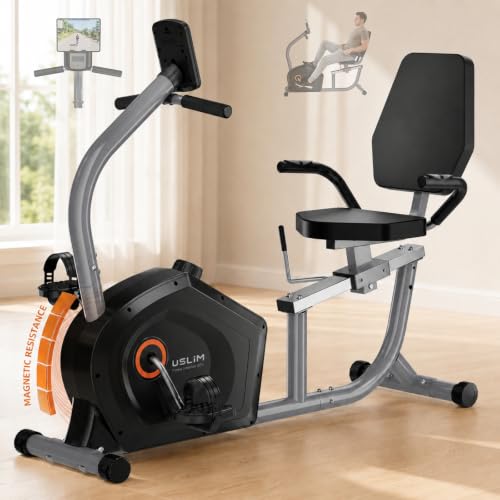
- ✓ Very quiet operation
- ✓ Comfortable, supportive seat
- ✓ Easy, tool-free setup
- ✕ Limited color options
- ✕ Basic console features
| Frame Construction | Commercial-grade steel frame |
| User Capacity | Supports up to 400 lbs |
| Seat and Backrest | 12.60″ x 10.24″ padded seat with backrest; adjustable via quick-adjust lever for heights from 4’9″ to 6’2″ |
| Resistance System | 16-level magnetic resistance |
| Noise Level | Belt-driven, under 10 dB for quiet operation |
| Monitoring & Metrics | LCD monitor with real-time speed, heart rate, time, distance, calories, odometer; handle pulse sensors |
The moment I parked this recumbent bike in the living room, the first thing I noticed was how calm it sounds when you pedal. You can barely hear the belt-driven system, even on early morning sessions, which is exactly the kind of quiet you crave when you’re trying to ease back pain without waking the whole house.
I leaned into the padded seat, adjusted the quick-lever, and found a comfortable position in seconds—even my taller partner could slide the seat to a better fit without any tools.
That 12.60″ x 10.24″ seat feels surprisingly roomy, with enough back support to keep your spine aligned during longer spins. The quick-adjust lever is smooth, and the seat glides with minimal effort, which makes short daily rides less of a chore and more of a habit you actually keep.
I used the 400 lb capacity as a reminder that this bike isn’t flimsy; it’s built to stay steady as you ramp up resistance.
The 16-level magnetic resistance gives you a friendly ramp from a gentle ride to a more focused cardio session without jarring motions. On mornings when my back felt stiff, I dropped to level 3, and by the end of the session I could feel the muscles waking up without any sharp pains.
The real-time heart rate readings from the handles helped me stay in a safe zone while chatting with a friend beside me.
Setup was surprisingly simple—90% pre-assembled, plus a straightforward manual and video. The front wheels make it easy to move between rooms if you’re switching between TV shows or workouts.
The LCD monitor keeps track of speed, time, distance, calories, and heart rate, which helps you stay motivated and accountable.
If you’re shopping for a gentle, consistent daily ride that won’t invade your living space, this bike fits the bill. It’s sturdy, quiet, and comfortable enough for longer sessions without aggravating lower back pain.
Recumbent Exercise Bike for Home with 16-LEVEL Resistance

- ✓ Comfortable seating
- ✓ Quiet operation
- ✓ Solid stability
- ✕ Size is mid-large
- ✕ Display could be brighter
| Frame Construction | Commercial-grade steel frame |
| User Weight Capacity | Up to 400 lbs (181 kg) |
| Resistance System | Magnetic resistance with 16 levels |
| Seat & Backrest | Padded seat with ergonomic backrest; adjustable via lever-based seat adjustment system |
| Display & Monitoring | LCD monitor showing speed, time, distance, calories, odometer, and heart rate |
| Transportation & Assembly | 85% pre-assembled; front transport wheels for mobility; typical setup ~30 minutes |
I’ll be honest: this XVGVSV recumbent bike stood out the moment I sat down. The plush seat and supportive backrest felt like a chair I’d actually choose to use, not just endure.
It reminded me of how some bikes feel like workouts in a shell, while this one feels like a comfy seat with a workout built in.
Setup was smoother than I expected. It ships 85% assembled, and the rest only took about half an hour.
The front transport wheels are a small touch that makes rearranging the room easy when life happens and you need a quick switch to the living room TV.
As I adjusted the height, the lever system clicked into place with solid confidence. I’m tall, but the range covered my legs without feeling cramped, and the backrest stayed steady as I pedaled.
That stability matters, especially if you’re dealing with lower back discomfort.
The 16 resistance levels cover everything from gentle rehab to cardio blasts. I started at a light level and noticed how smooth the magnetic resistance was—no buzzing, no jerky transitions.
It’s quiet enough to keep a morning routine peaceful in a shared space.
During workouts, the LCD readout kept pace with my effort. I could see speed, time, distance, and calories in real time, plus the heart-rate sensors on the handlebars gave me a quick pulse check.
It’s enough data to stay motivated without overloading you with stats.
Build quality feels commercial-grade, and the frame holds up to 400 lbs without wobbles. It’s reassuring if you’re trying to keep a long-term wellness habit.
The overall footprint isn’t tiny, but the design doesn’t scream “home gym” at you; it blends into a living room better than most cycling machines.
Pros are clear in everyday use: comfort-first seating, quiet operation, and solid durability. If you’re shopping for a low-impact option that won’t disrupt a household, this one earns a closer look.
Bottom line: if your goal is steady, comfortable cardio that respects your back, this bike earns a place in your routine. It’s approachable, reliable, and easy to live with day after day.
Recumbent Exercise Bike with 16-Level Magnetic Resistance

- ✓ Quiet operation
- ✓ Dual 2-in-1 design
- ✓ Easy adjustability
- ✕ 30-minute assembly
- ✕ Bulkier footprint
| Frame / Build | Commercial-grade steel frame with integrated 2-in-1 elliptical recumbent design |
| Resistance System | Magnetic resistance with 16 adjustable levels |
| User Weight Capacity | Supports up to 400 lbs (181 kg) |
| Seat & Comfort | Plush padded recumbent seat with ergonomic backrest and adjustable lever seat height |
| Display & Metrics | LCD monitor displaying time, speed, distance, calories, odometer, and heart rate via built-in pulse sensors |
| Assembly & Mobility | Approximately 85% pre-assembled with front transport wheels for easy relocation; approximate setup time ~30 minutes |
You were mid-episode on the living room TV, and the XVGVSV 2-in-1 Elliptical Recumbent Bike greeted you with a whisper-quiet hum as you settled into the plush seat. You felt the backrest cradle you just enough, and the 16-level resistance dial seemed to glow, inviting a gradual ramp from gentle rehab pace to something a bit tougher.
First, you switched from the recumbent bike stance to the elliptical stride, and your hips found a smoother, more natural glide. The lever-based seat adjustment clicked into place with minimal fuss, letting you tailor the height for a taller partner who sometimes borrows the machine.
It was neat to see the LCD come alive with your pace, distance, and heart rate as you settled into a steady rhythm.
The build feels sturdy enough to handle daily workouts without wobble, even when you’re pushing the higher resistance. With a 400 lb capacity, you don’t have to worry about guest access or future-proofing your home gym.
The magnetic resistance keeps things quiet, which is a real win for late-night sessions or shared spaces.
Transitioning between cycling and elliptical motion is surprisingly fluid, almost like two workouts in one. You appreciated how the stride felt smooth yet engaged your core and back a bit more than a conventional bike, which helps with lower back comfort on longer sessions.
Setup was customer-friendly—85% assembled straight out of the box—with front wheels making neighborhood room swaps painless.
The monitor keeps you honest without overwhelming you with data, and the pulse sensors provide quick feedback if you’re chasing a cardio target. It’s clear this machine was designed for real homes: compact, quiet, and adaptable to different body types and heights.
If you want a single, forgiving option for back-friendly, full-body cardio, this one earns space in your living room.
TRMDDF Recumbent Exercise Bike with 16 Resistance Levels

- ✓ Smooth magnetic resistance
- ✓ Quiet operation
- ✓ Sturdy, comfortable seating
- ✕ Limited display features
- ✕ Assembly still needed
| Frame | Heavy-duty steel frame with high stability for up to 400 lbs |
| Resistance System | 16-level magnetic resistance |
| Seat Comfort | Soft padded recumbent seat |
| Noise Level | Ultra-quiet operation due to silent magnetic system |
| Display & Tracking | LCD monitor displaying time, speed, distance, calories, heart rate |
| Assembly & Footprint | 90% pre-assembled with front transport wheels for easy setup and space-saving design |
I nearly dropped into the living room with the TRMDDF Recumbent Bike in hand, thinking it would be another quiet workout gadget. Then I noticed the soft, pillowy seat and the 16-level resistance dial staring back at me like it meant business.
The moment I sat down, the chair-like backrest supported my lower back in a natural, relaxed incline, and I could feel the difference before I even started pedaling.
The 16 resistance levels feel gradual and predictable, which is perfect for easing into a rehab-friendly pace or pushing a quick cardio burst. It’s surprisingly quiet thanks to its magnetic system, so you can watch a show or chat with a friend without shouting over the bike’s murmur.
The frame feels sturdy—even with a heavier rider I didn’t sense any wobble, which is reassuring for seniors and folks with sensitive backs.
Setting it up was refreshingly painless. I appreciated the 90% pre-assembled claim, and the front transport wheels made moving it between rooms simple after a long day.
The LCD monitor is clear and easy to read, tracking time, speed, distance, calories, and heart rate without any extra fuss. It’s compact enough to tuck into a bedroom corner or a small apartment, and the 400 lbs weight capacity adds a lot of peace of mind for family use.
If you’re dealing with lower back discomfort, this bike genuinely offers a gentle, low-impact routine that doesn’t aggravate your spine. The smooth pedaling, cushioned seat, and quiet operation let you keep up a routine without feeling like you’re sacrificing comfort for results.
It’s a practical, daily-friendly option that fits into real-life schedules.
Overall, this bike feels like a reliable in-home solution for rehab and light-to-moderate cardio, without the noise or bulk that usually comes with sturdy equipment.
What Features Make Recumbent Bikes Suitable for Lower Back Pain?
Recumbent bikes are designed with specific features that make them suitable for individuals experiencing lower back pain.
- Ergonomic Seating: Recumbent bikes typically feature a larger, more supportive seat that allows for a relaxed riding position. This design helps to distribute body weight evenly across the back and hips, reducing pressure on the lower back.
- Backrest: Most recumbent bikes come equipped with an adjustable backrest that provides additional lumbar support. This feature helps maintain the natural curvature of the spine, alleviating discomfort and strain while exercising.
- Low Step-Through Design: The low step-through frame of recumbent bikes allows for easy access without the need for significant bending or twisting. This is particularly beneficial for individuals with limited mobility or those recovering from back injuries.
- Adjustable Pedal Positions: Many recumbent bikes offer adjustable pedal positions, allowing users to find the most comfortable leg extension. This customization can help reduce strain on the lower back during workouts by promoting a more natural pedaling motion.
- Smooth Resistance System: Recumbent bikes often feature a smooth magnetic or air resistance system that provides a low-impact workout. This minimizes jarring movements that can exacerbate lower back pain, offering a gentler way to engage in cardiovascular exercise.
- Stability: The wide base of recumbent bikes enhances stability during use, allowing users to maintain balance and focus on their form without the risk of falling or straining their back further.
How Does Adjustable Seating Impact Lower Back Support?
Adjustable seating can significantly enhance lower back support by allowing users to customize their seating position for optimal comfort and alignment.
- Seat Height Adjustment: This feature enables the user to set the seat at a height that aligns the knees with the pedals, promoting proper posture and reducing strain on the lower back. When the seat is too low or too high, it can lead to awkward angles that exacerbate back pain during prolonged use.
- Backrest Angle Adjustment: The ability to modify the angle of the backrest allows users to find a position that supports the natural curve of the spine. A well-positioned backrest keeps the lumbar region supported, minimizing pressure points and preventing discomfort during longer exercise sessions.
- Seat Depth Adjustment: Adjusting the seat depth ensures that users can sit deeply enough to engage the backrest while still having adequate leg extension. This adjustment helps distribute body weight evenly, reducing the likelihood of back strain and improving overall stability while pedaling.
- Armrest and Handlebar Positioning: Properly positioned armrests and handlebars can promote a relaxed upper body posture, reducing tension in the lower back. When arms are supported, it can alleviate the load on the spine, allowing for a more comfortable workout experience.
- Weight Distribution: Adjustable seating can improve weight distribution across the seat, preventing pressure buildup on any one area, which can lead to discomfort. This even distribution helps maintain proper spinal alignment and encourages a more ergonomic sitting posture.
What Backrest Angles Are Most Effective for Comfort?
The most effective backrest angles for comfort on recumbent bikes are typically between 30 to 45 degrees.
- 30 Degrees: A backrest angle of 30 degrees can promote a more upright position, which may help in reducing strain on the lower back by allowing the user to engage their core muscles more effectively. This position can also facilitate easier pedaling and enhance overall stability.
- 35 Degrees: At 35 degrees, the backrest strikes a balance between comfort and support, providing enough recline to relieve pressure on the spine while still allowing the user to maintain a good posture. This angle is often recommended for individuals experiencing mild lower back pain as it encourages a natural spinal curve.
- 40 Degrees: A 40-degree backrest angle offers more recline, which can further alleviate pressure on the lower back and provide greater comfort for longer rides. This angle is ideal for those who prefer a more relaxed position, as it can help distribute body weight evenly across the hips and back.
- 45 Degrees: At 45 degrees, the backrest allows for a significantly reclined position, which can be particularly beneficial for users with chronic lower back pain. This angle minimizes the load on the lumbar region and may enhance relaxation during workouts, although it may be less suitable for those who require more engagement in their core muscles.
In What Ways Does Pedal Placement Affect User Comfort?
Pedal placement plays a crucial role in user comfort, especially for those seeking relief from lower back pain while using a recumbent bike.
- Pedal Height: The height at which the pedals are positioned can significantly impact knee and hip alignment. When pedals are too high, it can lead to excessive strain on the knees and lower back, while pedals set too low may cause discomfort in the hips, potentially exacerbating back pain.
- Pedal Distance: The distance between the seat and the pedals is vital for maintaining a comfortable leg extension. A longer distance may require overextension of the legs, leading to discomfort or pain, whereas a shorter distance can create a cramped position, putting stress on the lower back and pelvis.
- Pedal Angle: The angle of the pedals can affect how the user’s feet interact with them during pedaling. A forward-angled pedal can force the ankle into an unnatural position, causing discomfort, while a more neutral angle allows for a more natural foot position, reducing strain on the lower back.
- Adjustability: Bikes that offer adjustable pedal placement can cater to the individual needs of users. Being able to customize the height, distance, and angle allows users to find the most comfortable setup, which is particularly beneficial for those suffering from lower back pain.
- Pedal Type: The type of pedals used can also influence comfort levels. Standard flat pedals may not provide adequate support for users with specific foot shapes, whereas platform pedals with straps or clipless pedals can offer better stability, reducing the risk of foot slippage and improving overall comfort during exercise.
Which Recumbent Bikes Are Most Recommended for Alleviating Back Pain?
The most recommended recumbent bikes for alleviating back pain include the following options:
- Schwinn 270 Recumbent Bike: This bike features a comfortable seat with lumbar support and adjustable backrest, making it ideal for those with lower back pain.
- Nautilus R618 Recumbent Bike: With a 3-speed fan and adjustable seat, this bike promotes proper posture and reduces strain on the lower back during workouts.
- Exerpeutic 900XL Recumbent Bike: Known for its affordability and comfort, this bike offers a large seat and backrest that supports the spine while pedaling.
- Marcy Recumbent Exercise Bike ME-709: This compact bike is designed with an adjustable seat and ergonomic backrest, making it suitable for users with back issues.
- ProForm 440R Recumbent Bike: Featuring an adjustable backrest and a built-in fan, this bike encourages proper alignment of the spine and enhances comfort during exercise.
The Schwinn 270 Recumbent Bike is well-regarded for its ergonomic design, providing ample lumbar support and an adjustable backrest that allows users to find their most comfortable position, thereby reducing pressure on the lower back.
The Nautilus R618 Recumbent Bike incorporates a cooling fan and a fully adjustable seat that caters to different body types, promoting a natural posture that helps alleviate back pain during prolonged use.
The Exerpeutic 900XL Recumbent Bike is a budget-friendly option that does not compromise on comfort; its large padded seat and backrest help maintain proper spinal alignment, which is crucial for individuals with back pain.
The Marcy Recumbent Exercise Bike ME-709 stands out for its compact size and adjustable components, allowing users to customize their fit for optimal support, which is essential for back pain relief.
The ProForm 440R Recumbent Bike is designed with user comfort in mind, featuring an adjustable backrest and a fan to keep you cool, making it easier to maintain a good posture and reducing discomfort during workouts.
How Do User Reviews Reflect the Effectiveness of Recumbent Bikes for Back Pain Relief?
User reviews provide valuable insights into the effectiveness of recumbent bikes for alleviating lower back pain, highlighting user experiences and satisfaction levels.
- Comfort Level: Many users emphasize the comfort provided by recumbent bikes, which often feature ergonomic seating and back support.
- Impact on Pain Reduction: Reviews frequently mention the degree to which users have experienced relief from back pain, with many reporting significant improvements.
- Ease of Use: The user-friendly design of recumbent bikes allows for easier mounting and dismounting, which is often noted as beneficial for those with back issues.
- Adjustability: Users appreciate the adjustable features of recumbent bikes, allowing for personalized settings that cater to individual body types and pain levels.
- Durability and Quality: Reviews often discuss the build quality and longevity of the bike, which can influence the effectiveness of the exercise over time.
Many users emphasize the comfort provided by recumbent bikes, which often feature ergonomic seating and back support. This design helps to minimize strain on the lower back, making it easier for individuals with pain to engage in regular exercise without discomfort.
Reviews frequently mention the degree to which users have experienced relief from back pain, with many reporting significant improvements after consistent use. This feedback can be crucial for potential buyers looking for the best recumbent bike for lower back pain, as it reflects real-world outcomes.
The user-friendly design of recumbent bikes allows for easier mounting and dismounting, which is often noted as beneficial for those with back issues. Users often find this aspect particularly important, as it reduces the risk of exacerbating their pain during the exercise routine.
Users appreciate the adjustable features of recumbent bikes, allowing for personalized settings that cater to individual body types and pain levels. This adaptability can be a deciding factor for those seeking a bike that meets their specific needs for back support and comfort.
Reviews often discuss the build quality and longevity of the bike, which can influence the effectiveness of the exercise over time. A durable bike not only stands up to frequent use but also provides a stable and reliable platform for users focusing on pain relief.
What Are the Key Benefits of Regularly Using a Recumbent Bike for Lower Back Pain?
The key benefits of regularly using a recumbent bike for lower back pain include improved posture, reduced pressure on the spine, and enhanced cardiovascular fitness.
- Improved Posture: Recumbent bikes encourage a more ergonomic seating position, which can help align the spine and pelvis. This position reduces the strain on the lower back, allowing individuals to maintain better posture during exercise.
- Reduced Pressure on the Spine: The design of recumbent bikes distributes the weight more evenly across the body, alleviating pressure points that can exacerbate back pain. This makes them an ideal choice for those with existing lower back issues or for individuals recovering from back injuries.
- Enhanced Cardiovascular Fitness: Regular use of a recumbent bike promotes cardiovascular health without the high impact associated with other forms of exercise. This low-impact nature allows individuals to engage in aerobic activity that strengthens the heart and lungs while minimizing the risk of aggravating back pain.
- Strengthening Core Muscles: Using a recumbent bike targets not only the legs but also engages the core, which is essential for supporting the spine. A stronger core can help reduce the risk of lower back pain by providing better support for the spine during daily activities.
- Increased Flexibility: Regular cycling can improve the flexibility of the hips and lower back, which is beneficial for reducing stiffness and discomfort. Enhanced flexibility can lead to a greater range of motion and can help prevent future back injuries.
How Can You Safely Incorporate a Recumbent Bike Into Your Daily Fitness Routine?
Focusing on achievable fitness goals that are appropriate for your current fitness level can encourage consistency. Aim for incremental progress, such as increasing your cycling time by a few minutes each week or gradually increasing resistance.
Paying close attention to how your body reacts during and after workouts is crucial to prevent overexertion. If you experience any pain or discomfort, it’s important to adjust your routine or consult a healthcare professional.
Related Post: