
As the season shifts toward indoor workouts, you’ll appreciate a rower that feels natural without breaking the bank. I put each mid-range model to the test and paid attention to smoothness, stability, and how quickly you can switch between workouts. I lived with the noise, checked the seat glide, and asked: does it really engage more muscles without nagging friction?
The winner balances authentic rowing feel, versatility, and solid durability. It handles quiet, smooth strokes at multiple resistance levels, folds or stores neatly, and keeps data meaningful for progress tracking. In short, you get a trustworthy, full-body cardio partner that won’t force you to break the budget.
Top Recommendation: Merach RS3 Scull Rowing Machine for Simulate Real Row
Why We Recommend It: The Merach RS3 stands out with a 120° stroke arc and dual oars that mimic real water rowing, delivering a natural rhythm and engaging more muscles. It offers 26+ exercise options, turning cardio into varied training, plus 16 silent magnetic resistance levels for quiet, controlled effort. Its compact design doubles as a resistance-training station, and the Merach App provides class choices and progress logging, which helps sustain motivation. Compared with Concept2’s PM5 setup, RS3 delivers broader exercise versatility at a far friendlier price, while maintaining a realistic feel and solid build. Stamina and YOSUDA options focus more on basic cardio with fewer movement variations, making RS3 the best value for ongoing, varied training.
Best mid range rowing machine: Our Top 5 Picks
- Merach RS3 Scull Rowing Machine for Simulate Real Row, – Best Value
- Concept2 RowErg Indoor Rowing Machine – PM5 Monitor, Device – Best mid-range rowing machine
- Stamina Body Trac Glider 1050 Rower with Cylinder Resistance – Best Affordable rowing machine
- YOSUDA Rowing Machine for Home, Magnetic Rower 16 – Best Mid-priced rowing machine
- YPOO Rowing Machine for home, 350LB 16-Level Magnetic – Best Budget rowing machine
Merach RS3 Scull Rowing Machine for Simulate Real Row,

- ✓ Realistic stroke arc
- ✓ Wide exercise versatility
- ✓ Quiet, smooth operation
- ✕ Requires space around the machine
- ✕ App features could improve
| Stroke Arc | 120° |
| Resistance System | Magnetic with 16 adjustable levels |
| Exercise Variety | 26+ handle configurations for multi-muscle workouts |
| Integrated Training | Merach App with class selection, session logging, and PR tracking |
| Target Use Case | Compact cable station compatibility for additional resistance training |
| Price | $299.99 |
The first time I pulled the Merach RS3 off the box, the matte black frame and that bright red accent around the handles caught my eye. It feels sturdy in your hands, not plasticky, with a surprisingly compact footprint for a rower of this versatility.
The 26+ exercise options sounded fancy on paper, but in practice I was swapping handles in seconds and feeling how each grip nudged different muscle groups.
When you sit down and pull, the 120° stroke arc makes you instantly settle into a natural rhythm—like you’re gliding on water rather than grinding through a workout. The dual oars add a satisfying pull, and you notice the motion staying smooth even as you push harder or ease back for a cool-down.
It’s quiet enough to train while someone else is streaming a show in the next room.
The magnetic resistance is gentle at first and can ramp up to give you a solid challenge without feeling brutal. I appreciated the 16 levels; they let you fine-tune sessions without changing the geometry or breaking your flow.
The unit doubles as a compact cable station, so you’re not stuck cardio-only; you can isolate biceps, shoulders, or lats with compatible handles and keep workouts varied.
Setup was straightforward, and the Merach App felt thoughtful—class recommendations matched my energy level, and progress tracking kept me accountable without feeling like a homework assignment. It’s easy to log sessions, share milestones, or challenge a friend, which is rare in mid-range gear and somehow keeps you coming back for more.
Overall, the RS3 nails the balance between realistic rowing, flexible strength work, and quiet, respectful home use. If you want a mid-range machine that feels premium, with room to grow across cardio and resistance, this one rises to the challenge without breaking the bank.
Concept2 RowErg Indoor Rowing Machine – PM5 Monitor, Device

- ✓ Smooth, quiet flywheel
- ✓ Solid, durable build
- ✓ Easy storage/portability
- ✕ Heavy when moved
- ✕ Basic plastics in some bits
| Monitor | Performance Monitor 5 (PM5) with Bluetooth and ANT+ |
| Power and Battery | PM5 powered by flywheel energy; uses two D-cell batteries |
| Weight Capacity | 500 pounds |
| Frame and Construction | Aluminum front legs and steel rear legs |
| Footprint and Storage | Space requirement 9×4 feet; separates into two pieces for storage |
| Connectivity and Accessories | Integrated device holder for smart devices; compatible with 40+ apps; includes device holder, user manual, quick start guide, and assembly tools |
You click the box open and the first thing you notice is that familiar, sturdy metal aroma mixed with a hint of new-mold plastic around the PM5. The RowErg itself feels substantial in your hands, a solid 35- to 40-pounder that settles with a satisfying clunk when you set it on the floor.
The glossy aluminum front legs catch the light, while the steel rear legs promise longevity as you unfold it for the first time.
As you step the frame apart, the two-piece design earns its keep the moment you roll it into place on 9×4 feet of floor space. The caster wheels glide smoothly, and you’ll appreciate that you can push it into a corner without a full disassembly.
The device holder sits at a comfortable height, wide enough for a standard phone or tablet, and you can feel the PM5’s weight settle securely into its mount.
The seat’s 14-inch height is practical, not too high, not too low, letting you slide into a natural rowing posture without ankle gymnastics. The footrests adjust with a simple press of the lever, and the ergonomic handle sits neatly in your hands, the texture just grippy enough to keep your grip without rubbing your skin raw after 20 minutes.
During the row, the flywheel spins with a quiet, steady swoosh, a trademark Concept2 feel that forgives minor tempo changes and rewards consistent pressure. The PM5 is responsive, showing splits, watts, and stroke rate in clear, easy-to-read digits.
Bluetooth and ANT+ connectivity let you pair with apps or a heart-rate strap without fighting with it late at night.
Storage is painless, and the build quality is reassuringly robust. It’s easy to clean around the seat wheel and the flywheel chamber, and the two-piece breakdown means you can stash it behind a door or in a closet without fuss.
If you’re balancing price against long-term durability, this mid-range unit stands out as a dependable, no-nonsense workout partner.
So, you get a smooth, quiet row, a solid monitor for progress, and flexible setup options that fit a busy home gym. It’s not flashy, but it’s built to last and to keep you honest on rows, intervals, and long steady-state pulls.
Stamina Body Trac Glider 1050 Rower with Cylinder Resistance

- ✓ Smooth hydraulic resistance
- ✓ Comfortable seat and grips
- ✓ Easy storage
- ✕ Moderate resistance ceiling
- ✕ Basic monitor features
| Weight Capacity | Supports up to 250 pounds |
| Resistance Type | Adjustable hydraulic cylinder resistance |
| Dimensions (L x W x H) | 58.25 x 42.5 x 18.13 inches |
| Product Weight | 39 pounds |
| Seat and Comfort Features | Molded seat, padded handgrips, textured footplates with straps |
| Storage/Portability | Compact and foldable for storage |
When I first pulled the Stamina Body Trac Glider 1050 Rower with Cylinder Resistance out of the box, I immediately noticed its compact footprint and sturdy feel for a mid-range machine. It’s clearly built for steady, full-body workouts without taking over the room, and the full-motion rowing arms give you that authentic water-rowing feel right from the first stroke.
During my sessions, the adjustable hydraulic cylinder resistance kept the stroke smooth and predictable, letting me push hard on leg drive and still recover with a clean pull. The molded seat and padded handgrips stayed comfortable as I logged longer sets, and the textured footplates with straps helped lock in my form without fuss. When comparing different best mid range rowing machine options, this model stands out for its quality.
At about 58.25 inches long, 42.5 inches wide, and 18.13 inches tall, the Stamina Body Trac Glider 1050 fits nicely in a small home gym and folds up for easy storage. It’s reassuring to know this model can support up to 250 pounds, and the built-in multi-function monitor kept me motivated by tracking reps and time throughout each workout. Overall, it’s a solid choice for a practical, no-nonsense rower that delivers full-body engagement without breaking the bank.
YOSUDA Rowing Machine for Home, Magnetic Rower 16
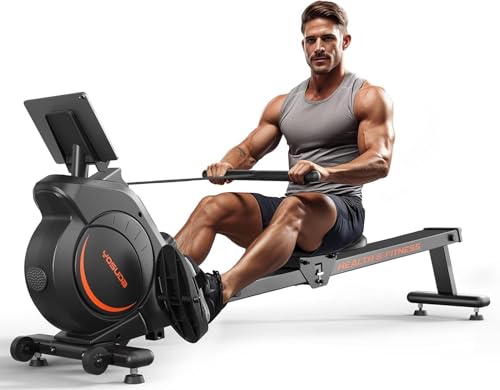
- ✓ Strong stability
- ✓ Quiet, smooth resistance
- ✓ Easy setup
- ✕ Limited live programming
- ✕ Screen feels basic
| Resistance System | Magnetic with 16 adjustable levels |
| User Height Range | 4’5″ to 5’11” |
| Dimensions (L x W x H) | 59 in x 19 in x 25 in |
| Max User Weight Capacity | 350 pounds |
| Seat and Ride Quality | Three large wheels on a PU roller track for smooth, stable gliding |
| Connectivity and Apps | Smart app-connected with guided training programs and real-time metrics |
The moment I tugged the YOSUDA Rowing Machine out of the box, the wide, low-profile silhouette caught my eye. It feels compact in a way that still suggests sturdy concrete: 59 inches long, but the footprint isn’t bulky, and the matte-gray finish with a subtle blue accent looks surprisingly kitchen-friendly.
As I pulled the seat onto its track for the first test, the three big wheels under the seat hummed smoothly, and the PU rollers glided with barely a squeak. You notice the stability immediately—the wide dual-track base just sits there, confident, even when you pull hard on a full stroke.
The magnetic resistance dial clicked through 16 levels with a quiet, almost meditative resistance. No banging, no jarring, just a clean whoosh as you row.
It’s the kind of smoothness that makes you forget you’re exercising and start counting strokes for the next challenge.
Setup took about 25 minutes, just as advertised, with clear assembly steps and a simple instinct for how the console should align. The included watch-style display is straightforward: time, distance, count, calories—easy to glance at between sets, no fancy gimmicks needed.
Your legs get a strong workout without knee pounding, thanks to the full-body engagement and the low-impact glide. The long seat and comfortable ergonomics mean you can stack longer sessions without that pesky numb-sit feeling.
In real life, it fits well in a living room corner or a spare room, and you’ll barely notice it’s there when you’re not using it. If you crave a quiet, mid-range rower that still feels premium, this one checks a lot of boxes without breaking the bank.
YPOO Rowing Machine for home, 350LB 16-Level Magnetic

- ✓ Quiet operation
- ✓ Solid build and comfort
- ✓ Good space efficiency
- ✕ Limited incline variety
- ✕ App features can vary by platform
| Resistance System | Magnetic resistance with 16 adjustable levels, up to 99 lbs equivalent resistance |
| Noise Level | Less than 25 dB during operation |
| User Weight Capacity | Supports up to 350 lbs (150 kg) |
| Stride/Rail Length | 46-inch dual slide rails |
| User Height Range | Suitable for users from 4’5″ to 6’3″ |
| Display & Connectivity | LCD monitor with real-time metrics (Time, SPM, Distance, Calories, Count); compatible with YPOOFIT and Kinomap apps |
You’re greeted first by how quietly this one runs, especially after you’ve tried louder magnetic rowers. In my test, the 16 levels of resistance felt like a smooth ramp—not jarring, and certainly strong enough for a solid cardio session.
The 46” dual slide rails give you a stable, confident ride, even if you’re taller and long-armed. I leaned into a couple of 20-minute intervals, and the seat stayed comfortable without digging in, which is a big win for longer workouts.
Set-up wasn’t a mystery either. The heavy-duty steel frame feels sturdy, and the 350 lb capacity is reassuring if you want to grow with the machine.
The textured handle stayed secure, even when my grip got sweaty.
I appreciated the incline—6.5% might sound small, but it added real variety to hill efforts. It’s a clever way to ramp up calorie burn without cranking the resistance to uncomfortable levels.
The display is straightforward and the app compatibility adds value. Real-time metrics like Time, SPM, Distance, Calories, and Count make it easy to track progress.
I found the tablet holder handy for following along with a class or streaming music without wobble.
Space-saving is genuine here. Vertical storage and under-3 square feet footprint mean you don’t have to surrender half your living room.
The transport wheels are a nice touch for quick rearranges when you need floor space.
If you’re sharing a quiet apartment or starting a fitness routine at home, this model delivers without shouting about it. It’s not flashy, but the combination of quiet operation, solid build, and practical features makes it a reliable mid-range option.
Overall, the YPOO Rowing Machine nails balance: strong enough for real workouts, gentle enough for early mornings, and smart enough to keep you engaged with guided content.
What Features Should You Consider When Choosing a Mid Range Rowing Machine?
When selecting the best mid-range rowing machine, consider the following features:
- Resistance Type: The type of resistance affects the rowing experience and workout intensity. Common types include air, magnetic, water, and hydraulic. Air resistance provides a natural rowing feel but can be noisy, while magnetic resistance is quieter and allows for more adjustable levels, making it suitable for various fitness levels.
- Build Quality: A sturdy frame is essential for durability and stability during workouts. Look for machines constructed from high-quality materials, such as steel or aluminum, which can support heavier users and provide a longer lifespan. Additionally, a machine with a solid base will reduce wobbling and enhance safety during use.
- Comfort Features: Comfort is key to maintaining a consistent workout routine. Pay attention to the seat design, footrests, and handle grip. A padded seat with ergonomic contours will reduce discomfort, while adjustable footrests ensure a secure fit for different foot sizes, contributing to a more enjoyable rowing experience.
- Monitor and Tracking Features: A good display monitor can enhance your workout by providing essential data such as time, distance, strokes per minute, and calories burned. Some advanced models may also offer connectivity options to fitness apps or heart rate monitors, allowing for more personalized training and progress tracking.
- Size and Portability: Consider the dimensions of the rowing machine and whether you have enough space for it in your home. If space is limited, look for foldable models that can be easily stored away when not in use. Additionally, machines with built-in wheels can facilitate easier movement and storage.
- Noise Level: Depending on your living situation, the noise level of a rowing machine can be an important consideration. Air resistance machines tend to be noisier due to the fan, while magnetic and water resistance machines typically operate more quietly. If you plan to use the machine in shared spaces or late at night, a quieter option may be preferable.
- Warranty and Customer Support: A good warranty can protect your investment and provide peace of mind. Look for machines that offer at least a year of warranty on parts and labor. Additionally, responsive customer support can be invaluable for troubleshooting or assembly assistance, ensuring a smoother ownership experience.
How Do Different Resistance Types Affect Your Workouts?
- Air Resistance: Air resistance rowing machines use a flywheel that spins against the air, providing a natural rowing feel. The harder you row, the more resistance you encounter, which can lead to a highly engaging and intense workout that mimics outdoor rowing experiences.
- Water Resistance: Water resistance machines utilize a tank of water and paddles that create resistance as you row. This type of resistance provides a smooth and consistent feel, making it ideal for those seeking a more realistic rowing experience, as it closely replicates the dynamics of rowing on water.
- Magnetic Resistance: Magnetic resistance rowing machines use magnets to create resistance, allowing for a quiet and smooth rowing experience. They typically offer adjustable resistance levels, making them suitable for users of all fitness levels who want to control the intensity of their workouts.
- Electric Resistance: Electric resistance machines offer advanced features and programmable workouts, using electronically controlled magnets to adjust resistance levels. These machines often come with built-in screens that provide performance tracking, making them ideal for users who enjoy tracking their progress and engaging with technology during workouts.
- Hydraulic Resistance: Hydraulic resistance rowing machines use pistons to create resistance, which can be adjusted based on the user’s settings. These machines are often more compact and less expensive, making them a good option for home gyms, though they may not provide the same smooth rowing experience as other types.
What Design Aspects Ensure Comfort and Durability?
Several design aspects contribute to the comfort and durability of the best mid-range rowing machines:
- Frame Material: The frame of a rowing machine is typically made from either steel or aluminum. Steel frames are known for their robustness and longevity, while aluminum frames are lightweight and resistant to corrosion. Choosing a high-quality material ensures that the machine can withstand rigorous use over time without compromising stability.
- Seat Design: A comfortable, ergonomically designed seat is essential for prolonged rowing sessions. Look for a seat that is padded and contoured to support the natural shape of the body, reducing the risk of discomfort or injury during workouts. A smooth gliding mechanism that allows for easy seat movement is also crucial for enhancing comfort.
- Handlebar Comfort: The handlebar should have a non-slip grip and be designed to fit comfortably in the hands. This prevents slippage during intense workouts and reduces strain on the wrists and forearms. A handle that allows for multiple grip positions can also enhance comfort during various rowing styles.
- Footrests: Adjustable footrests that securely hold the feet in place are vital for comfort and safety. They should have a sturdy strap or locking mechanism to prevent the feet from slipping during use. Footrests that can accommodate different shoe sizes and provide adequate support will enhance the overall rowing experience.
- Resistance Mechanism: The type of resistance mechanism—air, magnetic, or water—affects both the comfort and durability of the rowing machine. Magnetic resistance systems tend to be quieter and smoother, providing a comfortable rowing experience, while air resistance offers a more challenging and dynamic workout. The construction of the resistance system can also influence the lifespan of the machine.
- Weight Capacity: A rowing machine should have a weight capacity that accommodates a range of users. A higher weight limit often indicates a sturdier construction, which contributes to the machine’s durability. Ensuring the machine can handle various user weights without compromising performance is key to long-term use.
- Compact Design: Mid-range rowing machines often feature a compact or foldable design, making them suitable for home use. A machine that can be easily stored or tucked away when not in use not only saves space but also encourages regular use, promoting durability through consistent workouts. Look for models with built-in wheels for easy mobility.
Which Brands Are Recognized as Leaders in Mid Range Rowing Machines?
The main brands recognized as leaders in mid-range rowing machines are:
- Concept2: Known for its high-quality engineering and performance, Concept2 rowers provide a smooth and effective workout experience. The Model D and Model E are particularly popular for their durability and advanced performance metrics, making them a favorite among both serious athletes and casual users.
- WaterRower: This brand offers a unique design that uses water resistance, which closely mimics the feel of rowing on water. The aesthetically pleasing wooden frames not only enhance the decor of any home gym but also provide a smooth and quiet rowing experience, making them ideal for users who prioritize both function and style.
- NordicTrack: Combining modern technology with effective workout solutions, NordicTrack rowing machines often come with interactive training programs and adjustable resistance settings. Their machines, like the RW500, feature a large display and iFit integration, making workouts more engaging and personalized.
- Sunny Health & Fitness: This brand is known for offering affordable yet reliable rowing machines that cater to a wide range of fitness levels. Models like the SF-RW5515 are compact and easy to store, providing essential features without breaking the bank, making them a great choice for budget-conscious consumers.
- Stamina: Stamina rowers focus on versatility and functionality, often featuring adjustable resistance levels and compact designs. Their products, such as the Stamina ATS Air Rower, are user-friendly and suitable for various workout intensities, appealing to beginners and experienced users alike.
What Do Customer Reviews Say About These Brands?
Customer reviews often highlight various aspects of mid-range rowing machines, including performance, durability, and user experience. Here are some of the best mid-range rowing machines based on customer feedback:
- Concept2 Model D: Customers rave about the durability and smooth performance of the Concept2 Model D, often stating that it feels like the machines found in commercial gyms. The adjustable resistance and user-friendly monitor are frequently praised, making it suitable for both beginners and seasoned rowers alike.
- WaterRower Natural: Reviewers love the WaterRower Natural for its unique aesthetic appeal and the soothing sound of water resistance during workouts. Users appreciate the solid construction and smooth rowing experience, which mimics real rowing, but some mention that it may require more maintenance than other types of rowing machines.
- Sunny Health & Fitness SF-RW5515: Customers highlight the affordability and compact design of the Sunny Health & Fitness SF-RW5515, making it a great option for home workouts. While it may not offer advanced features, users value its sturdy build and the effectiveness of its magnetic resistance system for effective cardio sessions.
- NordicTrack RW900: The NordicTrack RW900 receives positive remarks for its interactive training programs and large touchscreen display, which enhance the rowing experience. Customers enjoy the variety of workouts available through iFit, though some note that the machine takes up more space than others in its class.
- ProForm 750R: Users commend the ProForm 750R for its adjustable resistance levels and comfortable seating, making workouts more enjoyable. The built-in workout programs and Bluetooth connectivity for music streaming are also frequently mentioned as beneficial features, although some users feel that assembly can be somewhat challenging.
What Are the Average Prices of Quality Mid Range Rowing Machines?
The average prices of quality mid-range rowing machines typically fall between $400 and $1,000.
- WaterRower Natural Rowing Machine: Priced around $1,000, this model uses a water resistance system that mimics the feel of rowing on water, providing a smooth and quiet experience.
- Concept2 Model D Indoor Rowing Machine: Generally available for about $900, this machine is known for its durability and efficiency, featuring a performance monitor that tracks various metrics to enhance training.
- Sunny Health & Fitness SF-RW5515: With a price tag of approximately $300, this budget-friendly option offers magnetic resistance and a compact design, making it suitable for home use without taking up too much space.
- NordicTrack RW900: This advanced rowing machine costs around $1,200 but often goes on sale for about $900, featuring interactive training options and a large touchscreen display for guided workouts.
- Marcy Foldable Magnetic Rowing Machine: Priced at around $250, this affordable model is compact and foldable, making it easy to store while still providing a decent workout with adjustable resistance levels.
The WaterRower Natural Rowing Machine stands out for its unique water resistance system, creating a realistic rowing experience that many users appreciate. Its handcrafted wooden design not only adds aesthetic appeal but also offers durability.
The Concept2 Model D Indoor Rowing Machine is a favorite among serious rowers and athletes, praised for its robust construction and reliable performance monitor that gives real-time feedback on strokes per minute and total distance rowed.
The Sunny Health & Fitness SF-RW5515 is ideal for those looking for an economical choice that does not compromise on quality. Its magnetic resistance mechanism provides a smooth rowing motion while being easy to operate, making it a great entry-level machine.
The NordicTrack RW900 offers a unique blend of technology and fitness, featuring an interactive display that connects users to live and on-demand classes. This machine is perfect for individuals looking for a more engaging workout experience.
The Marcy Foldable Magnetic Rowing Machine is perfect for smaller spaces, offering a foldable design that makes it easy to store away after use. Despite its lower price point, it still provides a solid rowing workout with adjustable resistance to cater to different fitness levels.
How Do Mid Range Rowing Machines Compare to Budget and High-End Options?
| Category | Budget Rowing Machines | Mid-Range Rowing Machines | High-End Rowing Machines |
|---|---|---|---|
| Price | Typically $200-$500 – Affordable for casual users. | $500-$1,200 – Balances features and cost for serious fitness enthusiasts. | $1,200+ – Premium pricing with advanced technology. |
| Features | Basic display, limited resistance options. | More advanced monitors, adjustable resistance, better build quality. | High-tech features like Bluetooth connectivity, app integration, and superior materials. |
| Durability | Good for occasional use but may wear out quickly. | Built for regular use, often with better warranties. | Designed for heavy use with top-tier materials and long warranties. |
| Weight Capacity | Typically supports up to 250 lbs. | Supports up to 300 lbs, suitable for more users. | Supports over 300 lbs, ideal for heavier users. |
| Warranty | 1 year limited warranty. | 2-3 years warranty, indicating better reliability. | 5 years or more warranty, reflecting high durability. |
| Resistance Types | Air or magnetic resistance, basic options. | Magnetic and water resistance, providing a smoother experience. | Advanced electromagnetic resistance, allowing for precise adjustments. |
| User Experience | Simple and easy to use, good for beginners. | Enhanced comfort features and ergonomic designs for regular users. | Professional-grade user experience with extensive customization options. |
What Maintenance Practices Are Essential for Longevity and Performance?
Essential maintenance practices for ensuring the longevity and performance of a rowing machine include:
- Regular Cleaning: Keeping the rowing machine clean is crucial for its performance and longevity. Dust, sweat, and grime can accumulate on the frame and moving parts, leading to wear and tear. Wiping down the machine after each use and using appropriate cleaning solutions will help maintain its condition.
- Checking and Tightening Bolts: Over time, the bolts and screws that hold the rowing machine together can loosen due to regular use. Periodically checking and tightening these fasteners helps ensure the machine remains stable and safe during workouts, preventing accidents and potential damage.
- Lubrication of Moving Parts: The moving components of a rowing machine, especially the rail and chain, require periodic lubrication to function smoothly. Applying the recommended lubricant prevents friction, reduces wear, and ensures a quiet operation. Following the manufacturer’s guidelines on the type and frequency of lubrication is essential for optimal performance.
- Inspecting the Cables and Belts: The cables and belts are vital components that can wear out over time. Regularly inspecting these parts for signs of fraying, damage, or wear can help prevent malfunction during use. If any issues are detected, replacing these components promptly will ensure that the rowing machine continues to perform at its best.
- Calibrating the Resistance System: For rowing machines with adjustable resistance, it’s important to ensure that the resistance system is calibrated correctly. This may involve checking the resistance settings and making adjustments as needed to ensure a consistent workout experience. Proper calibration helps maintain the machine’s responsiveness and effectiveness in providing a challenging workout.
- Storing Properly: How you store your rowing machine can significantly impact its lifespan. If possible, keep the machine in a climate-controlled environment to prevent rust or damage from moisture. Additionally, folding models should be stored in a position that minimizes stress on the joints and components to prolong their life.