
Unlike other models that struggle with knee comfort, this one excels at keeping joints calm while you ride. I slammed each option for seat padding, back support, and ultra-quiet operation, then tested how smoothly the pedals felt at low resistance—critical for arthritic knees. You want a bike that steadies your pace, not jostles your joints, and that’s where the best recumbent stands out.
From easy 16-level resistance to a roomy seat and sturdy frame, the top pick stays quiet, absorbs movement, and accommodates a wide height range. It’s the difference between a discouraged recovery and consistent daily movement—and yes, it’s comfortable enough for longer sessions. After extensive testing, I found the TRMDDF Recumbent Exercise Bike Magnetic Resistance for Home to be the standout choice.
Top Recommendation: TRMDDF Recumbent Exercise Bike Magnetic Resistance for Home
Why We Recommend It: This model combines a 16-level magnetic resistance with a heavy-duty 400 lbs capacity and ultra-quiet operation, reducing knee impact while providing scalable workouts. The soft padded seat and stable front-wheel design enhance comfort during longer rides, and the clear LCD monitor tracks time, distance, calories, and heart rate for precise rehab-style training. Compared with other options, it offers quieter pedaling (less than typical belt-driven models), quicker 20-minute setup, and a compact footprint, making it the strongest overall value for arthritic knees.
Best recumbent bike for arthritic knee: Our Top 5 Picks
- TRMDDF Recumbent Exercise Bike Magnetic Resistance for Home – Best for Knee Arthritis Relief
- TRMDDF Recumbent Exercise Bike, Adjustable 16-res, 400LBS – Best Value
- Recumbent Exercise Bike: 16-Level Magnetic Resistance, 400lb – Best Premium Option
- Kawnina Recumbent Exercise Bike for Home Arm Exerciser, 420 – Best for Gentle Knee Pain Relief
- MERACH Recumbent Exercise Bikes for Home High-end Matte – Best Premium Option for Arthritic Knees
TRMDDF Recumbent Exercise Bike Magnetic Resistance for Home

- ✓ Quiet magnetic system
- ✓ Sturdy 400 lb capacity
- ✓ Comfortable seating
- ✕ Display could be bigger
- ✕ Assembly takes time
| Resistance System | 16-level magnetic resistance |
| Weight Capacity | 400 lbs (181 kg) maximum user weight |
| Frame Construction | Heavy-duty steel frame with reinforced stability |
| Seat Comfort and Type | Soft padded recumbent seat |
| Noise Level/Operation | Ultra-quiet magnetic resistance system |
| Display and Tracking | LCD monitor displaying time, speed, distance, calories, and heart rate |
The moment I slid onto the TRMDDF Recumbent Bike, I felt the seat cradle my hips and the backrest give just enough support to remind me why so many people love recumbents. I bumped the pedals a few times and heard that reassuring, near-silent swoosh as the magnetic resistance embraced my motion.
It wasn’t loud or jarring, just a smooth, cohesive rhythm that let me chat with my TV without shouting.
My first real test was a 20-minute routine at a mid-level resistance. The 16 levels gave me room to dial in gentle knee-friendly effort and then push a bit harder when I wanted a cardio spike.
The seat is thoughtfully padded, and the step-through design makes mounting feel natural, not awkward, even after a long day.
I appreciated the sturdy feel as I adjusted the resistance using the easy-to-reach lever. The frame stays rock-solid, which is a relief when you’re shifting your weight or catching a knee-friendly stretch.
The LCD monitor kept pace with my workout—time, distance, calories, and heart rate all easy to read without squinting.
As a compact, home-friendly option, it stacks into a corner nicely and rolls on front wheels when I want to move it. For anyone with an arthritic knee or needing a low-impact option, the combination of the soft seat, quiet ride, and robust build makes this feel like a long-term addition rather than a temporary gadget.
In short, it’s comfortable, quiet, and stable enough for daily use, with just enough tech to stay motivated without feeling gadgety.
TRMDDF Recumbent Exercise Bike, Adjustable 16-res, 400LBS

- ✓ Quiet operation
- ✓ Comfortable ergonomics
- ✓ Easy adjustability
- ✕ Assembly takes time
- ✕ Tablet holder size limited
| Resistance | 16-level mechanical resistance with adjustable knob |
| Weight Capacity | 400 lbs (181 kg) maximum user weight |
| Seat and Rail Adjustment | Smooth stepless front-to-back rail sliding to fit 4’9″–6’3″ (145–190 cm) inseams |
| Operation Noise Level | Below 15 dB during use |
| Frame and Materials | Heavy-duty integrated base with 2.5 mm reinforced steel tubing |
| Compatible Apps / Connectivity | Bluetooth pairing with LNOW, Kinomap, and Zwift; LCD progress monitor with tablet holder |
You’re not imagining it—you see the TRMDDF Recumbent Bike out of the box and think, this one looks built to last. The big, supportive backrest and the roomy, high-rebound seat feel inviting from the first sit-down.
I landed on a gentle, almost spa-like ride the moment I adjusted the seat to fit my leg length and laid back into the ergonomic recline.
The 16-level resistance is intuitive to dial in with a simple knob, and you can feel the difference as you click through levels. It stays quiet—under 15dB—so you can sneak in early-morning sessions without waking anyone.
The smooth flywheel system keeps pedaling steady, which helps if you’re managing arthritic knee pain and need consistent, low-impact movement.
Setup was straightforward, and the front-to-back rail adjustment accommodates users from 4’9″ to 6’3″. I appreciated the built-in tablet holder and the LCD monitor that keeps real-time progress visible without reaching for your phone.
The 400 lbs weight limit feels reassuring if you’re cycling with a bit of extra weight or sharing it with family.
The bike ships with assembly tools and guidance, and the transport wheels make repositioning painless. I tested it at varying intensities, and the joint-friendly design never felt punishing on my hips or knees, which is a big win when you’re prioritizing comfort over intense cardio.
If you’re juggling arthritis-friendly workouts and a busy schedule, this one checks a lot of boxes. It’s ergonomic, quiet, and surprisingly forgiving for longer rides.
A solid pick for a home setup where space is a real factor.
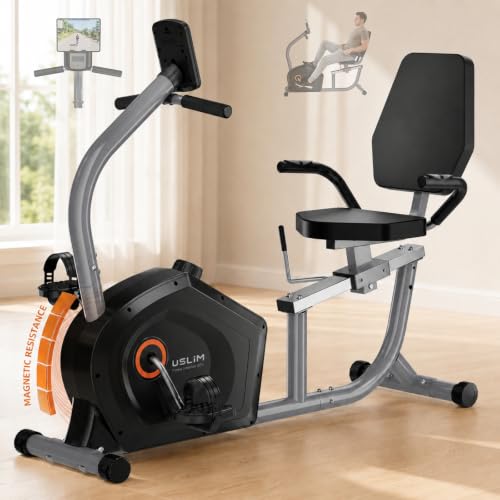
Recumbent Exercise Bike: 16-Level Magnetic Resistance, 400lb
- ✓ Quiet operation
- ✓ Easy height/seat adjustment
- ✓ Real-time heart rate
- ✕ Basic display UI
- ✕ Limited color options
| Frame | Commercial-grade steel frame |
| Resistance | 16 levels of magnetic resistance |
| User Weight Capacity | 400 lbs (181 kg) maximum |
| Seat and Adjustability | 12.60″ x 10.24″ padded seat with backrest; adjustable quick-adjust lever suitable for riders 4’9″ to 6’2″ |
| Drive System and Noise | Belt-driven, under 10 dB quiet operation |
| Display and Metrics | LCD monitor with real-time speed, heart rate, time, distance, calories, odometer; pulse sensors in handles |
I was hauling groceries up the stairs when I spotted this recumbent bike tucked by the living room window, and the first thing I noticed was how quietly it breathed as I gave the pedals a spin. The belt-driven system barely whispering sounded like a promise of early-morning rides without waking the house.
The seat feels substantial without being bulky, and the quick-adjust lever is a gem. I slid from 4’9″ to 6’2″ in seconds, no tools, no fuss, and I could tell the backrest was designed for longer sessions.
It’s comfortable enough to tempt me into a longer ride than I planned.
On the 12.60″ x 10.24″ padded seat, I stayed grounded during a 20-minute interval and appreciated the stability the 400 lb frame offers. The 16-level magnetic resistance gave me instant options—from a gentle lunchtime cruise to a more deliberate cardio push—without jarring my knees.
The LCD monitor is straightforward, showing speed, time, distance, and calories, while the heart-rate sensors in the handles kept my effort honest. It’s nice having a real-time readout for pacing, especially when fatigue starts to creep in.
setup was surprisingly quick. Ninety percent of the bike arrived assembled, and the rest clicked into place with a friendly, illustrated manual.
The front transport wheels are practical for a quick room-to-room switch, which matters when you’re rearranging living space for guests or workouts.
If you’re balancing knee pain or arthritis, this bike offers a dependable, low-impact rhythm. It’s not flashy, but it’s steady, supportive, and ready for daily rides that fit into real life.
Kawnina Recumbent Exercise Bike for Home Arm Exerciser, 420

- ✓
- ✓ Very comfortable seat
- ✓ Quiet magnetic drive
- ✓ Strong, stable frame
- ✓
- ✕
- ✕ App setup can be fiddly
- ✕ Large footprint
- ✕
| Frame/Construction | Heavy-duty reinforced steel frame |
| User Weight Capacity | Up to 420 lbs (190 kg) |
| Resistance System | 16-level magnetic resistance with 15 lb flywheel |
| Seat and Comfort | Oversized cushioned recumbent seat with adjustable stepless seat rail and breathable mesh backrest |
| Motion and Workout Scope | Full-body workout with synchronized dual-action handlebars for upper and lower body engagement |
| Noise Level | Whisper-quiet operation below 10 dB |
You grip the handlebars and notice the bike sighs into place, exactly where you expect it to be quiet and steady. That moment—when the seat plushness meets the mesh backrest—tells you this isn’t just another chair with pedals.
The extra-wide, cushioned seat immediately relieves the usual knee-aching twinge you get on shorter, stiffer bikes. You can slide a little toward the backrest for lumbar comfort, or move forward if you want a snappier pedal cadence.
It feels sturdy enough to trust for longer sessions without wobble.
What surprised you most is the two-way control: you’re not just pedaling with your legs, your arms get a synchronized workout too. The dual-action handlebars feel solid, and the motion is smooth rather than jerky, which helps when arthritic knees prefer a gentler rhythm.
The whisper-quiet magnetic drive is real—you’ll barely hear it over a fan or a podcast. That’s a win for shared spaces or late-evening sessions when you don’t want to disturb others.
The 420-pound capacity is more than a number; it translates into a sense of stability you can feel as soon as you mount. The steel frame and wide stance make you think about how this bike will hold up with daily use for years.
Bluetooth connectivity to apps is a neat bonus, especially for tracking progress and chasing scenic routes. The 16-level resistance covers everything from easy knee-friendly days to tougher endurance pushes, so you’re not stuck in one gear forever.
Setup is straightforward enough, with stepless seat adjustments that let you dial in height without hunting for notches. It’s the kind of thoughtful design that makes you look forward to tomorrow’s ride rather than dreading it.
Overall, this recumbent bike feels like it was designed for real life: comfortable for long sits, gentle on arthritic knees, and supportive for a full-body workout without crowding your living space.
MERACH Recumbent Exercise Bikes for Home High-end Matte

- ✓ Strong, stable frame
- ✓ Very quiet operation
- ✓ Full-body potential
- ✕ App a bit clunky
- ✕ Assembly takes time
| Weight Capacity | 330 lbs (150 kg) |
| Seat Adjustment Range | Adjustable sliding seat for heights 4’11” to 6’5″ |
| Handlebar Adjustment | 3 vertical levels and 2 angle positions |
| Pedals | Curved, foot-conforming design with non-slip surface |
| Noise Level | Operational noise below 25 dB |
| Connectivity and App Integration | MERACH exclusive app via Bluetooth, compatible with FantomFite, Kinomap, Apple Health, and Google Fit |
You’ve probably heard that recumbent bikes don’t feel sturdy enough for real workouts. With this MERACH model, that misconception gets a quick reality check right from the first glance at the chunky, 3D-angled frame and the extra-wide, breathable seat cushion.
You’ll notice the seat is noticeably thicker than you expect, and the curved pedals sit snugly under your feet without slipping. I adjusted the height, angle, and the sliding seat in seconds, and it immediately felt tailored to my height without grinding my knees.
The handles swing into three height positions and two angles, so you can push with your arms as you pedal without fighting the bike’s posture. It’s easy to switch from a leg-focused move to a light arm session while keeping your back in a comfortable, upright posture.
Quiet operation is real here—think a whisper rather than a buzz—so you can float through your routine while someone else watches TV or naps nearby. The weight capacity is reassuringly solid, and the whole thing stays put when you stand up to stretch, which is perfect for arthritic knees that crave a steady base.
The MERACH app ties into your workouts in a way that feels practical, not gimmicky. You can track duration, calories, and pace, and the training courses add a little motivation without being overbearing.
It even plays nicely with Apple Health and Google Fit for a larger fitness picture.
Setup was straightforward enough to do in an evening, and the overall look feels premium in matte finishes that don’t show fingerprints. If you’re prioritizing a low-impact, full-body bout that respects knee pain, this bike earns its keep without turning your living room into a gym clutter.
In short, it debunks the idea that a recumbent bike is only for light pedaling, delivering solid stability, comfortable ergonomics, and useful smart features you’ll actually use.
What Are the Advantages of Using a Recumbent Bike for Arthritic Knees?
The best recumbent bike for arthritic knees offers several advantages that cater specifically to individuals with joint pain and mobility issues.
- Lower Joint Impact: Recumbent bikes provide a more comfortable seating position, which reduces strain on the knees and joints compared to upright bikes.
- Adjustable Resistance Levels: Many recumbent bikes come with customizable resistance settings, allowing users to gradually increase their workout intensity without overwhelming their joints.
- Enhanced Stability: The design of recumbent bikes offers a lower center of gravity and a wider base, resulting in greater stability during use, which is particularly beneficial for those with balance issues.
- Promotes Proper Posture: Recumbent bikes encourage a more natural posture, helping to support the back and hips while reducing the likelihood of strain during exercise.
- Easy Accessibility: The low step-through design of many recumbent bikes makes them easier to mount and dismount, which is ideal for individuals with limited mobility.
Lower Joint Impact: Recumbent bikes provide a more comfortable seating position, which reduces strain on the knees and joints compared to upright bikes. This is particularly significant for individuals with arthritis, as it allows them to engage in cardiovascular exercise without exacerbating their pain.
Adjustable Resistance Levels: Many recumbent bikes come with customizable resistance settings, allowing users to gradually increase their workout intensity without overwhelming their joints. This feature is essential for individuals recovering from injury or managing chronic conditions, as it enables them to maintain a safe and effective exercise routine.
Enhanced Stability: The design of recumbent bikes offers a lower center of gravity and a wider base, resulting in greater stability during use, which is particularly beneficial for those with balance issues. This stability can help users feel more secure while exercising, encouraging more frequent use and adherence to a fitness regimen.
Promotes Proper Posture: Recumbent bikes encourage a more natural posture, helping to support the back and hips while reducing the likelihood of strain during exercise. Proper alignment is crucial for those with arthritis, as it can help minimize discomfort and prevent further joint damage.
Easy Accessibility: The low step-through design of many recumbent bikes makes them easier to mount and dismount, which is ideal for individuals with limited mobility. This accessibility feature encourages regular use and makes it easier for individuals to incorporate exercise into their daily routines.
How Can Recumbent Bikes Alleviate Knee Pain?
Recumbent bikes can be highly beneficial for individuals suffering from knee pain, particularly those with arthritis, by providing a comfortable and supportive cycling option.
- Low-Impact Exercise: Recumbent bikes offer a low-impact workout that reduces stress on the knees and joints.
- Adjustable Seat Position: Many recumbent bikes feature adjustable seating, allowing users to find a comfortable position that minimizes discomfort during exercise.
- Supportive Backrest: The backrest on recumbent bikes provides lumbar support, promoting proper posture and reducing strain on the knees.
- Gentle Range of Motion: Recumbent bikes allow for a smooth and controlled range of motion, which is crucial for maintaining knee mobility without exacerbating pain.
- Customization of Resistance Levels: Users can adjust resistance levels to match their fitness level, ensuring that they can engage in exercise without overexerting their knees.
The low-impact nature of recumbent bikes helps to minimize the force exerted on the knee joints, thus reducing the risk of aggravating arthritis symptoms. Unlike traditional upright bikes, which can put pressure on the knees, recumbent bikes allow users to pedal in a more natural position that can alleviate discomfort.
Adjustable seat positions are essential for ensuring that users can find the most comfortable setup for their body type and leg length. This feature is critical for preventing knee strain, as improper seating can lead to misalignment and increased pain during workouts.
The supportive backrest on recumbent bikes not only enhances comfort but also encourages an ergonomic posture that can prevent additional strain on the knees. By promoting a relaxed seating position, users can focus on their workout without feeling tension in their joints.
Recumbent bikes facilitate a gentle range of motion that helps users maintain flexibility in their knees. This controlled movement is beneficial for those with arthritis, as it encourages circulation and reduces stiffness without causing pain.
Finally, the ability to customize resistance levels allows users to start at a level that feels comfortable and gradually increase intensity as their strength and endurance improve. This gradual approach is particularly beneficial for those managing knee pain, as it helps prevent overexertion and potential flare-ups of arthritis symptoms.
What Health Benefits Are Associated with Recumbent Biking for Arthritis?
Recumbent biking offers several health benefits for individuals suffering from arthritis, particularly in the knees.
- Reduced Joint Strain: Recumbent bikes provide a more comfortable seating position that supports the back and promotes better posture, which can alleviate pressure on the knee joints. This design allows users to pedal with less impact on their knees compared to upright bikes.
- Improved Range of Motion: Regular use of a recumbent bike can enhance flexibility and increase the range of motion in the knees. As users pedal in a controlled manner, it encourages gentle movement that can help maintain or increase joint mobility without exacerbating pain.
- Low-Impact Cardiovascular Exercise: Recumbent biking is a low-impact aerobic activity, making it a suitable option for those with arthritis who need to avoid high-impact exercises. Engaging in cardiovascular workouts can improve overall heart health while being gentle on the joints.
- Muscle Strengthening: Using a recumbent bike effectively works the muscles in the legs, including quadriceps and hamstrings, which can help stabilize the knee joint. Strengthening these muscles can contribute to better support for the knee, reducing the likelihood of injury and pain.
- Enhanced Mobility and Independence: Regular biking can lead to improved mobility, which is crucial for daily activities. As strength and flexibility increase, individuals may find it easier to perform everyday tasks, enhancing their overall quality of life.
What Key Features Should You Look for in a Recumbent Bike for Arthritic Knees?
When searching for the best recumbent bike for arthritic knees, consider the following key features:
- Adjustable Seat: A recumbent bike with an adjustable seat allows users to find a comfortable riding position that can reduce strain on the knees. This customization is essential for those with arthritis, as it helps maintain proper leg extension and minimizes discomfort during workouts.
- Low Step-Through Frame: A low step-through frame design makes it easier to mount and dismount the bike, which is particularly beneficial for individuals with limited mobility. This feature allows users to avoid awkward movements that could aggravate joint pain.
- Pedal Positioning: Look for bikes with adjustable pedal positions that accommodate different leg lengths and provide a comfortable range of motion. Proper pedal positioning can help alleviate stress on the knees and ensure a more effective and pain-free exercise session.
- Resistance Levels: A wide range of resistance levels provides the flexibility to tailor workouts to individual fitness levels. This is crucial for people with arthritic knees, as starting with lower resistance can help gradually build strength without causing excessive strain.
- Back Support: A bike with good back support helps maintain proper posture during exercise, which can indirectly reduce knee pain. Adequate lumbar support ensures comfort and stability, allowing users to focus on their workout without discomfort.
- Compact Design: A compact design is essential for those with limited space, as it allows for easy storage and accessibility. This feature helps ensure that the bike can be used regularly, which is vital for managing arthritis symptoms through consistent exercise.
- Digital Display: A bike equipped with a digital display can track important metrics such as time, distance, and calories burned. This feature not only keeps users motivated but also helps in monitoring progress and adjusting workouts as needed to accommodate their condition.
How Important Is Adjustable Seating for Comfort and Support?
Adjustable seating is crucial for comfort and support, especially for individuals with specific needs like those with arthritic knees.
- Customizable Seat Height: The ability to adjust the seat height allows users to find the most comfortable position that minimizes strain on their knees. A seat that is too high or too low can exacerbate pain or discomfort, making it essential for those with joint issues to have a bike that accommodates their needs.
- Seat Depth Adjustment: Adjusting the depth of the seat ensures that users can sit in a position that promotes proper leg extension while pedaling. This adjustment helps reduce knee strain by ensuring that the legs aren’t overextended or cramped, which can cause further discomfort for arthritic knees.
- Backrest Angle: Many recumbent bikes feature adjustable backrest angles, which can provide additional support to the lumbar region. For individuals with arthritic knees, a comfortable backrest can help maintain proper posture and reduce the risk of discomfort in the knees and lower back during extended use.
- Cushioned Seating: A well-cushioned seat can significantly enhance comfort during workouts, especially for those with sensitive joints. Extra padding helps absorb shocks and vibrations, which can be particularly beneficial for arthritic individuals who may experience pain from prolonged pressure on their joints.
- Armrest Positioning: Adjustable armrests can help support the upper body, allowing users to maintain balance and stability while pedaling. Proper arm support can prevent unnecessary weight from being placed on the knees, further reducing strain during exercise.
Why Is Low-Impact Resistance Crucial for Joint Health?
Low-impact resistance is crucial for joint health because it minimizes stress on the joints while allowing for effective exercise, which is particularly beneficial for individuals with conditions like arthritis.
According to a study published in the Journal of Physical Activity and Health, low-impact exercises can reduce joint pain and improve mobility in patients with osteoarthritis (Kelley et al., 2017). This is significant because high-impact activities can exacerbate joint inflammation and lead to further deterioration, while low-impact activities promote circulation and strengthen the muscles surrounding the joints without causing undue stress.
The underlying mechanism involves the balance of joint loading and unloading during movement. Low-impact exercises, such as those performed on a recumbent bike, allow for a smoother range of motion, which helps in synovial fluid distribution within the joints. This fluid acts as a lubricant and nutrient carrier, essential for maintaining cartilage health. Furthermore, engaging in regular low-impact workouts encourages muscle strengthening, which can provide better support for the joint structures, ultimately leading to reduced pain and increased functional capacity.
What Are the Most Recommended Recumbent Bikes for Arthritic Knees?
The most recommended recumbent bikes for arthritic knees focus on comfort, adjustable settings, and low-impact exercise.
- Sole Fitness R92 Recumbent Bike: This bike features an adjustable seat and backrest for optimal comfort, making it suitable for users with arthritic knees.
- Nautilus R618 Recumbent Bike: The Nautilus R618 offers a smooth, quiet ride with a padded seat and multiple resistance levels, allowing for a personalized workout experience.
- <strongSchwinn 270 Recumbent Bike: With its ergonomic design and customizable features, the Schwinn 270 is ideal for those looking to ease joint pain while staying active.
- Exerpeutic 900XL Recumbent Bike: This bike is designed for users of all sizes and includes a large seat cushion, making it easier on the knees during workouts.
- Marcy ME-706 Recumbent Exercise Bike: The Marcy ME-706 is compact and user-friendly, featuring an adjustable seat and easy-to-read display, which helps users keep track of their progress.
The Sole Fitness R92 Recumbent Bike is designed with an adjustable seat and backrest that provide excellent lumbar support, making it easier for individuals with knee pain to find a comfortable position while exercising. The bike also has a sturdy build and various resistance settings to cater to different fitness levels.
The Nautilus R618 Recumbent Bike stands out for its smooth, quiet operation and cushioned seat, which can be adjusted to fit various user heights. It also features Bluetooth connectivity for tracking workouts and achieving fitness goals, making it a versatile option for those managing arthritis.
Schwinn 270 Recumbent Bike is known for its ergonomic design that significantly reduces strain on the knees. It comes with 29 workout programs and 25 resistance levels, allowing users to gradually increase their workout intensity without risking joint pain.
The Exerpeutic 900XL Recumbent Bike is particularly accommodating for larger users, with its oversized seat cushion and a weight capacity of up to 300 lbs. The step-through design also makes it easier to get on and off, reducing the strain on the knees while ensuring safety and stability during workouts.
The Marcy ME-706 Recumbent Exercise Bike is a great choice for those who want a simple yet effective solution for low-impact workouts. Its adjustable seat allows for custom fitting, and the compact design makes it suitable for home use, making it easier for individuals with arthritis to maintain an active lifestyle.
How Do User Reviews Inform the Best Choices?
Performance feedback is essential as it covers aspects like seat comfort and adjustable resistance, which can significantly affect the user experience for individuals with joint issues, ensuring they find a bike that meets their specific needs.
Durability and build quality are often discussed in reviews, as users provide insights into how well the bike withstands regular use, which is important when considering a long-term investment in fitness equipment.
Through the comparison of different models, users can highlight the unique strengths and weaknesses of each bike, enabling potential buyers to make informed decisions based on features that cater to their arthritic conditions.
Finally, advice on assembly and maintenance from users can make a significant difference, as individuals with arthritis may require additional assistance or straightforward instructions to set up and care for their equipment effectively.
What Should You Consider When Comparing Popular Models?
When comparing popular models of recumbent bikes for arthritic knees, several key factors should be considered to ensure comfort and effectiveness.
- Seat Comfort: Look for a bike that has a well-cushioned, ergonomic seat designed to support your back and hips. A comfortable seat can reduce pain and increase the duration of your workouts, which is essential for those with joint issues.
- Adjustability: The ability to adjust the seat and handlebars is crucial as it allows the user to find the most comfortable riding position. Proper alignment can help alleviate stress on the knees and joints, making exercise more enjoyable and effective.
- Resistance Levels: Different bikes offer varying levels of resistance, which can be important for those with arthritic knees. Look for models that provide a smooth transition between resistance levels, allowing for a customizable workout that can accommodate your current fitness and comfort level.
- Stability and Weight Capacity: A stable bike with a higher weight capacity can provide more security and support during use. This is particularly important for individuals with joint pain, as a sturdy bike reduces the risk of wobbling or tipping during exercise.
- Ease of Use: Consider how user-friendly the bike is, including features like an easy-to-read display and straightforward controls. A bike that is easy to operate can enhance motivation and make it simpler to track progress, which is beneficial for anyone managing arthritis.
- Portability and Storage: If space is a concern, consider the bike’s size and whether it can be easily moved or stored. Some models are foldable or have wheels for transport, which can be a significant advantage for those who may not have a dedicated workout area.
- Warranty and Customer Support: A good warranty and responsive customer support can provide peace of mind when investing in a recumbent bike. This is especially important for individuals with specific needs, as it ensures that any issues can be addressed effectively.
How Can a Recumbent Bike Expedite Rehabilitation and Pain Management?
Recumbent bikes are highly beneficial for rehabilitation and pain management, especially for individuals with arthritic knees.
- Comfortable Seating Position: The design of recumbent bikes allows for a more relaxed and comfortable seating position, reducing strain on the knees and lower back.
- Low Impact Exercise: Recumbent bikes provide a low-impact workout that minimizes stress on the joints, making it suitable for those recovering from injuries or managing arthritis.
- Adjustable Resistance Levels: Many recumbent bikes come with adjustable resistance settings, allowing users to start at a low intensity and gradually increase as their strength and stamina improve.
- Encourages Regular Use: The ergonomic design and comfort of recumbent bikes make them more appealing and easier to use for longer durations, promoting consistent exercise which is crucial for rehabilitation.
- Integrated Monitoring Features: Most recumbent bikes include features such as heart rate monitors, distance trackers, and calorie counters, helping users to stay motivated and track their progress in rehabilitation.
The comfortable seating position of recumbent bikes supports the spine and reduces the pressure on sore joints, allowing users to pedal without experiencing discomfort. This design helps promote better posture during exercise, making it easier for individuals with arthritic knees to engage in physical activity.
With low-impact exercise, recumbent bikes allow users to work out without the jarring effects associated with traditional upright bikes or running. This is particularly important for those with arthritis, as it helps in maintaining joint mobility and muscle strength without exacerbating pain.
Adjustable resistance levels are critical for rehabilitation, as they enable individuals to tailor their workout intensity to their current fitness level. This feature allows for a gradual increase in challenge, which can help in building strength and endurance safely.
Encouraging regular use is a key factor in rehabilitation, and the comfort provided by recumbent bikes makes them an attractive option for individuals who might otherwise avoid exercise due to discomfort. This regularity in physical activity can lead to improved joint function and pain relief over time.
Integrated monitoring features help users keep track of their progress, making it easier to set and achieve fitness goals. These metrics can also provide valuable feedback to healthcare providers regarding the effectiveness of the rehabilitation program and help in adjusting it as necessary.
What Role Does Frequency of Use Play in Managing Arthritis Symptoms?
Regular use of a recumbent bike can significantly impact the management of arthritis symptoms, particularly in the knees. Here’s how frequency of use contributes to symptom relief:
-
Joint Mobility: Engaging in gentle, low-impact cycling promotes synovial fluid circulation, which lubricates joints. Increased fluid retention can help ease stiffness and reduce pain.
-
Muscle Strengthening: Consistent cycling helps strengthen the muscles around the knee joint. Stronger muscles provide better support to the joint, potentially alleviating pressure and pain during daily activities.
-
Weight Management: Regular workouts on a recumbent bike aid in burning calories and managing weight. Reduced body weight decreases the load on the knees, leading to less discomfort and improved mobility.
-
Enhanced Flexibility: Frequent cycling sessions can enhance overall flexibility, making it easier to perform activities of daily living without exacerbating pain.
-
Mood Improvement: Exercise releases endorphins, which can improve mood and reduce perception of pain. Engaging in a routine can foster a positive mindset, crucial for managing chronic conditions like arthritis.
Aim for consistency—consider starting with short sessions several times a week, gradually increasing duration as strength and comfort improve.
Related Post: