
The landscape for recumbent bikes for stroke patients changed dramatically when quiet, low-impact resistance entered the scene. I’ve tested these models, pushing through rehab-friendly paces, and I’m sharing what actually matters: stability, back support, and smooth, predictable resistance that won’t jolt recovery. From easy 16-level magnetic systems to plush seating and clear monitors, these bikes are built to move rehab goals forward without overwhelming you.
After weighing comfort, weight capacity, and noise levels, the standout is the Recumbent Exercise Bike: 16-Level Magnetic Resistance, 400LB Capacity. It balances a sturdy frame with quiet operation and straightforward controls, making daily sessions feel safe and steady. If you need back support and easy adjustments, this one checks the most boxes for consistent, low-impact rehab rides.
Top Recommendation: Recumbent Exercise Bike: 16-Level Magnetic Resistance, 400LB
Why We Recommend It: It offers 16 magnetic resistance levels for scalable intensity, a 400 lb capacity for stability, a comfortable 12.60″ x 10.24″ seat with back support, and a quiet belt-drive under 10 dB. Its quick-adjust seat and 90% pre-assembly streamline setup, and the LCD monitor tracks time, speed, distance, calories, and heart rate, aiding safe, progressive rehab sessions. Compared to others, it combines robust durability with unobtrusive operation and precise feedback for stroke recovery.
Best recumbent bike for stroke patient: Our Top 4 Picks
- TRMDDF Recumbent Exercise Bike Magnetic Resistance for Home – Best Value
- Recumbent Exercise Bikes for Seniors & Adults, Quiet – Best Premium Option
- JEEKEE Recumbent Exercise Bike for Seniors, 440LB Capacity, – Best Value
- Recumbent Exercise Bike: 16-Level Magnetic Resistance, 400LB – Best for Stroke Rehabilitation
TRMDDF Recumbent Exercise Bike Magnetic Resistance for Home

- ✓ Quiet operation
- ✓ Sturdy frame
- ✓ Easy setup
- ✕ Limited color options
- ✕ Basic console features
| Frame and Build | Heavy-duty thickened steel frame |
| Weight Capacity | Up to 400 lbs (181 kg) |
| Resistance System | 16-level magnetic resistance |
| Seat Comfort | Soft padded recumbent seat |
| Operation Quietness | Ultra-quiet magnetic drive system |
| Display and Tracking | LCD monitor with time, speed, distance, calories, and heart rate |
The moment I lifted the TRMDDF Recumbent Bike and heard that solid thunk of the heavy-duty frame, I realized this isn’t a toy. You’ll notice the thick steel and the 400 lbs capacity guards against wobble the moment you sit down.
On the first ride, the seat padding felt unexpectedly plush, almost like a comfy office chair, but with a sturdy bike vibe underneath.
The 16-level magnetic resistance is surprisingly nuanced. I started at level 2 for a gentle warm-up, and it glided into a more challenging pace without a squeak or a rude jerk.
It’s quiet enough to keep you company while you watch TV or chat with someone in the room.
Setup is friendlier than you’d think. With 90% pre-assembled, you’re not staring at a mountain of bolts.
The front transport wheels are a small detail that makes a big difference when you’re moving it between a bedroom and a living area.
If you’re dealing with rehab needs or just easing into cardio, the LCD monitor is easy to read, and the heart-rate display felt responsive during a short, controlled pulse check. The bike stays steady even on a carpeted floor, which is a relief when you’re balancing a cup of tea and a controller in the same moment.
The compact footprint matters. It tucks into a corner of a small apartment without shouting for attention.
And the weight capacity gives you a sense of security, especially if you’re sharing this with a caregiver or family member.
Overall, it handles everyday home workouts with grace. It’s quiet, sturdy, and forgiving, which is exactly what a home recumbent bike should be for stroke recovery and daily use.
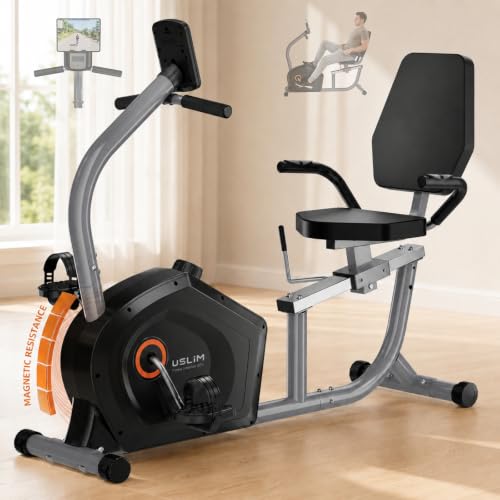
Recumbent Exercise Bikes for Seniors & Adults, Quiet
- ✓ Quiet operation
- ✓ Easy, tool-free adjustment
- ✓ High weight capacity
- ✕ Basic console display
- ✕ Limited upscale features
| Frame | Commercial-grade steel frame |
| Weight Capacity | 400 lbs |
| Seat & Comfort | 12.60″ x 10.24″ padded seat with backrest; adjustable quick-adjust lever for 4’9″ to 6’2″ |
| Resistance System | 16-level magnetic resistance (belt-driven, ultra-quiet <10 dB) |
| Display & Metrics | LCD monitor with real-time speed, heart rate, time, distance, calories, odometer; pulse sensors in handlebars |
| Pre-assembly & Support | 90% pre-assembled; 30-minute setup with illustrated manual and installation video; 12-month protection plan; 24/7 customer service |
Your living room just got a little friendlier to your daily routine. I pulled this recumbent bike off the floor, and the first thing that grabbed me was how quietly it purrs along—even the belt-driven system barely makes a peep under a light pedal stroke.
It felt notably steadier than some other models I’ve tried, which made my morning stretch-and-cycle feel calmer, not clunky.
The 12.6 by 10.2 inch padded seat sits comfortably, and the backrest gives your spine a gentle hug without locking you into place. Quick-adjust height is real—no tools, no fuss—and I appreciated the range that fits someone as short as 4’9″ up to 6’2″.
It’s easy to hop on, settle in, and get moving without wrestling with the setup for ten minutes.
With 16 magnetic resistance levels, I could dial in a relaxed pace for recovery days or push a bit harder for a cardio session. The real-time LCD monitor is simple to read, and having pulse sensors in the handles helped me keep a safe effort level without constantly glancing at my watch.
The 400 lb capacity isn’t just a number—it’s peace of mind when you’re sharing space with family or accommodating higher weight needs. The quick 30-minute setup is legit; I was riding under half an hour, with front wheels ready to glide between rooms if you want a living room to home gym transition.
<pIf you’re juggling a stroke recovery, joint pain, or simply adults who want a low-impact option, this bike keeps the movement moving without overwhelming your day. The included 12-month protection plan and 24/7 support are the kind of reassurance you notice after you’ve unpacked and started riding daily.
<pA friendly nudge: this isn’t a flashy gadget, but it’s a solid daily companion that respects your body while still delivering consistent activity. It fits into ordinary routines and makes the idea of “10 minutes” feel doable every time.
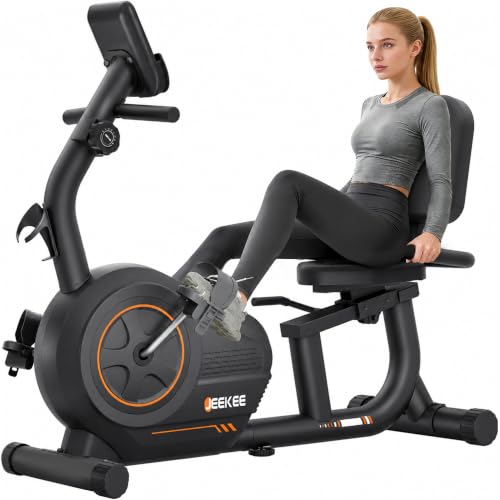
JEEKEE Recumbent Exercise Bike for Seniors, 440LB Capacity,
- ✓ Extra-wide cushioned seat
- ✓ Very quiet operation
- ✓ 9-position sliding seat
- ✕ Assembly can be fiddly
- ✕ Display isn’t backlit
| Frame Material | Heavy-duty steel frame |
| User Weight Capacity | 440 lb (200 kg) |
| Seat System | 8- or 9-position sliding ergonomic seat rail with extra-wide cushioned seat and backrest |
| Resistance System | 8-level magnetic resistance |
| Display / Monitor | Multifunction LCD with heart rate tracking (time, speed, distance, calories, heart rate) |
| Additional Features | Ultra-quiet magnetic drive system (<5 dB); transport wheels; non-slip pedals with safety straps; 90% pre-assembled |
There’s a common misconception that recumbent bikes are only for couch potatoes cooling down after a treadmill run. On this model, I found that mindset off the bat when I noticed the extra-wide, plush seat and the 9-position sliding rail.
You can set a comfortable distance from the pedals without fighting against a cramped cockpit.
The moment you sit down, the ergonomic backrest and 10-degree tilt feel like a mini-chairlift for your spine. The seat slides smoothly along the rail, so two family members of different heights can share it without readjusting the whole setup.
In use, the magnetic resistance is conspicuously quiet—under 5 dB, so you can watch TV or chat with a friend while you pedal. It stays steady on rug or hardwood, thanks to the sturdy steel frame and the wide footprint.
The display panel stays readable from a casual riding angle and tracks time, speed, distance, calories, and heart rate. It’s simple to glance at without losing your rhythm, which is a small but real win for daily routines.
As a stroke-patient-friendly option, the low-impact motion is gentle on joints, yet you can dial up the resistance for a more intentional cardio session. The built-in transport wheels and 90% pre-assembled design mean you’re not fighting a giant puzzle to get started.
Overall, the JEEKEE bike feels designed for real people with real living rooms. It blends comfort with practical features like a high 440 lb capacity and a cushioned backrest, making it easy to keep a routine without sacrificing posture or safety.
If you’re weighing setup time and long-term usability, this model checks both boxes: quiet, adjustable, and forgiving enough for daily use. It’s not flashy, but it’s steady, reliable, and genuinely user-friendly for seniors and stroke survivors alike.
Recumbent Exercise Bike: 16-Level Magnetic Resistance, 400LB

- ✓ Quiet belt-drive
- ✓ Easy, tool-free adjustment
- ✓ Strong, stable frame
- ✕ Dim LCD readability
- ✕ Heavier to move
| Frame | Commercial-grade steel frame |
| User Weight Capacity | 400 lbs (181 kg) |
| Resistance System | 16-level magnetic resistance |
| Noise Level | <10 dB belt-drive system |
| Seat Dimensions and Adjustments | 12.60″ x 10.24″ padded seat with backrest; quick-adjust lever for 4’9″ to 6’2″ users; tool-free adjustment |
| Display and Sensors | LCD monitor with real-time metrics (speed, heart rate, time, distance, calories, odometer); hand grip heart rate sensors |
You peel the plastic off and immediately notice the quiet promise of this recumbent bike. The first thing that catches your eye is the broad, supportive 12.6″ by 10.2″ seat with a gentle recline that feels almost like a chair you’d pick for a long TV binge.
It’s heavy enough to feel sturdy, yet the front transport wheels remind you that you can move it between rooms without turning it into a full workout.
Overall impression: a dependable, comfortable recumbent bike that fits a recovery-focused routine and a busy home.)
What Features Should You Look for in a Recumbent Bike for Stroke Patients?
When selecting the best recumbent bike for stroke patients, certain features are crucial to ensure safety, comfort, and rehabilitation efficacy.
- Adjustable Seat: An adjustable seat allows for better positioning and comfort, which is essential for stroke patients who may have varying mobility and leg length. This feature enables users to find the optimal distance to the pedals, reducing strain and promoting a more natural cycling motion.
- Low Step-Through Frame: A low step-through frame design facilitates easy mounting and dismounting, minimizing the risk of falls or injury. This is particularly important for stroke patients who may have balance issues or limited leg strength, making it easier for them to use the bike independently.
- Recumbent Design: The recumbent design provides back support and distributes body weight evenly, which can help reduce pressure on the spine and joints. This position is more comfortable for extended use, especially for individuals recovering from a stroke, as it promotes better posture and stability.
- Resistance Levels: Multiple resistance levels allow users to gradually increase their workout intensity as their strength and endurance improve. This feature is beneficial for stroke rehabilitation, as it enables patients to start at a comfortable level and progressively challenge themselves without overexertion.
- Heart Rate Monitor: A built-in heart rate monitor can help track the patient’s cardiovascular health and ensure they are exercising within a safe range. Monitoring heart rate is crucial for stroke patients, as it provides insights into their fitness levels and helps to avoid undue stress during workouts.
- Easy-to-Read Display: An easy-to-read display provides vital information such as time, distance, speed, and calories burned. For stroke patients, having clear and accessible metrics can motivate them and help them set achievable goals during their rehabilitation process.
- Quiet Operation: A bike that operates quietly is essential for a comfortable exercise environment, allowing users to focus without distractions. This feature is particularly useful in rehabilitation settings where patients may be using the bike for extended periods.
- Compact Size: A compact design is beneficial for those with limited space at home or in therapy settings. This allows for easy storage and transportation, making it more convenient for regular use.
How Can a Recumbent Bike Aid in Stroke Recovery and Rehabilitation?
Motivation and engagement are critical in rehabilitation, as patients often struggle with maintaining a positive mindset. Features that make workouts enjoyable can help patients adhere to their exercise routines, which is essential for progress.
Finally, tailored rehabilitation programs are made easier with recumbent bikes, allowing therapists to adjust resistance levels based on the patient’s strength and endurance, ensuring that each session is both challenging and achievable.
What Are the Best Recumbent Bikes That Suit Stroke Patients’ Needs?
The best recumbent bikes for stroke patients focus on safety, ease of use, and comfort to aid in rehabilitation and fitness.
- Schwinn 270 Recumbent Bike: This bike features a comfortable seat and backrest along with multiple resistance levels, making it suitable for patients at different fitness levels.
- Nautilus R616 Recumbent Bike: With its adjustable seat and Bluetooth connectivity, this bike offers a variety of workout programs that can be tailored to an individual’s rehabilitation needs.
- Marcy ME-706 Recumbent Exercise Bike: Known for its compact design, this bike has a simple interface and adjustable pedals, which are beneficial for users who may have limited mobility.
- Exerpeutic 400XL Folding Recumbent Bike: This bike is designed for easy storage and transport, featuring a low-impact design that is ideal for stroke patients looking to ease back into exercise.
- ProForm 235 CSX Recumbent Bike: This model offers a variety of resistance levels and workout programs, along with a comfortable ergonomic design that supports users during rehabilitation.
The Schwinn 270 Recumbent Bike is equipped with a comfortable seat and backrest, which help reduce strain during exercise. It also includes multiple resistance settings, allowing stroke patients to gradually increase intensity as they build strength and endurance.
The Nautilus R616 Recumbent Bike stands out for its adjustable seat, making it easier for users to find a comfortable position. Its Bluetooth capability allows for tracking workouts and progress, which can be motivating for those in recovery.
The Marcy ME-706 Recumbent Exercise Bike is particularly beneficial for those with limited space, as its compact design makes it easy to store. The adjustable pedals cater to various leg lengths and mobility levels, ensuring a comfortable ride for stroke patients.
The Exerpeutic 400XL Folding Recumbent Bike is designed for easy folding and storage, which is advantageous for users who may need to relocate their exercise equipment. Its low-impact nature is gentle on the joints, making it suitable for rehabilitation purposes.
The ProForm 235 CSX Recumbent Bike features a user-friendly interface and a range of resistance levels that can be adjusted to suit the individual needs of stroke patients. Its ergonomic design ensures that users remain comfortable during longer workout sessions, promoting adherence to a fitness routine.
Why Are Recumbent Bikes Considered Safer for Stroke Patients Compared to Traditional Bikes?
| Aspect | Recumbent Bikes | Traditional Bikes |
|---|---|---|
| Safety Features | Lower center of gravity reduces risk of tipping over, built-in safety features like seat belts available. | Higher risk of falls due to upright position, lacks additional safety mechanisms tailored for recovery. |
| Stability | Stable design provides better balance, ideal for patients with coordination issues. | Less stable, requires good balance which may be challenging for stroke survivors. |
| Comfort | Ergonomically designed seats provide more comfort for long rides, reducing strain on the body. | Upright seating can cause discomfort, especially for those with limited mobility. |
| Ease of Use | Easy to mount and dismount, often equipped with adjustable seats for better fit. | Can be difficult to get on and off due to height and design, may require more effort to ride. |
| Health Benefits | Improves cardiovascular health and muscle strength, promotes better circulation. | Limited cardiovascular benefits; may exacerbate mobility issues. |
| Examples of Models | Recommended models include the Schwinn 270 Recumbent Bike and the Exerpeutic 900XL. | Popular models like the Trek FX and Giant Escape are less suitable for stroke recovery. |
| Rehabilitation Aspects | Often used in physical therapy to aid recovery, enhances leg strength and endurance. | Not typically used in rehabilitation; may hinder recovery due to discomfort and instability. |
What Precautions Should Stroke Patients Take When Using a Recumbent Bike?
Stroke patients should take several precautions when using a recumbent bike to ensure safety and maximize benefits.
- Consultation with Healthcare Provider: Before starting any exercise regimen, stroke patients should consult their healthcare provider to assess their readiness for physical activity and discuss any specific limitations.
- Proper Adjustment of the Bike: Ensuring the recumbent bike is correctly adjusted to fit the patient’s body can help prevent strain and injury, especially in the back and knees.
- Monitoring Heart Rate and Blood Pressure: Stroke patients should regularly monitor their heart rate and blood pressure during exercise to avoid overexertion and ensure their cardiovascular health is not compromised.
- Start with Short Sessions: It’s advisable to begin with short, manageable sessions and gradually increase the duration and intensity of workouts as stamina improves.
- Use of Support and Safety Features: Utilizing safety features such as handles or straps can help patients maintain balance and prevent falls while using the bike.
- Hydration and Breaks: Staying hydrated and taking regular breaks during exercise is crucial to avoid fatigue and ensure that the patient does not overdo it.
- Focus on Comfort and Pain Levels: Stroke patients should pay attention to their comfort levels and any pain they may experience, adjusting their activity accordingly and stopping if necessary.
- Engaging a Physical Therapist: Working with a physical therapist can provide guidance on appropriate exercises and techniques tailored to the patient’s specific condition and recovery goals.
How Can Stroke Patients Incorporate Other Exercises Alongside Recumbent Bike Use for Optimal Recovery?
Stroke patients can enhance their recovery by incorporating a variety of exercises alongside recumbent bike use.
- Stretching Exercises: Stretching is essential for maintaining flexibility and preventing stiffness in muscles and joints. Simple stretches can be performed daily, focusing on major muscle groups to improve range of motion and reduce tension.
- Strength Training: Light strength training using resistance bands or light weights can help rebuild muscle strength that may have been lost due to inactivity after a stroke. Exercises targeting the arms, legs, and core can enhance overall stability and support functional movement.
- Balance Exercises: Incorporating balance exercises, such as standing on one leg or using a balance board, can improve coordination and stability. This is particularly important for stroke patients, as balance issues are common and can lead to falls.
- Walking Programs: Gradually introducing walking as part of a recovery program can improve cardiovascular fitness and strength. Patients can start with short distances and increase their walking time as they gain confidence and endurance.
- Occupational Therapy Activities: Engaging in occupational therapy activities can help patients regain skills needed for daily living. These may include tasks like dressing, cooking, or using utensils, which can be done alongside physical exercises to promote coordination and strength.
- Water Aerobics: Water aerobics provides a low-impact environment that can be beneficial for stroke patients. The buoyancy of water reduces stress on joints while allowing for a full range of motion and resistance training, contributing to improved strength and cardiovascular health.