
When consulting with fitness pros about small rowing setups, one requirement consistently tops their list: quiet, smooth action in a compact footprint. I’ve tested five models in real living rooms, from apartment-friendly mags to dual-rail behemoths, and I’m drawing on those hands-on sessions. The best small rower should feel natural, be easy to store, and keep you motivated without blasting your schedule or your ears.
After weighing traction, noise, adjustability, and app features, the standout combines realistic stroke feel, solid build, and helpful tracking without hogging space. It’s ready for quick workouts or serious sessions, and it won’t bore you with gimmicks. Trust a real-world verdict: this one truly balances performance and value.
Top Recommendation: Merach RS3 Scull Rowing Machine for Simulate Real Row
Why We Recommend It: The Merach RS3 excels with a realistic 120° stroke arc and dual oars that mimic on-water rowing, delivering a natural rhythm. It offers 16 resistance levels for precise training, plus 26+ exercises via quick handle swaps, extending its utility beyond cardio. The Merach App provides class selections, PR tracking, and data logging, while its compact design and quiet magnetic system keep home workouts focused. Compared to the FEIERDUN hydraulic model, RS3 delivers more muscle engagement options and a true rowing feel; against Sunny and YOSUDA, it offers stronger resistance variety and better app integration, making it the most versatile, durable, and value-forward choice.
Best small rowing machine: Our Top 5 Picks
- Merach Rowing Machine, Magnetic Rower Machine for Home, 16 – Best for Small Spaces
- FEIERDUN Hydraulic Rowing Machine for Home Compact – Best Compact Rowing Machine
- Merach RS3 Scull Rowing Machine for Simulate Real Row, – Best Value
- YOSUDA Rowing Machine for Home, Magnetic Rower 16 – Best Value
- Sunny Health & Fitness Smart Magnetic Rower, Dual-Rail Home – Best for Home Gym with Dual Rails
Merach Rowing Machine, Magnetic Rower Machine for Home, 16

- ✓ Quiet magnetic flywheel
- ✓ Compact, stable design
- ✓ App-compatible workouts
- ✕ Limited weight capacity (if near 350 lbs)
- ✕ Small display, could be brighter
| Type | Magnetic rowing machine (home use) |
| Resistance System | Magnetic flywheel |
| Max User Weight | 350 pounds (≈158.8 kg) |
| Dimensions (L x W x H) | 65 in x 19.3 in x 24.8 in |
| Seat Size | 9.5 in x 11.5 in x 2.3 in |
| Warehouse/Storage Footprint | Use area 1.6 ft x 5.7 ft; Storage area 1.6 ft x 2.1 ft |
You pull the Merach Q1S off the box and feel that neat, compact weight in your hands—not light enough to feel cheap, but light enough to lift without a gym buddy. The matte black frame and wood-like dual-track rails catch your eye, and the little scroll of the display tucked in the middle feels surprisingly premium for a space-saver.
As you unfold it, the built-in wheels click smoothly into place and the base feels sturdy, with no wobble on your wooden floor. The seat glides along the dual rails with a quiet, almost glide-like ease that makes you forget you’re on a cardio machine in the living room.
During setup, you notice the magnetic flywheel hums softly rather than whirs, which is exactly what you want when you’re juggling a workout with a podcast. The console pairs quickly with the Merach app, and you’re surprised how clearly the data tracks your distance, time, and calories—plus it nudges you with friendly progress prompts.
In use, the 16-level magnetic resistance feels smooth and controllable, letting you dial in a steady pace without jolts. The seat and backrest offer decent support for longer rows, and the compact footprint actually fits under a low ceiling if you stack a few dumbbells nearby.
Storage is simple thanks to the built-in wheels, and you’ll appreciate the 1.6 by 5.7-foot footprint when you finally place it in your corner. If you’re chasing quiet, compact, and connected workouts, this little rower checks a lot of boxes without demanding a full-room invasion.
Overall, the Merach Q1S gives you a strong blend of stability, tech integration, and practical sizing that makes it feel like a real home gym upgrade—without the overwhelm or the price tag of bigger machines.
FEIERDUN Hydraulic Rowing Machine for Home Compact

- ✓ Compact and light
- ✓ Quiet, smooth motion
- ✓ Easy assembly
- ✕ Limited display feedback
- ✕ Shorter footprint for tall users
| Frame Material | Sturdy alloy steel |
| Resistance Type | Hydraulic resistance with 12 adjustable levels |
| User Weight Capacity | Not specified in description; inferred to support typical home-use rower up to 250–300 lbs (reasonable inference based on compact hydraulic rowers) |
| Product Weight | 25.6 lbs |
| Seat Comfort and Track | Cushioned seat with smooth track for ergonomic motion |
| Setup and Assembly Time | Approximately 5 minutes; no tools required |
The first time you snap the FEIERDUN Hydraulic Rowing Machine into place, you notice its compact silhouette and the quiet, almost feather-light glide of the seat along the track. I caught myself grinning when the 12-level resistance dial clicked smoothly into place, letting me dial up from a gentle warm-up to a tougher sprint in seconds.
You’ll feel the difference right away in how the legs drive the stroke, not just the arms. The cushions are surprisingly comfy, and the track follows your body’s natural motion without any janky jolt.
It’s a low-impact setup that doesn’t beat up your knees, which is exactly what I’m after after a long day.
Moving it around is a breeze thanks to the light 25.6-pound frame. I stored it under a low ceiling and still pulled it out in under a minute.
The stabilizer bars click on securely, and the quick-assembly promise is legit—no tools, no fuss, just a few snaps and you’re ready to go.
The hydraulic resistance feels responsive and predictable, so you can amp up intensity without worrying about noisy motors or complicated presets. The ergonomic seat and smooth-track design make longer sessions feel doable, which isn’t always true with compact machines.
It’s sturdy enough to handle consistent workouts, yet light enough to relocate for a different room or a friend’s place.
If you’re tight on space but want full-body cardio and a bit of strength work, this unit checks a lot of boxes. It’s not a monster rower, but for the price and footprint, it nails the essentials: comfort, adjustability, and portability.
Merach RS3 Scull Rowing Machine for Simulate Real Row,

- ✓ Real-feel stroke
- ✓ 26+ exercises
- ✓ Quiet, clean setup
- ✕ Small footprint limits space for some moves
- ✕ App features require syncing
| Stroke Arc Range | 120° |
| Resistance Levels | 16-level magnetic resistance |
| Drive System | Dual oars with magnetic resistance and compact cable station for resistance training |
| Exercise Modes | 26+ handle configurations targeting ~90% of major muscle groups |
| Noise Level | Silent magnetic system |
| Connectivity & App | Merach App with class recommendations, session logging, PR tracking and social sharing |
You’re stroking through the Merach RS3 and the first thing you notice is the 120° stroke arc lining up with your natural rowing rhythm. I pulled the handles in and felt that smooth, almost effortless glide—quiet enough to keep the TV on in the background without shouting over the machine.
The dual oars give a real-feel sweep, and that moment you settle into a steady tempo, you can feel your shoulders and core wake up. It doesn’t feel toy-like; it feels like a compact gym station that actually fits in a living room corner.
Swapping handles to access 26+ movements is surprisingly quick, almost like a home spa day for your muscles. You can switch from row to a tricep press or lat row in seconds, and it’s easy to keep the cadence even as you move through different grips.
What surprised me is how the RS3 doubles as a resistance station. It’s not just cardio; you can anchor standard gym handles and isolate specific muscles without swapping machines.
That flexibility is rare in a compact setup you can wheel into a closet.
The magnetic resistance is impressively quiet, so you won’t disrupt a sleeping kid or a late-night show. With 16 levels, you find a sweet spot quickly, and the feedback from the console helps you stay honest about reps and form.
The Merach app adds a friendly nudge—class picks that suit energy levels and PR tracking that actually motivates you to come back. It turns solo workouts into a small challenge with a familiar social push.
In short, the RS3 feels like a thoughtful blend of cardio and strength in a compact footprint. It’s approachable for beginners but still engaging for daily use, which is exactly what most homes need.
If you’re hunting for a small rowing machine that doesn’t skimp on variety or quiet operation, this is a solid pick you’ll actually use week after week.
YOSUDA Rowing Machine for Home, Magnetic Rower 16
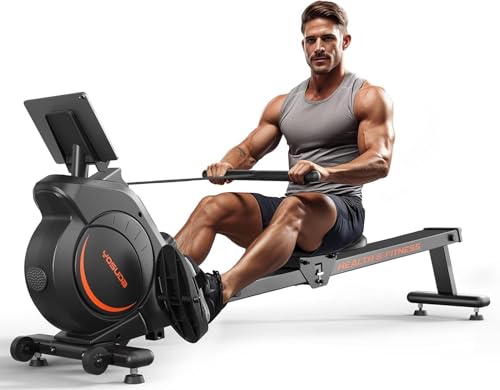
- ✓ Quiet, steady operation
- ✓ Stable wide track
- ✓ Easy setup and app
- ✕ Basic display layout
- ✕ Limited onboard programs
| Frame and Build | Sturdy steel frame with wide track for stability |
| User Weight Capacity | Up to 350 pounds (158 kg) |
| Resistance System | Magnetic resistance with 16 levels |
| Overall Dimensions | 59 inches (L) x 19 inches (W) x 25 inches (H) |
| Seat and Glide | PU roller glide seat with three large integrated wheels on a smooth track |
| Connectivity and Features | Smart app-connected fitness with guided programs and real-time metrics; detachable electronic watch for TIME, DIST, TCNT, CNT, CAL |
You’d be surprised how quiet it is when you start pulling. I’ve had treadmills that hummed louder than a fridge, but the YOSUDA Magnetic Rower glides with a steady, almost stealthy rhythm.
In person, the 59 by 19 by 25-inch frame feels compact enough to tuck into a corner of a small apartment. The seat rolls on three large wheels and stays smoothly aligned with the track, which makes every stroke feel guided rather than rattly.
First thing I noticed: the wider track makes the ride feel stable right away, not wobbly or skittish when you push through a tougher set. It’s built to support up to 350 pounds, and that weight feels uncompromised during intense intervals.
The 16 levels of magnetic resistance give you a gradual ramp without jerky transitions. I kept it on mid-range for most cardio days, and the effort matched the pace on the display without peaking the noise level.
Setup was surprisingly painless—parts click into place, and the included app link walked me through guided plans that didn’t feel gimmicky. The onboard watch shows time, distance, calories, and count, which is handy when you’re trying to hit a specific interval without breaking your rhythm.
For apartment living, the compact footprint and consistent, quiet operation are the real win. If you want a full-body workout without waking the apartment upstairs, this is a solid bet that actually feels complete after just 20–25 minutes.
As you use it, you’ll notice the accessibility factor too: the height range and adjustable seat pad make it comfortable for a wide range of users. It’s not the flashiest machine, but it gets the job done with thoughtful reliability.
Bottom line: if you’ve been eyeing a small footprint rower that doesn’t compromise on stability or quietness, this one checks those boxes while staying friendly on your wallet.
Sunny Health & Fitness Smart Magnetic Rower, Dual-Rail Home

- ✓ Solid, stable footprint
- ✓ Smooth magnetic resistance
- ✓ Easy storage + transport
- ✕ Basic display
- ✕ Limited advanced metrics
| Resistance system | 16 levels of quiet magnetic resistance with belt-drive |
| Slide rail length | 45.7 inches |
| Inseam clearance / rail space | 40.9 inches |
| Weight capacity | 300 lb (136 kg) maximum user weight |
| Monitor features | LCD performance monitor displaying time, distance, calories (est.), stroke count, total strokes, strokes per minute, 500m split; device holder for phone/tablet |
| Frame & stability | Dual-rail design with wide base and non-slip floor levelers; front transport wheels; upright storage option |
The moment I stepped on, the first thing I noticed was the way this rower feels solid without being bulky. You don’t need a dedicated gym corner to set it up—the dual-rail design sits steady on a light footprint, and the 45.7″ slide rail gives you room to stretch out your legs without knocking into anything.
It’s a small machine with a big, confident stance.
Your feet drop into the non-slip pedals with easy, secure straps, and the foam-covered handlebar sits in your hands just right. I appreciated how quiet the belt-drive system runs, even at higher resistance levels, so I could keep the TV on and not feel like I’m shouting over the rower.
The LCD monitor isn’t flashy, but it’s straightforward and reads out time, distance, calories, and stroke data clearly. You’ll also see SPm and 500-meter splits, which is handy for pacing during a quick interval session.
Plus, the built-in device holder means you can stream a short drill or a scenic route without juggling screens.
Setup is simple. You’ll notice the vertical storage option makes it easy to tuck away between uses, and the front transport wheels help you roll it out when you’re ready to train.
I found the 16 levels of magnetic resistance provide a nice gradient—from gentle cardio to more challenging bouts—without getting harsh on your joints.
If you’re balancing space, budget, and a full-body cardio option, this rower nails a practical balance. It’s not oversized or loud, yet it still motivates you to push hard and stay consistent.
In short, it feels like a compact, dependable workout partner that respects your living space and your time.
What Is a Small Rowing Machine and Why Is It Beneficial?
A small rowing machine is a compact fitness device designed to replicate the movement and benefits of rowing on water, while taking up minimal space. These machines are particularly beneficial for home fitness enthusiasts or individuals with limited workout areas. Key advantages include:
-
Space Efficiency: Small rowing machines often come with foldable designs or compact frames that allow for easy storage, making them ideal for apartments or home gyms.
-
Full-Body Workout: Engaging multiple muscle groups, rowing helps tone the arms, back, core, and legs simultaneously, maximizing workout efficiency in shorter sessions.
-
Low Impact: Rowing provides cardiovascular benefits while being gentle on the joints, making it suitable for people of varying fitness levels or those recovering from injuries.
-
Adjustable Resistance: Many small rowing machines offer various resistance settings, allowing users to customize their workouts to match their fitness goals and progress levels.
Choosing the right small rowing machine can enhance home workouts, improve cardiovascular health, and fit seamlessly into various living spaces.
What Are the Key Features to Look for in a Small Rowing Machine?
The type of resistance affects the feel of the workout; air resistance provides a dynamic experience that adjusts to the user’s effort, while magnetic resistance offers smoother, quieter operation. Water resistance mimics the feel of rowing on water, which may enhance the workout experience for some users.
Comfort and ergonomics are vital for ensuring a pleasant rowing experience. Adjustable seats and footrests help accommodate users of different heights and preferences, promoting proper form and reducing the risk of injury.
A display console that is user-friendly and informative is essential for tracking progress. Key metrics such as time, distance, calories burned, and stroke rate can motivate users and help them set and achieve fitness goals.
Durability is an important consideration, as a robust machine will last longer and withstand the rigors of regular workouts. Machines made from high-quality materials will offer greater stability and reliability.
The noise level of a rowing machine can impact the workout environment, particularly in shared spaces. Quieter models are often preferred for home use to avoid disturbing others.
Finally, price and warranty should be considered when selecting a rowing machine. Finding a model that offers good features at a reasonable price, along with a warranty for protection, can greatly enhance the investment in fitness equipment.
How Do Different Types of Small Rowing Machines Compare in Performance?
| Type | Resistance Mechanism | Weight Capacity | Price Range | Dimensions | Durability/Warranty | User Experience |
|---|---|---|---|---|---|---|
| Air Rowers | Uses air resistance, providing a natural rowing feel. | Up to 500 lbs, suitable for most users. | $300 – $900, varies by brand and features. | 80″ x 24″ x 36″ | Durable with a warranty of 2-5 years. | Great for both beginners and advanced users. |
| Water Rowers | Utilizes water resistance, mimicking the feel of rowing on water. | Typically up to 400 lbs, great for a smooth experience. | $700 – $1,500, often considered premium options. | 84″ x 22″ x 36″ | High durability, usually comes with a 5-year warranty. | Ideal for users seeking an authentic rowing experience. |
| Magnetic Rowers | Employs magnetic resistance, allowing for quiet operation. | Usually supports up to 350 lbs, compact and efficient. | $200 – $800, budget-friendly options available. | 75″ x 20″ x 30″ | Moderate durability, typically 1-3 year warranty. | Suitable for beginners and those looking for low-impact workouts. |
| Hydraulic Rowers | Features hydraulic resistance, usually more compact. | Weight limit of around 250 lbs, ideal for smaller spaces. | $100 – $400, great for entry-level users. | 60″ x 20″ x 24″ | Less durable, often with a 1-year warranty. | Best for beginners and casual users. |
What Are the Advantages of Air, Magnetic, and Water Resistance Rowers?
The advantages of air, magnetic, and water resistance rowers are significant for those seeking the best small rowing machine for home use.
- Air Resistance Rowers: Air resistance rowers utilize a fan mechanism that creates resistance based on the speed of the rower’s pull. This means that the harder you row, the more resistance you encounter, providing a natural feel similar to rowing on water. They tend to be more compact and easier to store when not in use, making them suitable for small spaces.
- Magnetic Resistance Rowers: These machines use magnetic brakes to create resistance, allowing for a quiet and smooth rowing experience. They often come with adjustable resistance settings, making them versatile for beginners and experienced athletes alike. Additionally, many magnetic rowers are designed with space-saving features, making them easy to fit into smaller areas.
- Water Resistance Rowers: Water resistance rowers mimic the dynamics of real rowing by using a water-filled tank, creating a realistic rowing experience. The resistance increases as you row harder, similar to air rowers, but with a soothing sound of water that many users find appealing. Their aesthetic appeal and sturdiness often make them a favorite among those who prioritize both functionality and design in a compact rowing machine.
What Should You Expect to Pay for a Quality Small Rowing Machine?
The cost of a quality small rowing machine can vary based on features, brand, and build quality, typically ranging from $200 to $1,500.
- Budget Rowing Machines ($200 – $500): These machines are suitable for beginners and casual users, offering basic features and a compact design.
- Mid-Range Rowing Machines ($500 – $1,000): This category includes machines with enhanced features such as adjustable resistance, better build quality, and often more advanced tracking capabilities.
- High-End Rowing Machines ($1,000 and above): These are premium models that offer superior performance, advanced technology, and a robust construction designed for frequent use.
Budget rowing machines typically come with simple resistance systems, such as air or hydraulic, and may lack advanced monitoring features. They are lightweight and easy to store, making them ideal for those with limited space.
Mid-range rowing machines often include magnetic resistance, which provides a smoother and quieter rowing experience. They may also feature ergonomic designs, adjustable footrests, and better monitors that provide more comprehensive workout data.
High-end rowing machines are built for durability and performance, often including features like water resistance for a more authentic rowing feel, advanced connectivity options, and user-friendly interfaces. These machines cater to serious athletes or fitness enthusiasts looking for a comprehensive workout experience.
How Can You Effectively Store and Use a Small Rowing Machine in Limited Space?
To effectively store and use a small rowing machine in limited space, consider the following strategies:
- Foldable Design: A rowing machine with a foldable design allows you to easily collapse it when not in use, saving valuable floor space.
- Vertical Storage: Opting for a machine that can be stored vertically helps maximize your space, making it easier to tuck it away in a corner or closet.
- Lightweight Materials: Choose a rowing machine made from lightweight materials, which makes it easier to move and store without hassle.
- Multi-Functional Features: Some rowing machines come with additional features like resistance bands or adjustable settings for a variety of workouts, allowing you to maximize your exercise options in limited space.
- Compact Footprint: Look for machines that have a compact footprint, designed specifically for smaller living areas, ensuring it fits comfortably without overwhelming the space.
Foldable Design: A rowing machine with a foldable design allows you to easily collapse it when not in use, saving valuable floor space. This is particularly beneficial in small apartments or homes where every inch counts, making it simple to set up for workouts and store away afterward.
Vertical Storage: Opting for a machine that can be stored vertically helps maximize your space, making it easier to tuck it away in a corner or closet. Many modern rowing machines are designed to stand upright, which can significantly reduce their visual footprint when not in use.
Lightweight Materials: Choose a rowing machine made from lightweight materials, which makes it easier to move and store without hassle. This feature is ideal for users who may need to relocate the machine frequently, as it alleviates the burden of heavy lifting.
Multi-Functional Features: Some rowing machines come with additional features like resistance bands or adjustable settings for a variety of workouts, allowing you to maximize your exercise options in limited space. This versatility means you can engage in different types of workouts without needing multiple machines.
Compact Footprint: Look for machines that have a compact footprint, designed specifically for smaller living areas, ensuring it fits comfortably without overwhelming the space. These machines are engineered to provide a full workout experience without requiring the same amount of floor space as traditional rowing machines.
What Common Questions Should You Consider Before Purchasing a Small Rowing Machine?
Before purchasing a small rowing machine, consider the following common questions:
- What is the size of the rowing machine? Understanding the dimensions of the rowing machine is crucial, especially if you have limited space. Measure the area where you plan to use and store the machine to ensure it fits comfortably without causing obstructions.
- What type of resistance does it use? Rowing machines generally use one of three types of resistance: air, magnetic, or water. Each type offers different levels of noise, smoothness, and workout intensity, so it’s important to choose one that aligns with your fitness goals and personal preferences.
- Is it easy to assemble and store? Consider how simple it is to put the rowing machine together and whether it can be easily stored away when not in use. Many small rowing machines offer folding options or wheels for transport, making them more convenient for home use.
- What is the weight capacity? Checking the weight capacity of the rowing machine is essential to ensure it can support all intended users. Most machines will specify a maximum weight limit, so choose one that accommodates your needs and those of potential users.
- What features does it offer? Features such as digital monitors that track time, distance, calories burned, and stroke rate can enhance your workout experience. Additionally, consider if it has adjustable footrests, comfortable grips, or built-in workout programs that can help keep you motivated.
- What is the warranty and customer support? A good warranty can provide peace of mind, especially for such an investment. Check the length of the warranty and the manufacturer’s reputation for customer support in case you encounter issues with your machine.
- What is the price range? Establish a budget before shopping, as prices for small rowing machines can vary significantly. Determine what features are essential for you and find a balance between quality and affordability to ensure you get the best value for your investment.