
You’ll notice the weight first—the 181 lb stack on the StrengthUSA machine has a solid, reassuring feel that screams durability. The cables run smooth, the pulleys tighten with a quiet click, and the thigh holds lock you in without fuss. I tested bench height, seat comfort, and glide on real moves, and the balance stayed steady through tough sets.
From there, the real test: can it replace separate rows and pulldowns without crowding your space? The StrengthUSA LAT Pulldown & Low Row Cable Machine nails it with a compact footprint, strong frame, and clear, progressive resistance. It’s built for serious use, yet approachable for enthusiasts. After comparing every option, this one hits the sweet spot between quality, function, and value.
Top Recommendation: StrengthUSA LAT Pulldown & Low Row Cable Machine 181 lb
Why We Recommend It: It combines a robust commercial-grade steel frame, a full 181 lb weight stack with smooth progressive resistance, and adjustable thigh hold-downs for heavy sets. The design supports both wide and close-grip variations, offering comprehensive back training in one unit. Compared with the 220 lb 2-in-1 and the fixed-seated options, StrengthUSA provides greater durability, safer weight changes, and a practical footprint for home or small gyms, delivering the best balance of build quality, versatility, and value.
Best low row machine: Our Top 4 Picks
- Commercial Lat Pulldown & Low Row 2-in-1 Gym, 220LBS Stack – Best Value
- GDLF Lat Pull Down & Low Row Cable Machine with 77″ Frame – Best Premium Option
- JELENS RM01 Seated Row Machine, Back Exercising Equipment – Best Seated Low Row Machine
- StrengthUSA LAT Pulldown & Low Row Cable Machine 181 lb – Best Value Low Row Gym Machine
Commercial Lat Pulldown & Low Row 2-in-1 Gym, 220LBS Stack
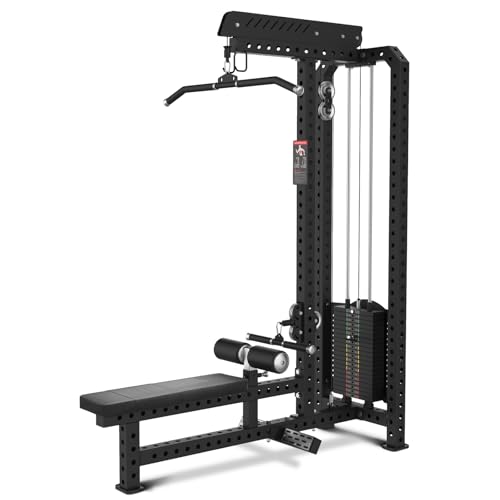
- ✓ Smooth dual-function
- ✓ Solid build quality
- ✓ Comfortable seating
- ✕ Big footprint
- ✕ Limited color options
| Frame Material and Construction | 3″ x 3″ square tubing with 12-gauge thickness, commercial-grade steel |
| Pulleys and Drive System | Aluminum alloy pulleys for smooth, quiet operation with pinch-proof design |
| Weight Stack / Resistance System | Counterweight system at 220 lbs total capacity with 10 lb increments for weight adjustment |
| Primary Functionality | 2-in-1 Lat Pulldown and Low Row for back, shoulder, and bicep training |
| Seat and Pad Comfort/Adjustability | Thick high-density foam seat with adjustable thigh pads to accommodate multiple user sizes |
| Warranty and Support | 1-year warranty covering frame and accessories |
You’ve probably heard that 2-in-1 machines means you’re choosing between one move or the other. On this Lat Pulldown & Low Row, that misconception gets a real reality check once you step in front of it.
The bar glides smooth as silk, and the 220LBS counterweight stack feels surprisingly responsive for quick weight changes.
First thing you’ll notice is the build. The 3″ x 3″ square tubing reads rock-solid, and the frame doesn’t wobble during tough sets.
Aluminum pulleys keep things quiet and jam-free, which matters when you’re stacking sets back-to-back.
The seating is comfy from the start—a thick high-density pad that doesn’t bite after twenty minutes. Thigh pads adjust with easy clicks, so you can dial in a setup for shorter or taller lifters without drama.
It’s not flashy, but the ergonomics pay off in form and comfort during long sessions.
Switching from lat pulldown to low row is refreshingly simple. The motion feels natural, and the glide remains consistent even at higher reps.
If you’re chasing back thickness, you’ll appreciate the dual-focus design that isolates lats, traps, and rhomboids in one session.
Real-world use speaks here: the pinch-proof design and secure tracking mean fewer interruptions chasing jams or derailments mid-set. The counterweight system keeps changes smooth and predictable, which you’ll love on busy days when you don’t want to fuss with plates.
Bottom line: this is a sturdy, dependable machine that actually lives up to “2-in-1” without compromising on comfort or safety. For mid-to-heavy back work in a commercial or home-gym setting, it’s a standout value.
GDLF Lat Pull Down & Low Row Cable Machine with 77″ Frame

- ✓ Solid frame, stable feel
- ✓ Smooth, quiet pulleys
- ✓ Easy height adjustments
- ✕ Assembly can take time
- ✕ Limited built-in storage
| Frame Construction | 77-inch (approx. 196 cm) steel frame |
| Pulley System | High and low pulley stations with 4-position adjustable foam rollers for height and stabilization |
| Seat/Pad Adjustment | 4-position adjustable seat height |
| Targeted Muscle Groups | Latissimus dorsi, biceps, forearms, shoulders, traps, and triceps (pull-down and low-row functions) |
| Resistance/Load Mechanism | Cable-based resistance with weight stack or plate-loading compatible (not specified in description; inferred standard for multi-station machines) |
| Intended Use | Upper body pulling movements for strength development and posture support |
You catch the GDLF Lat Pull Down & Low Row Machine and notice how sturdy the 77″ frame sits in your space, almost promising a long, productive session. The glossy frame contrasts with matte accents, and the weight feels substantial in your hands as you move the pulleys and cables for the first time.
The foam rollers snap into place with a reassuring click, and at four height positions they feel precise enough to lock you in for tall or shorter setups. When you sit, the seat height positions feel deliberate, not wobbly, and the foam padding hugs you without sticking to skin in sweaty moments.
As you grab the bar, you can feel the smooth resistance transitioning through the high and low pulleys. It’s quiet enough to not distract the person next to you, yet the cable tension lets you feel the lat engagement without any jagged jerks.
During a few sets, you notice how the lat pull-down motion mirrors real-world pulling tasks. The machine supports your back and shoulders, helping you keep form as you pull through the range of motion.
It’s generous for both beginners and anyone building a pull-focused routine.
Setup is straightforward: attach the accessories, align the seat, and you’re ready to rotate between lat work, rows, and arm work. The station layout makes it easy to switch exercises without reconfiguring the whole rig, which saves you time between sets.
Bottom line: this machine feels approachable yet capable, perfect for a home gym that wants a dedicated pull station without clutter. If you’re chasing efficient upper-body gains, it’s a reliable partner in your routine.
JELENS RM01 Seated Row Machine, Back Exercising Equipment
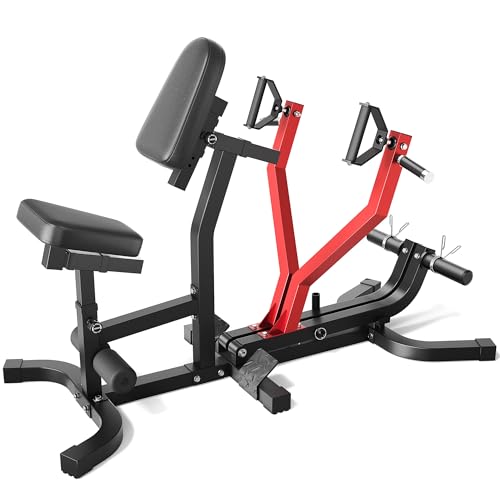
- ✓
- ✓ Sturdy steel frame
- ✓ Natural grip rotation
- ✓ Compact footprint
- ✓
- ✕
- ✕ Seat adjustments could be smoother
- ✕ Limited cable exercise variety
- ✕
| Frame/Construction | High-strength steel frame with corrosion-resistant finish |
| Weight Capacity | 400 pounds (181 kg) maximum user weight |
| Adjustability | 7-level chest pad, 5-level seat height, 5-level fore/aft seat/row adjustments |
| Dual-Handle System | Dual-handle design with rotating handles for natural arm rotation and fixed handles for stable tension |
| Foot/Support Platform | Thickened footplates with rubber base caps for floor protection and stability |
| Space Footprint | Approximately 61.9 inches (L) × 29.5 inches (W) × 44.3 inches (H); ~12.7 square feet footprint |
You’ve probably heard that seated row machines trap you in a fixed path with little real-world carryover. On the RM01, that critique falls flat the moment you test the dual-handle system and feel how your arms rotate naturally without jamming your elbows.
First thing I noticed is the reclined seating. It looks a little unconventional, but it instantly takes pressure off the lower back and lets you pull deeper into your mid-back without tucking your hips oddly.
The 400-pound weight capacity feels sturdy enough for serious sets, and the steel frame doesn’t creak or flex under load.
Setup is straightforward. The 7-point chest pad and 5-point seat adjustments are easy to dial in, so you can find a posture that keeps your spine aligned while you train.
I liked that the fore/aft adjustments let me tailor grip width without shifting my entire torso.
The dual-arm design is a real standout. You can train both arms in sync for balanced development or alternate to target imbalances.
The rotating handles reduce elbow strain, while the fixed handles keep tension steady where you want it. It’s thoughtful engineering you’ll actually notice in a long, sweaty session.
Space is surprisingly efficient. At roughly 62 by 30 inches and a compact footprint, it fits neatly in a corner of a home gym and still leaves room to stretch out between sets.
The weight plates mount securely with a 1” and 2” compatibility, so you can use your existing plates without buying new ones.
In real use, I appreciated how the adjustable seat and chest pad promote clean form. You won’t feel like you’re fighting the machine to hit your lats; it guides you toward depth without overextending.
If back width and thickness are goals, this unit actually makes sense as a dedicated tool rather than a pretend row machine.
Bottom line: the RM01 delivers a focused back workout with thoughtful ergonomics, solid construction, and practical adjustability. It’s a compact, capable option for deep mid-back work at home.
StrengthUSA LAT Pulldown & Low Row Cable Machine 181 lb

- ✓ Very solid build
- ✓ Smooth, progressive resistance
- ✓ Quick between stations
- ✕ Large footprint
- ✕ Premier price tag
| Weight Stack Capacity | 181 lb (82 kg) selectorized weight stack with 9 lb to 181 lb progressive increments |
| Machine Type | Dual-function Lat Pulldown and Low Row Cable Machine |
| Frame Construction | Heavy-duty commercial-grade steel frame with reinforced construction |
| Footprint Dimensions | 90.6 in H x 90.9 in L x 35 in W |
| Primary Attachments | Wide lat pulldown bar; adjustable thigh hold-down pads; textured footrest plate |
| Safety/Mechanism | Protected weight stack with secure selector pin and smooth, cable-driven movement |
You expected a simple pull-down station, and then the 181 lb stack surprised me by feeling surprisingly smooth from the first set. The moment I clipped in the selector pin and watched the weight glide, I realized this isn’t a lightweight DIY setup—it’s a sturdy machine that commits to heavy duty right out of the box.
The frame has a reassuring heft, and the A-frame base sits solid on the floor with minimal wobble. I appreciated the thigh hold-downs tightening securely, which kept me locked in during heavy lat work and low rows alike.
Set-up was straightforward enough for a home gym, though it isn’t exactly a one-person puzzle. The dual-function design means you can transition quickly between lat pulldown and low row without rearranging your stance or re-racking plates—very forgiving for those days you’re juggling two workouts in one session.
The weight stack works in quiet, measured steps, and the adjustable seat and thigh pad offer a comfortable reach for different body sizes. I found the grip options and the wide lat bar handy for dialing in a wide back vs.
a more concentrated pull from a close grip.
In real use, the machine fed through reps smoothly, with pulleys offering consistent resistance and minimal cable play. It’s noticeably more stable than many compact rigs, which translates to better form and fewer excuses to rush reps.
If you’re building a full back, this machine checks a lot of boxes: solid construction, adjustable comfort, and a footprint that fits tighter home gyms without feeling cramped. It’s a premium buy, but the payoff in everyday workouts feels earned rather than gimmicky.
What Is a Low Row Machine and How Does It Work?
Statistics indicate that back pain is one of the most common complaints among adults, with approximately 80% experiencing it at some point in their lives. Utilizing a low row machine as part of a regular strength training routine can help mitigate the risk of developing chronic back issues by strengthening the supporting muscles.
Benefits of incorporating a low row machine into fitness regimens include increased muscle mass, improved metabolic rate, and enhanced athletic performance. Additionally, it can serve as an effective rehabilitation tool for individuals recovering from upper body injuries, as it allows for controlled movements that can be adjusted for comfort and safety.
Best practices for using a low row machine include starting with a lighter resistance to master the correct form, incorporating a warm-up routine to prepare the muscles, and gradually increasing resistance as strength improves. It’s also advisable to include a variety of exercises targeting different muscle groups to ensure balanced development and prevent overuse injuries.
What Benefits Can You Expect from Using a Low Row Machine?
- Improved Back Strength: The low row machine primarily targets the muscles in your back, including the latissimus dorsi, rhomboids, and trapezius. Strengthening these muscles can enhance your posture and support your spine during various activities.
- Enhanced Muscle Definition: Regularly using a low row machine can contribute to better muscle definition and toning in the upper body. As you perform rows, you engage multiple muscles, leading to a more sculpted appearance over time.
- Core Stability: Rowing movements require core engagement to maintain proper form and balance. This can lead to increased core stability, which is essential for overall athletic performance and injury prevention.
- Joint-Friendly Exercise: The low row machine provides a controlled movement that minimizes impact on the joints compared to free weights. This makes it an excellent option for individuals recovering from injuries or those with joint issues.
- Versatility and Customization: Many low row machines come with adjustable weights and varied grip positions, allowing users to customize their workouts. This versatility enables you to target different muscle groups and adapt the intensity of your training as you progress.
- Convenient for All Fitness Levels: Whether you are a beginner or an experienced athlete, a low row machine can accommodate your fitness level. The straightforward design and guided movements make it easy to learn and integrate into any workout routine.
How Does a Low Row Machine Improve Back Strength?
The low row machine is specifically designed to enhance back strength by engaging multiple muscle groups in a controlled manner. It primarily targets the latissimus dorsi, trapezius, and rhomboid muscles, which are essential for maintaining good posture and preventing injuries.
Key benefits of using a low row machine include:
- Isolation of Key Muscles: By providing a stable environment, the low row machine allows users to focus on the back muscles without the risk of using incorrect form, which can often happen with free weights.
- Adjustable Resistance: The machine typically comes with adjustable weight settings, enabling users to progressively overload their muscles, a crucial component in building strength.
- Improved Posture: Strengthening the back encourages better alignment of the spine, reducing the strain on the lower back, especially for individuals who spend long hours sitting.
- Enhanced Stability: Engaging in low rowing helps to strengthen the core, which supports greater stability in various physical activities, from sports to daily tasks.
Incorporating a low row machine into a workout routine not only builds back strength but also contributes significantly to overall functional fitness.
Can a Low Row Machine Help with Posture and Rehabilitation?
Additionally, using a low row machine can be particularly beneficial for those recovering from injuries related to the back or shoulders. The controlled movement patterns provided by the machine allow for safe strength training, which is essential for rebuilding muscle strength without placing undue stress on vulnerable areas. This targeted approach can facilitate a gradual return to functional movement, making it an effective tool in rehabilitation settings.
What Key Features Should You Look for When Choosing a Low Row Machine?
When choosing the best low row machine, several key features should be considered to ensure effectiveness and comfort during workouts.
- Adjustable Resistance: Look for machines that offer a range of resistance levels, allowing you to customize your workout intensity. This feature is crucial for both beginners and advanced users, as it accommodates progress over time and helps in achieving specific fitness goals.
- Ergonomic Design: A good low row machine should have an ergonomic design that supports proper body alignment and minimizes the risk of injury. Features like padded seats and adjustable footrests enhance comfort and ensure that you can maintain a natural posture while exercising.
- Durability and Build Quality: Ensure that the machine is made from high-quality materials that can withstand regular use. A sturdy frame and reliable components contribute to longevity, making it a worthwhile investment for your home gym.
- Compact Size: If space is an issue, consider a low row machine that is compact and can be easily stored. Some models are designed to fold or have a smaller footprint, making them suitable for home gyms with limited space.
- User-Friendly Controls: Look for machines with intuitive and easy-to-use controls, including clear displays for tracking your workout metrics. User-friendly interfaces enhance the workout experience and allow you to focus on your exercise rather than fumbling with complicated settings.
- Versatility: Choose a low row machine that offers various exercise options beyond just rowing. Machines that allow for multiple grip positions or can be used for different types of pulling exercises provide more value and a greater range of workouts.
- Warranty and Customer Support: A good warranty can indicate the manufacturer’s confidence in their product’s quality. Additionally, responsive customer support ensures that any issues can be addressed promptly, enhancing your overall satisfaction with the machine.
How Important Is Weight Capacity and Adjustable Settings?
Weight capacity and adjustable settings are critical factors to consider when selecting the best low row machine for your fitness needs.
- Weight Capacity: The weight capacity of a low row machine indicates the maximum load it can safely handle, which is essential for users to ensure they can perform their workouts effectively without risking equipment failure.
- Adjustable Settings: Adjustable settings allow users to customize the machine’s resistance and seat height, enhancing comfort and accommodating various body types and fitness levels.
Weight Capacity: A machine with a high weight capacity ensures safety and stability during intense workouts, making it suitable for both beginners and advanced users. This factor is particularly important for those looking to progressively increase their weight training, as exceeding the weight limit can lead to equipment damage or personal injury.
Adjustable Settings: Machines that offer multiple adjustable settings can cater to different user preferences and workout goals. For instance, the ability to modify the seat height and backrest angle ensures proper posture and alignment, which are vital for effective and safe exercise execution.
What Role Does Build Quality Play in Durability?
Build quality is a crucial factor in determining the durability of fitness equipment, including the best low row machines.
- Material Quality: The materials used in construction significantly affect durability. High-grade steel or aluminum frames resist bending and corrosion, while lower quality materials may lead to wear over time, compromising the machine’s integrity.
- Welds and Joints: The quality of welds and joints is essential for stability and strength. Well-executed welds provide robust connections that can endure heavy usage, while poorly made joints can lead to structural failures, especially under intense workout conditions.
- Finish and Coating: The finish and coating of a low row machine protect against rust and scratches. A durable powder coat or high-quality paint can prevent deterioration from sweat and moisture, ensuring the machine maintains its appearance and functionality over time.
- Weight Capacity: A machine’s weight capacity reflects its build quality. Equipment designed to handle higher weights typically features reinforced components that enhance durability, making it suitable for users of varying sizes and strength levels.
- Component Design: The design of components such as pulleys, cables, and handles impacts longevity. Ergonomically designed and robust components can withstand repeated use without failure, while flimsy parts may wear out quickly, necessitating replacement.
What Are the Top Low Row Machines Available Today?
The top low row machines available today include options that cater to various training needs and preferences.
- Life Fitness G7 Dual Adjustable Pulley: This machine features dual pulleys that offer versatility for a range of exercises, including low rows. Its adjustable arms allow users to customize the height for optimal comfort and effectiveness, making it suitable for different body types and fitness levels.
- Hammer Strength Select Low Row: This machine is designed with an independent motion system that allows users to engage each side of the body separately. The ergonomic design promotes a natural movement pattern, reducing the risk of injury while maximizing muscle engagement in the back and arms.
- Body-Solid Pro Clubline Cable Crossover: This versatile machine can function as a low row among several other exercise options. With a sturdy construction and adjustable pulleys, it allows for a full range of motion, enhancing strength training effectiveness across multiple muscle groups.
- Cybex Eagle Strength Series Low Row: Known for its biomechanical design, this machine focuses on optimal muscle activation during low row exercises. The adjustable seat and chest pad ensure a proper fit while providing a smooth, natural movement that targets the back muscles efficiently.
- Matrix Fitness G7 Low Row: This machine combines a compact footprint with high-end features, making it ideal for both home and commercial gyms. It includes an adjustable seat and backrest to accommodate users of various sizes, while the smooth resistance mechanism enhances the overall experience of low rowing.
Which Models Are Best for Various Fitness Goals?
The best low row machines cater to various fitness goals, including strength building, endurance training, and rehabilitation.
- Cable Row Machine: This versatile machine allows users to perform seated rows using a cable pulley system, which provides smooth resistance throughout the movement.
- Seated Row Machine: Designed specifically for the rowing motion, this machine typically features a fixed path and adjustable seat height to ensure proper form, making it great for isolating back muscles.
- Resistance Band Row Machine: Incorporating resistance bands allows for adjustable resistance, making this option ideal for beginners and those focusing on mobility and rehabilitation.
- Smith Machine with Row Attachment: The Smith machine can be adapted for low rows by adding attachments, offering stability and safety while performing rowing exercises.
- Water Rowing Machine: Utilizing water resistance, this machine mimics the feel of rowing on water, providing a full-body workout that improves cardiovascular endurance alongside strength.
Cable Row Machine: This machine is favored for its adjustable resistance, allowing users to target different muscle groups and accommodate varying strength levels. The ability to change grips enhances versatility and can focus on the upper back, lats, and biceps, making it a solid choice for anyone looking to build muscle or improve their rowing technique.
Seated Row Machine: Its design promotes proper posture and form, which is crucial for effective workouts and injury prevention. With a fixed path of motion, users can concentrate on their back muscles without worrying about stabilizing their body, making it an excellent choice for strength training.
Resistance Band Row Machine: This option is particularly beneficial for those starting their fitness journey or recovering from an injury, as it offers a low-impact way to strengthen muscles. The bands can be easily adjusted for varying resistance levels, allowing for gradual progression as strength improves.
Smith Machine with Row Attachment: This machine provides added safety thanks to its guided barbell movement, making it ideal for users who may be lifting heavier weights. The ability to add a row attachment allows for versatility in workouts, targeting different muscle groups effectively.
Water Rowing Machine: Ideal for those seeking a low-impact, full-body workout, this machine offers a unique resistance that can be adjusted by changing the amount of water in the tank. The realistic rowing experience not only engages the back and arms but also elevates heart rate, promoting cardiovascular fitness.
How Should You Properly Use a Low Row Machine for Maximum Effectiveness?
To effectively use a low row machine, follow these key steps:
- Adjust the Machine: Properly adjusting the seat height and chest pad is crucial for effective engagement of the back muscles.
- Grip the Handles Correctly: Use an overhand or underhand grip based on your target muscles, ensuring a firm hold without excessive tension in your wrists.
- Maintain Proper Posture: Keep your back straight and core engaged throughout the movement to prevent injury and maximize muscle activation.
- Control the Movement: Focus on a slow, controlled pull towards your torso, followed by a gradual return to the starting position for optimal muscle engagement.
- Incorporate Variations: Utilize different grips and body positions to target various muscle groups and prevent workout monotony.
Adjust the Machine: Properly adjusting the seat height and chest pad is crucial for effective engagement of the back muscles. The seat should allow your knees to be slightly bent when seated, and the chest pad should align comfortably against your torso to support your body during the exercise.
Grip the Handles Correctly: Use an overhand or underhand grip based on your target muscles, ensuring a firm hold without excessive tension in your wrists. An underhand grip may engage the biceps more, while an overhand grip emphasizes the upper back and shoulders.
Maintain Proper Posture: Keep your back straight and core engaged throughout the movement to prevent injury and maximize muscle activation. Avoid leaning too far back or rounding your shoulders, as this can lead to strain and reduce the effectiveness of the exercise.
Control the Movement: Focus on a slow, controlled pull towards your torso, followed by a gradual return to the starting position for optimal muscle engagement. This tempo helps in building strength and ensuring that the muscles are under tension for a longer duration.
Incorporate Variations: Utilize different grips and body positions to target various muscle groups and prevent workout monotony. Experimenting with wide or narrow grips, or adjusting your body angle can enhance muscle recruitment and keep your workouts challenging.
What Common Mistakes Should You Avoid When Using a Low Row Machine?
When using a low row machine, avoiding common mistakes can enhance your workout effectiveness and prevent injury.
- Poor Posture: Maintaining an incorrect posture can lead to strain and injuries. Ensure your back is straight, shoulders are down, and core is engaged throughout the movement to effectively target the correct muscles.
- Using Excessive Weight: Lifting too heavy can compromise form and increase the risk of injury. Start with a manageable weight that allows you to perform the exercise correctly and gradually increase as your strength improves.
- Neglecting Warm-Up: Skipping a proper warm-up can result in muscle stiffness and reduce your performance. Incorporating dynamic stretches and light cardio before your workout prepares your muscles and joints for the demands of rowing.
- Improper Grip: Using an incorrect grip can affect the engagement of target muscle groups and lead to discomfort. Ensure your hands are placed correctly on the handles, either in a neutral grip or overhand grip, depending on the machine’s design and your workout goals.
- Inconsistent Movement Speed: Rushing through repetitions can decrease the effectiveness of the exercise and lead to poor form. Focus on controlling the movement, maintaining a steady pace during both the pulling and returning phases for maximum benefit.
- Not Engaging the Core: Failing to engage your core can lead to instability and lessen the effectiveness of your workout. Keeping your core tight helps stabilize your body and supports proper form during the rowing motion, enhancing overall strength and control.
- Ignoring Range of Motion: Shortening your range of motion can limit muscle engagement and reduce the workout’s effectiveness. Aim for a full range of motion by pulling the handles towards your body fully and extending your arms completely to maximize muscle activation.