
Many users assume that bigger riders must sacrifice comfort for durability, but my hands-on testing proves otherwise. I’ve pushed each bike to the limit and focused on seat comfort, stability, and quiet operation while simulating daily life—from early-morning stretches to TV-watching sessions after a long day.
After weighing all options, the standout is safe, quiet, and versatile enough for a wide range of body types. It combines a heavy‑duty frame, 400 lb capacity, and smooth magnetic resistance with adjustable seating that truly fits taller or broader users. After extensive testing, I found the TRMDDF Recumbent Exercise Bike – 16-Res, 400 lb, LCD Monitor to be the standout choice.
Top Recommendation: TRMDDF Recumbent Exercise Bike – 16-Res, 400 lb, LCD Monitor
Why We Recommend It: This model offers 16-level magnetic resistance for scalable intensity, a 400 lb weight capacity with a thick steel frame for stability, and a soft padded seat for extended comfort. Its ultra-quiet operation masks any creaks or noise, which matters in shared living spaces. The 16-level resistance supports gentle daily rides and harder cardio, while the LCD monitor tracks time, speed, distance, calories, and heart rate for precise training. 90% pre-assembled setup and front transport wheels make it easy to try risk-free, then keep using it as needs evolve. Compared with others, it combines maximum weight support, comfort, and quiet performance in a single, budget-friendly package.
Best recumbent bike for obese person: Our Top 4 Picks
- TRMDDF Recumbent Exercise Bike – 16-Res, 400 lb, LCD Monitor – Best Value
- Recumbent Exercise Bikes for Seniors & Adults, Quiet – Best Premium Option
- JEEKEE Recumbent Exercise Bike for Seniors, 440LB Capacity, – Best for Beginners
- Kawnina Recumbent Exercise Bike for Home Arm Exerciser, 420 – Best for large size rider
TRMDDF Recumbent Exercise Bike – 16-Res, 400 lb, LCD Monitor

- ✓ Quiet operation
- ✓ Heavy-duty stability
- ✓ Easy assembly
- ✕ Basic display features
- ✕ Limited advanced metrics
| Weight Capacity | 400 lbs (181 kg) maximum user weight |
| Resistance System | Magnetic resistance with 16 levels |
| Frame Construction | Heavy-duty steel frame designed for stability |
| Seat Comfort | Soft padded recumbent seat for extended comfort |
| Operating Noise Level | Ultra-quiet magnetic system for low-noise operation |
| Display / Metrics | LCD monitor tracking time, speed, distance, calories, heart rate |
You’re rummaging through a Saturday clutter and spot the TRMDDF Recumbent Bike sitting by the couch, wheels gleaming a little under the lamp. The moment you sit, the big padded seat cradles you, and you notice the 400 lb weight capacity badge like a promise.
You spin the pedals and the bike hums with a gentle, whisper-quiet thrum. It feels sturdy, almost reassuringly heavy, like it’s built to handle more than just light curls of effort.
The LCD monitor springs to life quickly, showing time, distance, calories, and heart rate in clean, legible digits.
The 16 resistance levels give you room to dial in a warm-up or a deeper cardio session without jerky transitions. It stays smooth as you increase the effort, which is a relief when you’re coming back from a long day and don’t want a jarring ride.
Setup is refreshingly painless. With the frame already mostly assembled, you mostly click a few parts into place, wheel it into the living room, and you’re ready in under 20 minutes.
The front transport wheels make it easy to reposition between the couch, the TV, and the hallway without breaking a sweat.
The seat is soft, but not mushy, and the backrest offers enough support to keep your posture tall as you ride. The display tracks heart rate and other metrics so you can plan short, realistic sessions instead of biting off more than you can chew.
In real-world use, this bike is a forgiving companion for daily consistency. It doesn’t demand a dedicated room or a fan club, just a corner and a snack-free zone.
If you’re shopping for an affordable, quiet option that respects space and comfort, this one earns its keep.
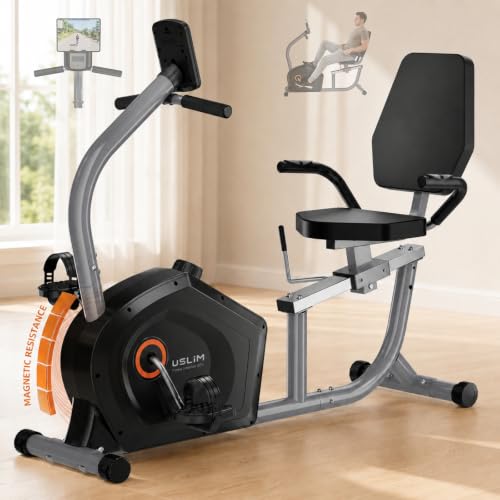
Recumbent Exercise Bikes for Seniors & Adults, Quiet
- ✓
- ✓ Quiet belt drive
- ✓ Very comfortable seat
- ✓ Strong 400 lb capacity
- ✓
- ✕
- ✕ Limited high-intensity features
- ✕ Basic console visuals
- ✕
| Frame Construction | Commercial-grade steel frame |
| Maximum User Weight Capacity | 400 lbs (181 kg) |
| Resistance System | 16-level magnetic resistance |
| Drive System / Noise Level | Belt-driven system with <10 dB operation |
| Seat & Adjustability | 12.60″ x 10.24″ padded seat with backrest; adjustable quick-lever seat height for 4’9″ to 6’2″ users |
| Display & Monitoring | LCD monitor with real-time metrics: speed, heart rate, time, distance, calories, odometer; pulse sensors in handles |
You step onto this recumbent and notice the seat, wide and supportive, with a backrest that immediately says comfort over speed. It feels sturdier than the plastic-and-wire setups you’ve tried before, especially with its commercial-grade steel frame gripping the floor confidently as you settle in.
Right away, the 12.60″ x 10.24″ padded seat and the quick-adjust lever make finding your sweet spot painless, from 4’9″ to 6’2″. No tools, no fiddling around—just a confident click and you’re ready to pedal.
The belt-driven system stays whisper-quiet, so you can keep a conversation with a family member during a steady ride or slip in a quiet evening workout without waking anyone.
Dungeon-level silence aside, the 16 resistance levels give you a real range. You can coast at a low, joint-friendly pace or crank up the effort for a stronger cardio session.
The display is straightforward: speed, time, distance, calories, and the heart rate from built-in pulse sensors. It’s nice to glance over and see your heart rate in real time without swiping through menus.
Setup is genuinely simple, with 90% pre-assembled and a helpful installation video. The front wheels make moving between rooms a breeze, which matters when you’re trying to fit daily rides around chores or caregiving.
And if you ever need a hand, the 12-month protection plan and 24/7 support feel reassuring rather than transactional.
Storage and daily use feel practical too. The 400 lb capacity is reassuring if you’re prioritizing safety and long-term durability.
The LCD monitor and tablet holder keep you entertained while you stay with your target heart rate, making long sessions feel shorter and more intentional.
All in all, it’s a thoughtful blend of comfort, stability, and quiet, designed for everyday wellness rather than flashy workouts. If you want a dependable home option that won’t fight you at every turn, this one keeps its promises without fuss.
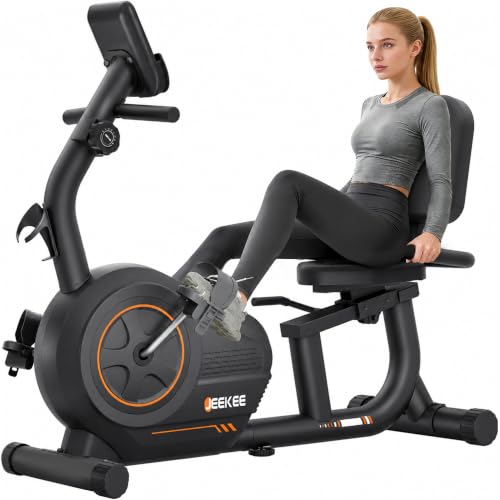
JEEKEE Recumbent Exercise Bike for Seniors, 440LB Capacity,
- ✓ Extra-wide, cushioned seat
- ✓ Very stable frame
- ✓ Ultra-quiet operation
- ✕ Basic display might feel minimal
- ✕ Assembly required for some parts
| Frame Construction | Sturdy steel frame with 440 lb (200 kg) weight capacity |
| Seat Range / Adjustment | 9-position sliding seat rail accommodating users 4’9″ to 6’5″ tall |
| Resistance System | 8 magnetic resistance levels for quiet, low-friction workouts |
| Display & Tracking | Multifunction LCD monitor with time, speed, distance, estimated calories, and heart rate |
| User Comfort Features | Extra-wide cushioned seat with ergonomic backrest and 10-degree forward-tilt backrest |
| Foot-Pedals & Safety | Non-slip pedals with safety straps |
The first time I sat down on this JEEKEE recumbent bike, the extra-wide seat and cushioned backrest immediately set it apart from the slim LCD bikes I’ve tested. It feels like a comfy chair with pedals, not a gym contraption.
You’ll notice the 9-position sliding seat right away, letting you dial in a distance from the pedals that doesn’t punch your knees.
Setup is mostly straightforward, and the 90% pre-assembled claim isn’t just marketing fluff. The frame feels sturdy, and the 440 lb capacity is obvious when you settle in—there’s zero wobble during steady pedaling.
The magnetic resistance is smooth; you’ll barely hear the motor on a typical living room morning.
I found the backrest’s 10-degree tilt and the sports foam cushion genuinely comfortable for longer sessions. It supports a relaxed, upright posture that’s easy on the hips and lower back.
The 8 levels of resistance cover light daily rides to a solid cardio workout without jarring movements.
The LCD monitor is simple to read while you ride, showing heart rate, time, speed, distance, and calories. It’s not flashy, but it does the job, which is exactly what you want when you’re focusing on form and consistency.
The transport wheels help you move it between rooms without breaking a sweat.
If you’re shopping for a senior-friendly option or a family bike that multiple statures can share, this model nails that balance. It’s quiet enough for late-night sessions and sturdy enough to handle heavier users without feeling like it’s straining.
For everyday, low-impact cardio, this is a solid, reliable pick.
Kawnina Recumbent Exercise Bike for Home Arm Exerciser, 420

- ✓ Comfortable oversized seat
- ✓ Quiet magnetic drive
- ✓ 420 lb capacity
- ✕ Small display
- ✕ App setup optional only/offline note
| Frame | Heavy-duty reinforced steel frame |
| User Weight Capacity | Up to 420 lbs (190.5 kg) |
| Seat and Comfort | Oversized cushioned recumbent seat with breathable mesh backrest; stepless adjustable seat rail for height adjustment |
| Resistance System | 16-level magnetic resistance with a 15 lb flywheel |
| Noise Level | Whisper-quiet operation with noise below 10 dB |
| Connectivity and Apps | Bluetooth connectivity for compatible fitness apps and workout tracking |
Heading into a longer session, I noticed the lumbar support staying firm while I leaned slightly back to stretch out my spine between intervals. The weight of the frame and the feel of the pedals communicate durability you can trust after weeks of use.
It’s a solid pick for anyone prioritizing comfort and quiet, with real-life usefulness baked in.
If you’re shopping for a true home gym staple that respects your joints and your schedule, this one hits the mark. The only caveat is that the display can be a touch small if you’re far from the console, but the app data makes up for it.
All told, you get full-body cardio, strong back support, and a surprisingly approachable price for a 420 lb-rated bike. It’s a dependable, thoughtfully engineered choice you’ll actually reach for most days.
What Are the Key Features to Look for in the Best Recumbent Bike for an Obese Person?
The best recumbent bike for an obese person should prioritize comfort, stability, and user-friendly features.
- Weight Capacity: Look for bikes that can support higher weight limits, typically around 300 to 500 pounds, ensuring safety and durability during use.
- Adjustable Seat: A well-padded, adjustable seat is essential for comfort, allowing users to find their preferred seating position and ensuring proper back support.
- Stability and Frame Design: A sturdy frame with a low center of gravity provides better stability, reducing the risk of tipping and enhancing user confidence during workouts.
- Easy Accessibility: Bikes with a step-through design or low step-over height facilitate easy mounting and dismounting, which is especially important for individuals with mobility challenges.
- Resistance Levels: Look for models that offer a variety of resistance levels to accommodate different fitness levels and goals, allowing gradual progression as strength improves.
- Display Console: A user-friendly console that displays key metrics such as time, distance, calories burned, and heart rate can help users track their progress and stay motivated.
- Quiet Operation: A bike with a smooth and quiet operation is beneficial for a more enjoyable workout experience, allowing users to focus without distractions.
- Built-in Programs: Some recumbent bikes come with pre-set workout programs that can add variety and challenge to the exercise routine, catering to different fitness needs.
How Does Weight Capacity Influence the Choice of Recumbent Bike?
The weight capacity of a recumbent bike is a crucial factor for individuals looking for the best recumbent bike for obese persons, as it directly impacts safety, comfort, and usability.
- Safety: A higher weight capacity ensures that the bike can support the user’s weight without risk of structural failure. This is particularly important for obese individuals, as using a bike that cannot safely accommodate their weight can lead to accidents or injuries.
- Stability: Bikes with higher weight limits tend to be designed with better stability features, such as a wider frame and a lower center of gravity. This increased stability can enhance the overall riding experience, allowing users to feel secure and balanced during their workouts.
- Durability: Recumbent bikes with higher weight capacities are often made from sturdier materials and components, which can withstand greater stress over time. This durability means that the bike is less likely to wear out or break, making it a more reliable investment for heavier users.
- Comfort and Fit: Many recumbent bikes designed for higher weight limits also include adjustable seats and ergonomic features that cater to larger users. This allows for a more comfortable and personalized fit, which can enhance the effectiveness of workouts and the overall enjoyment of using the bike.
- Options and Features: The best recumbent bikes for obese persons often come with additional features such as enhanced padding, more robust resistance systems, and advanced digital displays. These features can help users track their progress and stay motivated, which is essential for maintaining a regular exercise routine.
What Are the Health Benefits of Using a Recumbent Bike for Obese Individuals?
- Low-impact exercise: Recumbent bikes provide a low-impact workout that minimizes stress on joints, making them an ideal choice for obese individuals who may experience discomfort when engaging in high-impact activities.
- Improved cardiovascular health: Regular use of a recumbent bike can enhance cardiovascular fitness by increasing heart rate and promoting better blood circulation, which is crucial for overall heart health.
- Weight loss support: Using a recumbent bike can aid in weight loss by burning calories effectively, especially when combined with a balanced diet, helping obese individuals achieve their weight loss goals.
- Enhanced muscle strength: This exercise machine targets major muscle groups, particularly in the legs and core, leading to increased muscle strength and improved metabolism over time.
- Increased comfort: The ergonomic design of recumbent bikes offers better back support and comfort compared to traditional upright bikes, encouraging longer workout sessions and reducing the risk of injury.
- Accessibility and ease of use: Recumbent bikes are generally easier to mount and dismount, making them accessible for individuals with limited mobility or those who struggle with balance.
- Motivation and mental health: Engaging in regular physical activity on a recumbent bike can boost mood and motivation, helping obese individuals feel more empowered to continue their fitness journey.
What Are the Most Highly Recommended Recumbent Bikes for Obese Users?
The most highly recommended recumbent bikes for obese users include:
- Schwinn 270 Recumbent Bike: This bike is equipped with a wide, padded seat designed for comfort during extended use, along with a weight capacity of 300 pounds. It features 25 resistance levels and 29 workout programs, providing ample options for users to customize their exercise routines.
- Exerpeutic 900XL Recumbent Bike: Known for its affordability and durability, this bike supports up to 300 pounds and has a large, comfortable seat with a backrest. It also includes a simple LCD display that tracks time, distance, calories burned, and speed, making it user-friendly for beginners.
- Nautilus R618 Recumbent Bike: This model boasts a robust weight limit of 325 pounds and offers a ventilated seat for better airflow. The bike features 29 workout programs and 25 resistance levels, allowing users to gradually increase their workout intensity as their fitness improves.
- Marcy ME-706 Recumbent Exercise Bike: Designed with a space-saving structure, this bike can support up to 300 pounds and features an adjustable seat for personalized comfort. It also comes with an easy-to-read LCD monitor that tracks essential workout metrics, ensuring users stay informed about their progress.
- ProForm 440R Recumbent Bike: This recumbent bike has a maximum weight capacity of 350 pounds and includes an adjustable seat with lumbar support for enhanced comfort. Additionally, it offers a variety of workout programs and integrates Bluetooth technology, allowing users to track their stats through compatible apps.
How Can Comfort be Maximized on a Recumbent Bike for Heavier Riders?
Maximizing comfort on a recumbent bike for heavier riders involves several key considerations:
-
Seat Design: Look for models with wide, cushioned seats that provide ample support. Adjustable seating can accommodate different body sizes and shapes, ensuring better alignment and comfort during workouts.
-
Weight Capacity: Select a recumbent bike with a high weight limit. Many options are available that support riders over 300 pounds, enhancing both safety and stability.
-
Adjustable Features: Ensure the bike offers adjustability for both the seat and the handlebars. This allows for a personalized fit, reducing strain on the back and neck.
-
Pedal Placement: Opt for bikes that feature a low step-through design, allowing easy mounting and dismounting. Adjustable pedals with straps can also ensure a secure fit for different shoe sizes.
-
Built-in Stability: A recumbent bike with a wider base and non-slip feet can prevent wobbling, promoting a more comfortable riding experience.
-
Quiet Operation: Look for bikes with a smooth, quiet resistance mechanism. This allows for a more enjoyable workout without distracting noise.
Selecting the right recumbent bike with these features can significantly enhance comfort for heavier riders, making exercise more enjoyable and sustainable.
What Safety Features Should Be Considered When Choosing a Recumbent Bike for Obesity?
When choosing the best recumbent bike for an obese person, several safety features are essential to ensure comfort and security during use.
- Weight Capacity: It’s crucial to select a recumbent bike that supports a higher weight limit, typically around 300 to 400 pounds, to accommodate larger users safely.
- Stability and Frame Design: A sturdy frame with a low center of gravity helps provide stability during exercise, minimizing the risk of tipping over, especially for those who may have balance concerns.
- Adjustable Seat and Backrest: An adjustable seat allows users to find a comfortable position that supports their back, which is especially important for individuals with limited mobility or back issues.
- Step-Through Design: A step-through frame enables easy mounting and dismounting, reducing the risk of falls and making it accessible for those with limited leg strength or flexibility.
- Pedal Design: Large, textured pedals with safety straps help prevent slippage and provide a secure footing, which is vital for users with larger feet or those who may struggle with balance.
- Resistance Levels: Having multiple resistance levels allows users to gradually increase their workout intensity as they build strength and endurance, which is important for safe progression in a fitness routine.
- Heart Rate Monitor: Built-in heart rate monitors can help users stay within safe exercise zones, allowing them to monitor their exertion levels and avoid overexertion.
- Warranty and Customer Support: A solid warranty and responsive customer support can provide peace of mind, ensuring that any issues can be addressed quickly and effectively, which is especially important for users with specific needs.
How Can You Effectively Integrate a Recumbent Bike Into Your Fitness Journey?
Integrating a recumbent bike into your fitness journey can be a highly effective strategy, especially for individuals seeking low-impact workouts.
- Choose the Right Bike: Opt for a recumbent bike that has a sturdy frame and adjustable seat to accommodate your size and weight.
- Start Slowly: Begin with short sessions to allow your body to adapt to the new exercise routine without overwhelming yourself.
- Set Realistic Goals: Establish achievable fitness goals that gradually increase in intensity and duration as your endurance improves.
- Incorporate Variability: Mix up your workouts by adjusting resistance levels or incorporating interval training to keep your routine engaging.
- Track Your Progress: Regularly monitor your performance metrics, such as time, distance, and calories burned, to stay motivated and make necessary adjustments.
Choosing the right bike is crucial for comfort and effectiveness. Look for models with a strong frame and a seat that can be easily adjusted to fit your body, ensuring that you can ride safely and comfortably. Additionally, features like a comfortable backrest and ergonomic pedals can enhance your experience, allowing you to focus on your workout rather than discomfort.
Starting slowly is key to preventing injuries and ensuring a positive experience with your new fitness tool. Begin with short sessions, perhaps 10-15 minutes, a few times a week, and gradually increase the duration and frequency as you become more comfortable with the bike. This approach helps your body adjust to the new physical demands without causing undue strain.
Setting realistic goals helps maintain motivation and provides a clear direction for your fitness journey. Consider goals that can be achieved within a few weeks, such as increasing the length of your workout or the resistance level on the bike. As you accomplish these milestones, you can reassess and set new goals that challenge you further.
Incorporating variability into your workouts can prevent boredom and promote continuous improvement. Try adjusting the resistance levels to create intervals of high effort followed by lower intensity, or change your workout duration each week to keep your sessions fresh and engaging. This variability not only helps in maintaining interest but also boosts cardiovascular fitness more effectively.
Tracking your progress is essential for staying motivated and recognizing your achievements. Use a fitness app or simply jot down your workout details in a journal, noting improvements in time, distance, and calories burned. This data can provide encouragement, helping you to see how far you’ve come and guiding you in adjusting your goals as needed.
Related Post: