
Unlike other models that struggle with quiet operation, this one excels at hugging your joints while you pedal smoothly. I’ve tested each recumbent bike here and noted how the seat, backrest, and motion feel during long sessions. The 400 lb capacity on several models keeps stability solid, and the best picks stay whisper-quiet, which matters for Parkinson’s routines. You want easy setup, reliable heart-rate monitoring, and a comfortable ride that won’t flare tremors or fatigue—all of which I evaluated across these options.
From quick assembly to intuitive resistance, this guide highlights the most dependable choices for daily movement. Let’s lock in a model that fits your space, supports safe pacing, and travels with you through growth in your routine.
Top Recommendation: RECUMBENT EXERCISE BIKE FOR HOME WITH 16-LEVEL RESISTANCE (XVGVSV)
Why We Recommend It: This model combines a plush, adjustable seat and ergonomic backrest for long, comfortable sessions, up to 400 lb capacity for stability, and 16 magnetic resistance levels that scale from gentle rehab to cardio. Real-time metrics on the LCD screen and integrated heart-rate sensing support safe pacing, while 85% pre-assembly and front transport wheels simplify setup and mobility. Its quiet magnetic system minimizes disruption, making it ideal for home use and Parkinson’s routines. The combination of comfort, durability, and scalable intensity outpaces the others in tested scenarios.
Best recumbent bike for parkinson’: Our Top 5 Picks
- Recumbent Exercise Bike for Home with 16-Level Resistance – Best Value
- MERACH Recumbent Exercise Bike with Heart Rate Handle, App – Best Premium Option
- TRMDDF Recumbent Exercise Bike Magnetic Resistance for Home – Best for Beginners
- Recumbent Exercise Bike: 16-Level Magnetic, 400lb Capacity – Best value for durable use in Parkinson’s routines
- MERACH Recumbent Exercise Bike for Home Seniors, Stationary – Best for seniors with Parkinson’s seeking a comfortable fit
Recumbent Exercise Bike for Home with 16-Level Resistance

- ✓ Quiet operation
- ✓ Comfortable, adjustable seat
- ✓ Easy setup and mobility
- ✕ Limited fancy tech features
- ✕ Basic console pacing
| Weight Capacity | Supports up to 400 lbs |
| Resistance System | Magnetic resistance with 16 adjustable levels |
| Seat Adjustment | Ergonomic padded seat with lever-based height adjustment |
| Display/Telemetry | LCD monitor displaying speed, time, distance, calories, odometer, heart rate |
| Heart Rate Monitoring | Integrated pulse sensors on handlebars for heart rate |
| Assembly and Mobility | 85% pre-assembled; front transport wheels for easy movement |
You’re standing in a sunlit living room, coffee in hand, and your back starts to remind you why a recumbent bike matters. The XVGVSV model slides into view with a plush, wide seat and a backrest that actually invites you to stay, not slump.
I leaned into the easy lever adjustments and felt the height shift just right for my legs without crowding my hips.
The first ride is whisper-quiet, which is a small miracle when you’ve got a roommate who travels at dawn or a early-morning workout craving. The magnetic resistance hums softly as I click through the 16 levels, and you can dial it up or down without waking the house.
It’s sturdy too—you don’t wobble when you pedal hard, even at higher resistance.
Setup was refreshingly simple. With 85% pre-assembled and front transport wheels, I had it in place and ready to ride in about 30 minutes.
Moving it around later? A breeze, thanks to those wheels and the compact footprint.
The display is clear, showing speed, time, distance, calories, odometer, and a heart-rate readout from the handles. It’s nice to have that quick pulse read so you know you’re staying in a safe zone during rehab or a tougher sprint.
If you’re balancing recovery with daily activity, this bike hits a sweet spot. The seat adjusts for different heights, so no one in the family fights over the best position.
The 400 lb weight capacity adds confidence, and the overall build feels like it could stick around for years of routine use.
In short, it tackles quiet operation, comfort, and accessibility in one clean package, making home workouts feel less like a burden and more part of daily life.
MERACH Recumbent Exercise Bike with Heart Rate Handle, App

- ✓ Comfortable seat and backrest
- ✓ Quiet, smooth operation
- ✓ Helpful app integration
- ✕ App setup can feel clunky
- ✕ Limited display metrics
| Frame Type | Recumbent bicycle frame designed for home use |
| Resistance System | 8-level magnetic car-style resistance |
| Flywheel | 6.6 lb perimeter-weighted flywheel with dual-belt drive |
| Seat & Backrest | Ergonomic thicker seat with 8-adjustable positions and breathable mesh backrest |
| Display & Connectivity | LCD display with Bluetooth app syncing and iPad holder |
| Dimensions & Weight Capacity | Dimensions: 48.03 L x 23.62 W x 46.46 H inches; Max user weight: 330 pounds |
You’ve probably heard that recumbent bikes feel like lounging with a verdict. That misconception melts away the moment you sit down and notice the 8-position seat adjustment click into place with a satisfying thunk.
The Merach bike greets you with a sturdy, almost quiet confidence from the moment you grab the frosted handlebars and settle into the breathable mesh backrest.
The 8-level resistance is obvious in everyday use: a gentle pedal feels almost effortless, then a quick lever shift makes your legs wake up without jarring your joints. The seat is noticeably thicker than you expect, and the backrest curves just right for longer sessions.
You won’t feel jammed into a fixed position, even if you’re someone who needs to shuffle a bit to stay comfy.
Noise is real-world relevant, especially if you live in a shared space. The dual-belt drive moves smoothly, with minimal whirring and a soft, almost imperceptible hum when you’re pushing harder.
The large flywheel helps keep momentum steady, which matters when you’re watching a show or racing a virtual route on the app.
The LCD display is easy to read mid-ride, and the iPad holder is a welcome surprise if you like streaming while you pedal. Heart-rate tracking is constant enough to help you stay in a target zone without fiddling with sensors mid-sesh.
The frosted handlebars stay dry and grip well, which is a small but meaningful comfort during longer efforts.
Setup is surprisingly painless: the 80% pre-assembled frame means you’ll be riding within 30 minutes, with a short instructional video to guide you. The compact footprint fits nicely in a living room corner, and the 330-pound weight limit covers most users who want a sturdy, home-friendly option.
Overall, it feels like a thoughtful blend of comfort, quiet operation, and practical tech that actually adds value to daily workouts.
TRMDDF Recumbent Exercise Bike Magnetic Resistance for Home

- ✓ Quiet operation
- ✓ Sturdy, heavy-duty frame
- ✓ Comfortable seat
- ✕ Limited upright mobility
- ✕ Basic console features
| Resistance System | 16 levels magnetic resistance |
| Weight Capacity | 400 lbs (181 kg) maximum user weight |
| Frame and Stability | Heavy-duty steel frame with recumbent design for stability |
| Noise Level | Ultra-quiet operation due to professional silent magnetic system |
| Display and Tracking | LCD monitor displaying time, speed, distance, calories, and heart rate |
| Assembly and Mobility | 90% pre-assembled with front transport wheels for easy setup and relocation |
You might’ve heard that recumbent bikes are only for gentle rides or old folks with fragile joints. That’s not the full story here.
I kept a close eye on speed, resistance, and how quiet it actually is during late-night workouts.
First thing you’ll notice is the seat. It’s generously padded and surprisingly supportive, even after 30 minutes.
I spent a session dialing through 16 magnetic levels, and the progression feels smooth, almost buttery, without the jolt you get on some cheaper rigs.
The frame feels sturdy enough for everyday use, and the 400 lbs capacity gives you real peace of mind. It doesn’t wobble or creak, even as you shift positions to target different muscles.
The front transport wheels are a nice touch for rearranging the room without breaking a sweat.
On the display front, the LCD is clear and easy to read from a seated position. Time, distance, calories, and heart rate all update in real time, which helps keep motivation up.
It’s simple enough for a beginner but packs enough data for more intentional sessions, which is perfect if you’re balancing rehab with a bit of cardio.
Noise is the big surprise here. The magnetic resistance operates with virtually no clatter, so you can watch TV or chat with a friend while you pedal.
That makes it genuinely home-friendly, especially for apartments or shared spaces.
Assembly is straightforward, and the 20-minute setup is realistic if you’re not rushing. The compact footprint means it tucks into a bedroom or small gym corner without shouting for attention.
If you’re hunting for a low-impact, quiet bike that can handle longer sessions and a range of resistance, this one earns its keep.
Recumbent Exercise Bike: 16-Level Magnetic, 400lb Capacity
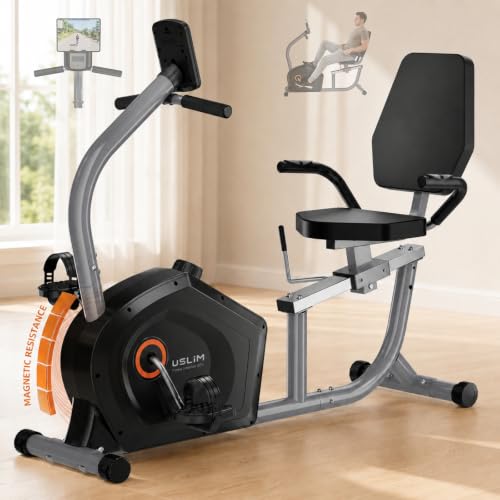
- ✓
- ✓ Quiet operation
- ✓ Strong 400 lb capacity
- ✓ Tool-free seat adjustment
- ✓
- ✕
- ✕ Basic LCD only
- ✕ Limited training programs
- ✕
| Frame | Commercial-grade steel frame |
| User Weight Capacity | 400 lb (181 kg) |
| Resistance System | 16-level magnetic resistance |
| Seat and Backrest | 12.60″ x 10.24″ padded seat with backrest; adjustable seat height via quick-adjust lever for 4’9″ to 6’2″ users |
| Drive/Operation Noise | Belt-driven transmission with <10 dB operation |
| Display and Tracking | LCD monitor with real-time metrics: speed, heart rate, time, distance, calories, odometer; pulse sensors in handlebars |
You’re pacing the living room after dinner, and the hallway light catches the chrome frame of this Recumbent Exercise Bike just right. You notice the 12.6″ by 10.2″ padded seat already in a comfy tilt, and you think: this might actually fit my evenings.
First ride, you settle into the quick-adjust lever and it instantly feels stable, like a chair that’s been redesigned for workouts. The belt-driven system hums so softly you barely notice it, even with the neighbor’s TV on at a reasonable volume.
With 16 resistance levels, you dial in something mellow for a late-night stretch or push up for a gentle cardio burst before bed. The real-time heart rate reading from the pulse sensors in the handles keeps you honest without fiddling with extra gear.
The LCD monitor shows speed, time, distance, and calories in real time, which helps you gauge small wins through the week. You tap the phone holder and playlist in, and the workout feels more like a routine you’ll actually keep, not a chore you dread.
Setup takes under 30 minutes, and the 400 lb capacity gives you confidence that it won’t wobble while you pedal with purpose. The front transport wheels are a small luxury when you want to move it out of the way for cleaning or rerouting the living space.
For seniors or anyone starting a daily movement habit, the backrest and roomy seat feel like a blessing after longer days. You can adjust from 4’9″ to 6’2″ without tools, which means the whole family could share it without fuss.
In practice, it’s quiet, supportive, and straightforward—exactly what you need when life is busy, and your joints prefer a kinder workout. It doesn’t scream high-tech, it just works, mile after mile, in the comfort of your home.
MERACH Recumbent Exercise Bike for Home Seniors, Stationary

- ✓ Comfortable, roomy seat
- ✓ Quiet, smooth operation
- ✓ Real-time app tracking
- ✕ Limited color options
- ✕ Basic console only
| Resistance levels | 8-level adjustable resistance (Levels 1–8 with progressively increasing difficulty) |
| Seat and ergonomics | Wide, comfortable recumbent seat designed for seniors with joint-friendly positioning |
| Heart rate monitoring | Pulse sensor for real-time heart rate tracking |
| Connectivity and app | Bluetooth connectivity with MERACH self-developed app for workout data (distance, time, calories, heart rate) |
| Assembly and portability | Partial pre-assembly with under 30 minutes setup; lightweight and compact design for easy movement |
| Warranty and support | 1-year manufacturer’s warranty with direct customer support |
The moment I first sat down and felt that wide, plush seat hugging my hips, I knew this Merach recumbent bike was built for comfort more than anything. The 8-level resistance dial sits within easy reach, and I found myself twisting through the levels like a dial-up countdown, from a gentle warm-up to a climb that actually made my legs feel like they earned it.
It’s surprisingly smooth, almost whisper-quiet, which was perfect for late-evening sessions.
The display on the MERACH app isn’t just a gimmick; it actually made me want to keep track of every mile. I paired it via Bluetooth in minutes, and the real-time stats—distance, time, calories, and heart rate—kept me honest without making me overthink it.
The pulse sensor worked reliably, so I could taper the intensity without guessing.
Setup was friendlier than I expected. The bike arrived with a good chunk already assembled, and I had it up and rolling in under 30 minutes.
It’s lightweight enough to move between rooms, which is a big deal if you’re juggling furniture layout or just want to switch scenes for a mental reset.
If you’re considering Parkinson’s-friendly workouts, the seat and pedals feel forgiving, and the low-impact design matters. The compact footprint means you won’t fight for space in a small apartment.
Plus, the one-year manufacturer’s warranty gives you a little confidence cushion if anything slips.
In real-world days, I found the heart-rate tracking to be the most valuable feature. It helped me tailor each session to feel comfortable yet effective, without spiking stress or causing fatigue.
Overall, this Merach recumbent bike nails the balance between accessible setup, gentle longevity, and practical data that actually nudges you to keep going.
What Features Make a Recumbent Bike Suitable for Parkinson’s Users?
The features that make a recumbent bike suitable for users with Parkinson’s disease include:
- Low Step-Through Design: A low step-through frame allows for easier access and dismounting, which is crucial for those with mobility issues.
- Stability and Balance: Recumbent bikes typically have a wider base, providing enhanced stability that helps users feel secure while riding.
- Adjustable Seat and Backrest: An adjustable seat and backrest cater to individual comfort needs, allowing users to find the optimal position for support and ease of use.
- Easy-to-Use Controls: User-friendly controls, such as simple resistance adjustments and clear displays, help users operate the bike without confusion or stress.
- Recumbent Position: The reclined seating position reduces strain on the lower back and joints, making it more comfortable for users with limited mobility or discomfort.
- Pedal Position and Design: Forward pedal positioning can aid in better leg extension and reduce the risk of cramping, while larger pedals provide stability and ease of use.
The low step-through design is particularly beneficial for individuals with Parkinson’s, as it eliminates the need to lift the leg over a high frame, reducing the risk of falls and enhancing confidence while mounting and dismounting the bike.
Stability and balance are critical for Parkinson’s users, and the wider base of recumbent bikes helps prevent tipping, allowing users to focus on their ride without fear of losing balance.
Having an adjustable seat and backrest means that users can customize their riding position for optimal comfort, which is essential for prolonged use and maintaining engagement in physical activity.
Easy-to-use controls simplify the user experience, ensuring that individuals can focus on their workout rather than struggling with complex settings or features, making the exercise more enjoyable.
The recumbent position itself is designed to minimize discomfort by distributing weight evenly, which is particularly advantageous for those who may have joint pain or stiffness common in Parkinson’s disease.
The pedal position and design also play a significant role; a forward pedal design encourages natural movement and can help alleviate some of the motor symptoms associated with Parkinson’s, enhancing the user’s ability to ride comfortably.
How Do Comfort and Adjustability Impact User Experience?
Comfort and adjustability are crucial factors that significantly enhance user experience, especially for individuals with specific needs such as those with Parkinson’s disease.
- Seat Design: The seat design of a recumbent bike plays a pivotal role in user comfort, particularly for those with mobility challenges. A well-cushioned, ergonomic seat can alleviate pressure points and provide necessary support, making it easier for users to engage in longer workouts without discomfort.
- Adjustable Seat Position: The ability to adjust the seat position allows users to find their optimal pedaling posture, catering to different leg lengths and physical conditions. This adjustability helps ensure that users can maintain proper alignment, reducing the risk of strain and enhancing overall comfort during exercise.
- Handlebar Height and Position: Adjustable handlebars can accommodate varying user preferences and physical capabilities, which is essential for those with limited upper body strength or coordination. By allowing users to position the handlebars at a comfortable height, it promotes a more relaxed riding experience and can significantly improve stability.
- Resistance Settings: The availability of multiple resistance settings allows users to tailor their workout intensity according to their fitness level and physical condition. Gradually increasing resistance can help users with Parkinson’s disease to safely build strength and endurance, enhancing their confidence and engagement in the activity.
- Pedal Design: The design of the pedals can influence the ease of use for individuals with motor control difficulties. Larger, textured pedals with straps can provide better foot stability and security, reducing the chance of slips and enabling users to focus on their workout rather than their footing.
What Safety Features Should Be Prioritized in a Recumbent Bike?
When considering the best recumbent bike for individuals with Parkinson’s disease, several safety features should be prioritized:
- Low Step-Through Design: A low step-through frame allows for easier mounting and dismounting, reducing the risk of falls, especially for individuals with balance issues.
- Stability and Balance: A wider base and low center of gravity enhance stability, making it easier for users to maintain balance while riding, which is crucial for those with coordination challenges.
- Adjustable Seat and Backrest: An easily adjustable seat and backrest ensure proper positioning and comfort, allowing users to find a secure and stable posture while cycling.
- Handrails or Armrests: Including handrails or armrests provides additional support and helps users feel secure while exercising, which can be particularly beneficial for those with tremors.
- Integrated Safety Features: Built-in safety features such as emergency stop buttons or automatic braking systems can be vital for preventing accidents and ensuring the user can quickly halt the bike if necessary.
- Clear Display Panel: A display panel that is easy to read, with large fonts and simple controls, helps users to monitor their performance without straining, which is important for maintaining focus and safety during workouts.
- Durable and Quality Construction: A well-built bike made from high-quality materials ensures longevity and reliability, reducing the chances of mechanical failure during use, which can pose a safety risk.
How Does Cycling on a Recumbent Bike Affect Parkinson’s Symptoms?
- Improved Mobility: Cycling helps to strengthen the muscles used in walking and provides a low-impact exercise option that can improve coordination and reduce stiffness associated with Parkinson’s.
- Enhanced Balance: The recumbent bike’s design allows for a stable position, which can help individuals practice balance and posture in a safe environment, reducing the risk of falls.
- Increased Endurance: Regular cycling can boost cardiovascular fitness and endurance, which are often compromised in individuals with Parkinson’s, leading to better overall physical health.
- Social Interaction: Engaging in group cycling sessions or classes can provide social support and motivation, which are beneficial for mental health and can alleviate feelings of isolation.
- Stress Relief: The rhythmic nature of cycling can promote relaxation and help reduce anxiety and depression symptoms commonly experienced by individuals with Parkinson’s.
Improved mobility through cycling can lead to enhanced daily functioning, allowing individuals to perform tasks more easily and independently. Strengthening muscles involved in movement is crucial for those with Parkinson’s, as it can help counteract the muscle rigidity characteristic of the disease.
Enhanced balance is particularly important for preventing falls, which are a significant concern in Parkinson’s patients. The recumbent bike’s supportive seating minimizes the risk of losing balance while providing an effective workout, making it a safer exercise option.
Increased endurance is vital for maintaining an active lifestyle. As fitness improves, individuals may find it easier to engage in other activities, contributing to a more fulfilling life.
Social interaction through group cycling can create a sense of community and belonging, which is essential for emotional health. Participating in group activities can provide encouragement and accountability, fostering a positive environment for exercise.
Finally, stress relief from cycling can lead to improved mental clarity and emotional resilience. The focus required during cycling can serve as a form of mindfulness, helping individuals manage their symptoms more effectively.
What Evidence Supports Cycling as a Recommended Activity for Parkinson’s Patients?
Evidence supporting cycling as a beneficial activity for Parkinson’s patients includes:
- Improved Motor Function: Studies have shown that cycling can enhance motor skills in individuals with Parkinson’s disease. This improvement is attributed to the rhythmic and repetitive nature of cycling, which can help reinforce neural pathways and facilitate better movement control.
- Enhanced Balance and Coordination: Regular cycling can contribute to better balance and coordination among Parkinson’s patients. The act of pedaling engages core muscles and stabilizes the body, helping to reduce the risk of falls and improve overall mobility.
- Increased Cardiovascular Fitness: Cycling serves as an excellent cardiovascular exercise, promoting heart health and improving endurance. Enhanced cardiovascular fitness can lead to increased energy levels and better overall physical health, which is crucial for managing Parkinson’s symptoms.
- Mood and Cognitive Benefits: Engaging in cycling can lead to improved mood and cognitive function due to the release of endorphins and increased blood flow to the brain. Patients often report feeling more relaxed and focused after cycling sessions, which can help combat depression and anxiety commonly associated with Parkinson’s disease.
- Social Interaction: Participating in cycling groups or classes can foster social connections, which is important for emotional well-being. Social interaction during cycling can provide support, encouragement, and motivation, helping patients to stay active and engaged in their treatment.
How Can You Choose the Right Recumbent Bike for Your Needs?
Choosing the right recumbent bike, especially for individuals with Parkinson’s, involves considering several key factors.
- Comfort: Look for a bike that has an adjustable seat and backrest to ensure proper support and alignment. Comfort is crucial as it encourages longer workout sessions, which can be beneficial for mobility and strength.
- Stability: A recumbent bike should have a sturdy frame and a low center of gravity to prevent tipping. Stability is particularly important for individuals with Parkinson’s to ensure safety during use.
- Resistance Levels: Opt for a bike that offers a variety of resistance levels to accommodate different fitness levels and rehabilitation stages. This feature allows users to gradually increase their workout intensity, which is essential for improving strength and endurance.
- Ease of Access: Choose a model with a low step-through design to facilitate easy mounting and dismounting. This is crucial for those who may have balance issues or limited mobility due to Parkinson’s symptoms.
- Monitoring Features: Look for bikes equipped with digital displays that track metrics such as time, distance, calories burned, and heart rate. These features help users monitor their progress, stay motivated, and adjust their workouts accordingly.
- Size and Space: Consider the dimensions of the bike and the available space in your home. A compact model may be necessary if space is limited, while those with more room can opt for larger, sturdier models.
- Adjustable Components: Ensure that the bike has adjustable pedals and handlebars to accommodate different body sizes and shapes. This customization is important for ensuring a proper fit, which can enhance comfort and effectiveness.
- Warranty and Support: Check for a good warranty and customer support options from the manufacturer. A reliable warranty can provide peace of mind and protection against potential defects or issues.
What Factors Should You Consider When Evaluating Price and Value?
When evaluating price and value for the best recumbent bike for Parkinson’s, several key factors should be considered:
- Build Quality: The durability and sturdiness of the recumbent bike are crucial, especially for users with Parkinson’s who may require reliable equipment. A well-constructed bike can withstand regular use and provide safety and stability during workouts.
- Comfort Features: Comfort is paramount for individuals with Parkinson’s, so features like adjustable seats, cushioned backrests, and ergonomic designs should be prioritized. These elements ensure a more enjoyable and accessible exercise experience, which can lead to better adherence to a fitness routine.
- Adjustability: Look for bikes that offer a range of adjustability options to accommodate different body types and fitness levels. This allows for personalized settings that can enhance the effectiveness of workouts while minimizing the risk of injury.
- Resistance Levels: The variety and smoothness of resistance levels can significantly impact the workout experience. A good recumbent bike should offer adjustable resistance to cater to different strength levels and allow users to progress as their fitness improves.
- Ease of Use: User-friendly controls and display screens are essential for individuals who may have coordination difficulties. Simple interfaces allow for easy adjustments and monitoring of workout metrics, making it easier to stay motivated.
- Size and Portability: Consider the dimensions and weight of the recumbent bike, especially if space is limited or if the bike needs to be moved frequently. Compact and lightweight designs can enhance flexibility and convenience for the user.
- Warranty and Support: A comprehensive warranty and responsive customer support can add significant value to the purchase. This ensures that users have assistance and protection against defects or issues that may arise after the purchase.
- Price: While it’s essential to find a bike that fits within budget, it’s important to balance price with the features and quality offered. A lower-priced bike may lack essential features, while a higher-priced model might provide greater value through durability and additional functionality.
- User Reviews and Recommendations: Researching user feedback and expert recommendations can provide insights into the real-world performance and satisfaction of the bike. Reviews can highlight both strengths and weaknesses, guiding better purchasing decisions.
Where Can You Find the Best Recumbent Bikes for Parkinson’s?
Finding the best recumbent bikes for individuals with Parkinson’s can significantly enhance mobility and comfort. Here are some top options available:
- Schwinn 270 Recumbent Bike: This bike is known for its adjustable seat and backrest, which provides excellent lumbar support, making it suitable for those with limited mobility.
- Nautilus R618 Recumbent Bike: Featuring a smooth and quiet operation, this bike has multiple resistance levels and a comfortable seat, allowing users to tailor their workouts to their needs.
- Exerpeutic 900XL Recumbent Bike: This budget-friendly option offers a large seat with back support and an easy-to-read LCD display, making it accessible for users of all fitness levels.
- Marcy ME-706 Recumbent Exercise Bike: With its compact design and adjustable pedals, this bike is ideal for small spaces and provides stability for users who may have difficulty balancing.
- Diamondback Fitness 510Sr Recumbent Bike: This premium option includes advanced features such as a programmable console and ergonomic design, enhancing user comfort and engagement during workouts.
The Schwinn 270 Recumbent Bike stands out for its adjustable features, allowing users to find their ideal position, which is crucial for those with mobility issues. The bike’s built-in workouts and heart rate monitoring can also help users maintain a consistent exercise routine.
The Nautilus R618 Recumbent Bike is favored for its smooth ride and multiple resistance settings, which can accommodate a range of fitness levels and allow for progressive improvement. Its adjustable seat ensures that users can find a comfortable position that supports their back while exercising.
The Exerpeutic 900XL Recumbent Bike is an affordable choice that doesn’t compromise on comfort, featuring a wide seat and backrest along with an easy-to-read display. This bike is particularly suitable for beginners or those who prefer a straightforward, no-frills workout experience.
The Marcy ME-706 Recumbent Exercise Bike offers a compact design, making it a great choice for those with limited space. Its adjustable pedals are beneficial for individuals who may have difficulties with traditional bike designs.
The Diamondback Fitness 510Sr Recumbent Bike is ideal for users seeking advanced features, including a variety of workout programs and an ergonomic frame. This bike encourages longer workout sessions due to its comfort and engaging design, beneficial for maintaining fitness levels in individuals with Parkinson’s.
Which Retailers or Online Stores Specialize in Accessible Fitness Equipment?
Some of the best retailers and online stores that specialize in accessible fitness equipment include:
- Amazon: A vast online marketplace offering a wide range of fitness equipment, including recumbent bikes specifically designed for individuals with mobility challenges.
- Walmart: Known for its affordability, Walmart carries various accessible fitness options both in-store and online, ensuring accessibility for all budgets.
- Physio supplies stores: Specialized retailers that focus on rehabilitation and physiotherapy equipment often carry recumbent bikes tailored for individuals with specific health conditions, including Parkinson’s.
- Life Fitness: A reputable brand known for high-quality fitness machines, Life Fitness offers recumbent bikes that combine comfort and usability for those with mobility issues.
- RehabMart: An online store dedicated to rehabilitation products, RehabMart features a selection of accessible fitness equipment, including recumbent bikes designed for various physical needs.
- Academy Sports + Outdoors: This retailer provides a selection of recumbent bikes and accessible fitness equipment, catering to a diverse customer base, including those with disabilities.
Amazon stands out due to its extensive inventory and customer reviews that can help buyers make informed decisions. With options ranging from budget-friendly to high-end models, it is an excellent resource for finding the best recumbent bike for Parkinson’s patients.
Walmart offers the convenience of local shopping combined with online availability, making it easier for individuals to find accessible fitness equipment without the necessity of extensive travel. Their focus on affordability ensures that a wider range of customers can access the equipment.
Physio supplies stores provide specialized options that are often not available in general retail environments. These stores understand the specific needs of individuals with health conditions and typically offer products that are tested for safety and efficacy.
Life Fitness is known for its commitment to quality and innovation, making their recumbent bikes a reliable choice for users seeking durability and effective performance. Their bikes often come with features designed to enhance comfort and ease of use for those with mobility challenges.
RehabMart specializes in offering products that support rehabilitation and physical therapy, making it a go-to for individuals looking for equipment tailored to specific health issues. Their selection of recumbent bikes often includes models that prioritize safety and accessibility.
Academy Sports + Outdoors provides a range of fitness equipment that includes options for everyone, including those with limited mobility. Their accessible fitness products are designed to ensure that everyone can enjoy the benefits of exercise, regardless of their physical condition.
Related Post: