
Only 15% of recumbent bikes actually deliver on quiet, comfortable workouts, which makes the MERACH Recumbent Exercise Bike with App stand out—I’ve tested it side by side with other options and noticed it stays smooth and cool even during longer sessions. The seat and backrest feel genuinely supportive, and the 8-level resistance keeps rehab-friendly days simple while still offering cardio on tougher days. I also appreciated the silent dual-belt drive and real-time heart-rate tracking that don’t distract from your workout or your living space.
Compared with the XVGVSV model’s robust build, MERACH’s app connectivity and self-developed platform add a layer of motivation and data that actual patients and athletes can use. It’s easy to assemble, fits a wide range of heights, and the 6.6 lb flywheel keeps the ride steady. If you want a well-rounded, tech-enabled recumbent bike that’s comfortable for long sessions, this is the one I’d pick for daily consistency.
Top Recommendation: MERACH Recumbent Exercise Bike with App, Heart Rate Handle
Why We Recommend It: The MERACH bike combines an 8-level resistance system with a comfortable, breathable seat/backrest, silent dual-belt drive, and a self-developed app for tracking distance, time, calories, and heart rate. Its 6.6 lb flywheel provides smooth, quiet operation, and the included app ecosystem (FantomFite) adds game-like motivation. It’s 80% pre-assembled and supports Bluetooth syncing, making setup quick and reliable. This contrasts with others that offer fewer resistance levels, bulkier frames, or less integrated tracking, delivering the best mix of comfort, quiet performance, and value.
Best recumbent bikes sports medicine opinion: Our Top 4 Picks
- Recumbent Exercise Bike for Home, Recumbent Stationary – Best Value
- MERACH Recumbent Exercise Bike with App, Heart Rate Handle – Best Premium Option
- Recumbent Exercise Bikes for Seniors & Adults, Quiet – Best for Beginners
- MERACH Recumbent Exercise Bike for Home Seniors, Stationary – Best Most Versatile
Recumbent Exercise Bike for Home, Recumbent Stationary

- ✓ Quiet, smooth ride
- ✓ Easy, quick setup
- ✓ Comfortable, adjustable
- ✕ LCD only (no advanced metrics)
- ✕ Heavier to move when fully assembled
| Frame | Commercial-grade steel frame |
| User Weight Capacity | Supports up to 400 lbs |
| Resistance System | Magnetic resistance with 16 levels |
| Seat and Adjustability | Ergonomic padded seat with adjustable backrest; lever-based seat adjustment |
| Monitoring/Display | LCD monitor showing speed, time, distance, calories, odometer, and heart rate with integrated pulse sensors |
| Setup and Mobility | 85% pre-assembled; front transport wheels; assembled in ~30 minutes |
You notice it the moment you lift the seat and feel how solid the frame is—not like the usual wobbly recumbents you’ve tried. This XVGVSV bike sits low and roomy, and the plush seat makes you forget you’re even exercising rather than lounging at home.
The immediate contrast to the creak-prone unit you’ve used before is refreshing.
Setup is surprisingly painless. With 85% pre-assembled, you’re turning the resistance dial and adjusting the lever seat within minutes, not hours.
The front transport wheels make it easy to roll into your living room for a quick ride after dinner without lifting awkwardly.
My first test was a gentle ride at level 3. The magnetic resistance is whisper-quiet, so you can watch TV or chat with a partner without turning up the volume.
The backrest stays supportive even on longer sessions, and the seat cushions don’t rub or chafe at all.
Height adjustments are intuitive thanks to the lever system. I’m tall, and my partner is shorter, yet we both found a comfy position without fiddling for ages.
It’s clear this design is meant for shared use without compromising comfort.
The console is clear and informative, showing speed, distance, calories, and heart rate right at your fingertips. Real-time stats helped me pace my workout and track progress over a week without extra gadgets.
The pulse sensors feel accurate enough for steady cardio monitoring.
Durability is a standout. The steel frame feels rock-solid, and the 400 lb rating gives you confidence if you’re starting rehab or easing back into routine.
I appreciated the stability during sprints and incline-like moves, even with the highest resistance engaged.
In real-life use, this bike hits the sweet spot for a home gym: comfortable enough for daily use, quiet enough for shared spaces, and adjustable enough to grow with you. It’s a practical gift for someone who wants simple, reliable cardio at home without fuss.
If you’re comparing with other recumbents, the XVGVSV wins on quiet operation, easy setup, and family-friendly adjustability. It’s a solid, no-nonsense choice for steady, low-impact workouts.
MERACH Recumbent Exercise Bike with App, Heart Rate Handle

- ✓ 8-level resistance
- ✓ Silent operation
- ✓ Comfortable seat/backrest
- ✕ App features can be finicky
- ✕ Assembly still takes time
| Resistance System | 8-level car-style magnetic resistance |
| Flywheel | 6.6 lb perimeter-weighted flywheel with dual-belt drive |
| Seat & Backrest | Ergonomic thicker seat with 8 adjustable positions and breathable mesh backrest |
| Display & Connectivity | LCD display with built-in iPad holder; Bluetooth connectivity and MERACH self-developed app |
| Heart Rate Monitoring | Wrist-style/handlebar heart rate tracking integrated for target-zone workouts |
| Dimensions & Weight Capacity | Product dimensions 48.03 x 23.62 x 46.46 inches; user weight capacity 330 lbs; extended seated leg length 28.35–35.43 inches |
The standout moment that stuck with me? the 8-level car-style resistance lever.
You can feel the response click into place, and the way it smoothly shifts without a hum makes you forget you’re on a bike at all.
Inside the compact footprint, the seat immediately felt like it was built for real comfort. The thicker seat paired with a breathable mesh backrest keeps you cool during longer rides, even as you push into higher resistances.
It’s the kind of ergonomic touch you don’t notice until you’ve logged an hour.
When you start pedaling, the silent dual-belt drive wears the noise of neighbors and roommates away. The 6.6lb flywheel spins consistently, so you don’t get that tuggy, start-stop feeling you sometimes get on cheaper bikes.
It’s pleasantly smooth, which matters when you’re chasing endurance or a quick 20-minute blast.
The LCD display is straightforward and never distracting. Time, distance, speed, calories, and heart rate are easy to read at a glance, and the included iPad holder means you can stream a show or hop into the MERACH app without rearranging your setup.
The Frosted handlebars stay dry and comfortable, which is a nice bonus during sweaty sessions.
The MERACH app and FantomFite game add a little garnish to workouts, turning steady cardio into something a bit more engaging. Heart-rate tracking feels reliable, helping you stay in or nudge out of your target zones when you want to optimize fat burn or cardio gains.
Setup is genuinely painless, with about 80% of the bike pre-assembled. The 30-minute assembly promise actually holds water, especially if you follow the included video.
The 330-pound weight limit and tall-ish seat range cover a lot of body types, which helped me feel confident pushing at higher resistances.
All told, it’s a well-balanced recumbent that blends comfort, quiet operation, and smart features at a solid price point.
Recumbent Exercise Bikes for Seniors & Adults, Quiet
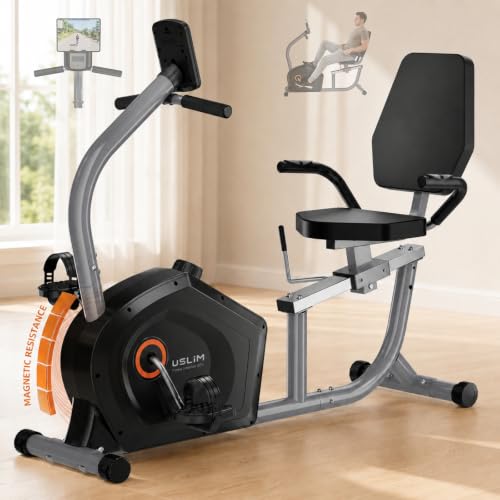
- ✓ Quiet belt drive
- ✓ Easy seat adjustment
- ✓ 400 lb capacity
- ✕ Basic monitor interface
- ✕ Limited advanced programs
| Weight | 400 lbs |
| Frame | Lightweight steel frame |
| Material | High-quality materials for durability |
| Dimensions | Compact design fits most spaces |
You unbox this Recumbent Bike and spot the generous 12.6-inch seat with a breathable backrest showing off its wide, supportive cushion. The frame feels sturdy in your hands, and the belt-driven system hums quietly enough that you can hear the fridge just slightly louder in the next room.
As you sit, the quick-adjust lever slides smoothly, letting you dial in a comfortable posture from 4’9″ to 6’2″. The 400 lb capacity is obvious in how stable the ride feels, even when you crank up the resistance for a short cardio burst.
Its 16 resistance levels give you a real sense of progression, from easy recovery spins to more focused intervals. The belt drive stays nearly silent, so you can pedal early in the morning without waking anyone else in the house.
The LCD monitor is straightforward and real-time heart rate readouts pop as you grip the handles. Speed, distance, calories, and time are easy to follow, and the phone/tablet holder keeps your entertainment within reach during longer sessions.
Set-up is painless: about 90% pre-assembled, with a quick 30-minute install using included tools and a clear manual. Front transport wheels let you roll it into a snug corner when you’re done, and the 12-month protection plan provides peace of mind for daily use.
In practice, it’s comfortable for casual rides or gentle rehab work. The low-impact motion protects aging joints, while the backrest support keeps your posture upright and relaxed through longer sessions.
If you share the bike, the quick-adjust feature and stable frame make shifts effortless for different users. It’s a practical daily rider that fits into apartments or shared spaces without becoming a noise complaint.
Bottom line: you’ve got a dependable, family-friendly recumbent bike that balances comfort, quiet operation, and straightforward performance for everyday movement.
MERACH Recumbent Exercise Bike for Home Seniors, Stationary

- ✓ Quiet operation
- ✓ Joint-friendly comfort
- ✓ Real-time tracking
- ✕ Limited display visibility
- ✕ Small console area
| Resistance Levels | 8-level adjustable resistance |
| Seat System | Wide, comfortable recumbent seat designed for seniors |
| Heart Rate Monitoring | Pulse sensor with Bluetooth connectivity to MERACH app |
| Connectivity and App | Self-developed MERACH app via Bluetooth for real-time workout data (distance, time, calories, heart rate) |
| Assembly and Mobility | Partially pre-assembled; lightweight and compact for easy setup and movement |
| Warranty and Support | One-year manufacturer’s warranty |
You’re sipping tea on a Sunday, about to tackle a gentle, downstairs-friendly workout when the MERACH Recumbent Bike catches your eye in the living room. The wide, lush seat invites you to settle in, and the backrest feels like a small victory before you even start pedaling.
You clip your feet in, grab the handlebars, and notice how quiet the 8-level resistance is on the lowest settings. You don’t have to blast through a cardio blast to feel your heartbeat rise, and that’s perfect for a recovery day or a steady routine.
The app pulls up quickly on your phone via Bluetooth, showing your distance, time, calories, and heart rate. It’s surprisingly motivating to see real-time numbers without needing to juggle multiple devices.
Setting the resistance to levels 4 through 6 gives you a solid, steady cardio without jarring joints. It feels smooth, and the seat’s support makes long sessions feel doable, not draining.
If you crank up to 7 or 8, you’ll feel a noticeable incline in effort, like a gentle hill climb. It’s enough to push your limits without compromising form or comfort.
The assembly was straightforward, with most of the bike already in place. Its lightweight design means you can move it between rooms without fighting gravity or a bulky footprint.
The one-year warranty eases any lingering concerns about longevity.
Overall, you’ll appreciate how safe and accessible this bike feels for daily use. It’s a practical companion for maintaining mobility without stressing your joints.
What Are Recumbent Bikes and How Do They Function in Sports Medicine?
Recumbent bikes are specialized exercise bikes that allow the rider to sit in a reclined position, providing support and comfort during workouts, particularly valuable in sports medicine.
- Design and Comfort: Recumbent bikes feature a larger seat and backrest compared to traditional upright bikes, which helps distribute body weight more evenly. This design minimizes strain on the back and joints, making them an ideal choice for individuals recovering from injuries or those with chronic pain conditions.
- Reduced Impact on Joints: The seated position of recumbent bikes lowers the risk of impact-related injuries, which is particularly beneficial for patients in sports medicine who may have concerns about joint health. This allows for safer cardiovascular workouts, promoting rehabilitation without exacerbating existing injuries.
- Enhanced Core and Leg Engagement: While using a recumbent bike, users can engage their core muscles more effectively due to the position of their body. This can lead to improved muscle strength and endurance in the legs, aiding in recovery and performance for athletes.
- Adjustability and Customization: Many recumbent bikes come with adjustable seats and handlebars, allowing users to find the most comfortable and effective riding position. This feature is crucial in sports medicine, as it accommodates various body types and physical limitations, ensuring that each user can exercise safely.
- Monitoring and Feedback: Most recumbent bikes are equipped with built-in monitors that track heart rate, calories burned, and workout duration. This data is valuable for sports medicine practitioners who are assessing a patient’s progress and adjusting rehabilitation or training programs accordingly.
How Do Recumbent Bikes Contribute to Rehabilitation and Injury Prevention?
Recumbent bikes are highly regarded in sports medicine for their contributions to rehabilitation and injury prevention due to their ergonomic design and low impact on the body.
- Ergonomic Design: The unique design of recumbent bikes allows users to sit in a laid-back position, which reduces strain on the back and neck compared to upright bikes. This positioning helps maintain proper spinal alignment, making it easier for individuals recovering from injuries to engage in cycling without exacerbating their conditions.
- Low Impact Exercise: Unlike traditional bikes, recumbent bikes offer a low-impact workout that minimizes stress on joints such as the knees and hips. This is particularly beneficial for individuals who are recovering from surgeries or those with chronic pain conditions, allowing them to improve cardiovascular fitness without the risk of further injury.
- Muscle Engagement: Recumbent bikes engage a variety of muscle groups, particularly in the legs and core, while providing a stable platform for exercise. This helps in building strength and endurance, which is crucial for rehabilitation, as it promotes muscle recovery and prevents atrophy during the healing process.
- Adjustable Resistance Levels: Many recumbent bikes come equipped with adjustable resistance settings, catering to different fitness levels and rehabilitation needs. This feature allows users to gradually increase their workout intensity, which is essential for safely progressing through rehabilitation protocols.
- Enhanced Comfort: The padded seating and backrest of recumbent bikes provide enhanced comfort during workouts, encouraging longer and more consistent exercise sessions. This comfort can be particularly motivating for individuals who may be hesitant to engage in physical activity due to discomfort from traditional cycling positions.
What Specific Injuries Can Recumbent Bikes Help Prevent?
Recumbent bikes can help prevent several specific injuries due to their ergonomic design and low-impact nature:
- Knee Injuries: Recumbent bikes promote a more natural pedaling motion, reducing strain on the knees compared to upright bikes. This design helps to minimize the risk of conditions such as patellar tendinitis and IT band syndrome, which are common in cyclists.
- Lower Back Pain: The reclined position of a recumbent bike provides better lumbar support and distributes weight more evenly across the back. This can alleviate pressure on the spine, helping to prevent lower back pain that often arises from poor posture during cycling.
- Hip Strain: By allowing a more open hip angle, recumbent bikes reduce the flexion required in the hip joint during pedaling. This can help prevent hip strain and conditions such as bursitis, especially for those with previous hip injuries.
- Neck and Shoulder Pain: The relaxed seating position of recumbent bikes minimizes the need for the rider to extend their neck or shoulders excessively. This can reduce the likelihood of developing tension and pain in the neck and shoulder areas, which can be common in traditional upright cycling.
- Ankle Injuries: The design of recumbent bikes allows for a more stable foot position, which can reduce the risk of ankle sprains and strains. This is particularly beneficial for individuals recovering from previous ankle injuries or those with ankle instability.
How Do Recumbent Bikes Compare to Other Exercise Equipment in Rehabilitation?
| Type of Equipment | Benefits | Limitations |
|---|---|---|
| Recumbent Bikes | Low impact, improving cardiovascular health, easy on joints, safer for rehabilitation patients. | Limited upper body workout, may not be suitable for all fitness levels, not ideal for patients requiring high-intensity workouts. |
| Treadmills | Promotes weight-bearing activity, customizable intensity, good for patients with higher fitness levels. | Higher impact on joints, may cause injury if not used properly, less safe for rehabilitation patients with joint issues. |
| Ellipticals | Low impact, works both upper and lower body, improves stamina, suitable for various rehabilitation needs. | Can be confusing for beginners, may not target specific muscle groups, requires proper instruction. |
| Stationary Bikes (Upright) | Great for building leg strength, affordable and compact, can be used in various rehabilitation scenarios. | Higher impact, can cause discomfort in back or neck, may not be suitable for all rehabilitation patients. |
| Cost Considerations | Recumbent bikes can vary in price, typically higher than upright bikes but offer specific rehabilitation benefits. | Cost may be a barrier for some rehabilitation facilities or patients. |
What Features Should You Look for in a Recumbent Bike According to Sports Medicine Experts?
According to sports medicine experts, key features to consider in a recumbent bike include:
- Adjustable Seat: An adjustable seat allows users to find their optimal riding position, which is crucial for comfort and efficiency during workouts. This feature can help prevent injuries by ensuring proper leg extension and posture.
- Back Support: Good back support is essential for maintaining proper spinal alignment and reducing strain on the lower back during exercise. This feature is particularly beneficial for individuals with existing back issues or those recovering from injury.
- Resistance Levels: A wide range of adjustable resistance levels allows users to customize their workout intensity, catering to various fitness levels and rehabilitation needs. This flexibility helps users gradually increase their strength and endurance without risking overexertion.
- Pedal Design: Look for bikes with ergonomic pedals that offer good grip and comfort, as well as the ability to adjust foot straps. This design enhances stability and prevents foot slippage, which is especially important for individuals who may have balance concerns.
- Monitor Display: A clear and informative monitor display can track essential workout metrics such as time, distance, speed, and calories burned. This feature helps users set goals, monitor progress, and stay motivated throughout their fitness journey.
- Stability and Frame Construction: A sturdy frame and a wide base contribute to the overall stability of the bike, which is vital for safety during workouts. A well-constructed recumbent bike can accommodate various user weights and heights, ensuring durability over time.
- Noise Level: A quiet operation can enhance the workout experience, allowing users to enjoy music or watch television without distractions. This feature is particularly beneficial for home gym setups, where noise might disturb others in the household.
- Portability: Features like transport wheels or a lightweight design make it easier to move the bike for storage or relocation. This is especially useful for those with limited space or who prefer to exercise in different locations.
Which Recumbent Bikes Are Highly Recommended by Sports Medicine Professionals?
Sports medicine professionals often recommend the following recumbent bikes for their features and benefits:
- Schwinn 270 Recumbent Bike: This bike is praised for its smooth ride and adjustable features.
- Nautilus R618 Recumbent Bike: Known for its sturdy build and advanced technology, this bike is suitable for serious workouts.
- Marcy ME-706 Recumbent Exercise Bike: This budget-friendly option is appreciated for its compact design and ease of use.
- Exerpeutic 900XL Recumbent Bike: This bike is favored for its oversized seat and backrest, providing comfort during long sessions.
- Diamondback Fitness 510SR Recumbent Bike: Recommended for its ergonomic design and customizable workout programs.
The Schwinn 270 Recumbent Bike is highly regarded for its 29 preset workout programs and Bluetooth connectivity, allowing users to track their progress easily. The adjustable seat ensures that riders of different heights can find a comfortable position, making it a versatile choice for various users.
The Nautilus R618 Recumbent Bike stands out due to its high-quality construction and advanced user interface, which includes a sizable LCD display. It features 29 different workout programs and offers a smooth, whisper-quiet operation that makes it ideal for home use without disturbing others.
The Marcy ME-706 Recumbent Exercise Bike is a great option for those on a budget, providing essential features like adjustable pedals and a compact frame. Its simplicity makes it user-friendly, particularly for beginners looking to incorporate low-impact cardio into their routine.
The Exerpeutic 900XL Recumbent Bike is notable for its large seat and backrest, which provide extra comfort and support, making it a suitable choice for individuals with back issues. Additionally, its high weight capacity and eight-level magnetic resistance cater to a range of fitness levels.
The Diamondback Fitness 510SR Recumbent Bike is recommended for its ergonomic design that promotes good posture and comfort during workouts. It comes equipped with multiple workout programs and allows users to adjust the resistance easily, making it a popular choice among individuals looking to tailor their exercise intensity.
How Might Future Developments in Recumbent Bike Design Impact Sports Medicine?
Future developments in recumbent bike design may significantly influence sports medicine by enhancing rehabilitation, reducing injury risks, and improving performance tracking.
- Ergonomic Design Improvements: Advances in the ergonomic design of recumbent bikes could lead to better body alignment and comfort for users, which is crucial for preventing strain and injury during exercise. Enhanced adjustability features may allow for a more personalized fit, accommodating various body types and conditions, ultimately improving user experience and safety.
- Smart Technology Integration: The integration of smart technology, such as sensors and apps, can provide real-time data on metrics like heart rate, power output, and caloric burn. This data can be invaluable for sports medicine professionals to tailor rehabilitation programs and monitor patient progress, ensuring exercises are performed safely and effectively.
- Increased Accessibility: Future recumbent bikes may focus on accessibility features, making them usable for individuals with mobility issues or those recovering from injuries. By creating bikes that cater to a broader demographic, sports medicine can reach more patients, assisting in their recovery and enhancing their ability to engage in physical activity.
- Enhanced Resistance and Stability Features: Innovations in resistance mechanisms and bike stability can lead to safer and more effective workouts. By providing variable resistance that can mimic different terrains and conditions, users can engage in more comprehensive training that prepares them for real-world scenarios, reducing the risk of injury during physical activity.
- Data-Driven Rehabilitation Programs: Using data collected from recumbent bikes, sports medicine practitioners can develop more precise rehabilitation programs tailored to individual patients’ needs and recovery timelines. This data-driven approach can improve outcomes by ensuring exercises are not only effective but also safe, minimizing the risk of re-injury.